
Aperol Spritz Ingredients, Taste and Alcohol Content
What are Aperol spritz ingredients, and how alcoholic is it?
An Aperol spritz is an Italian sparkling cocktail made with Aperol, Prosecco and soda water, usually served over ice with orange. It is bittersweet, citrusy and sparkling. Aperol itself is 11% alcohol by volume; the maker gives the mixed spritz as about 9%.
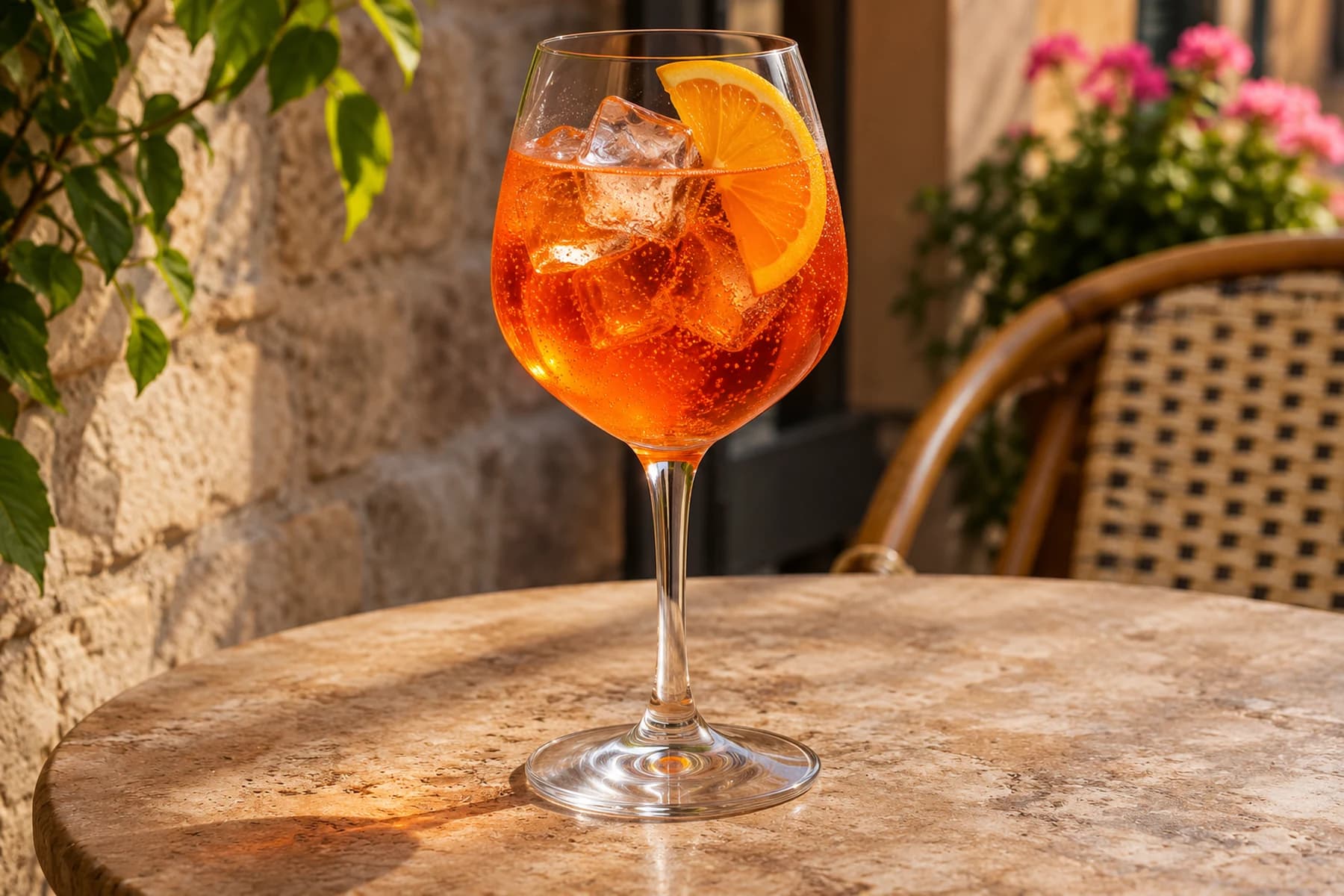
What is an Aperol spritz?
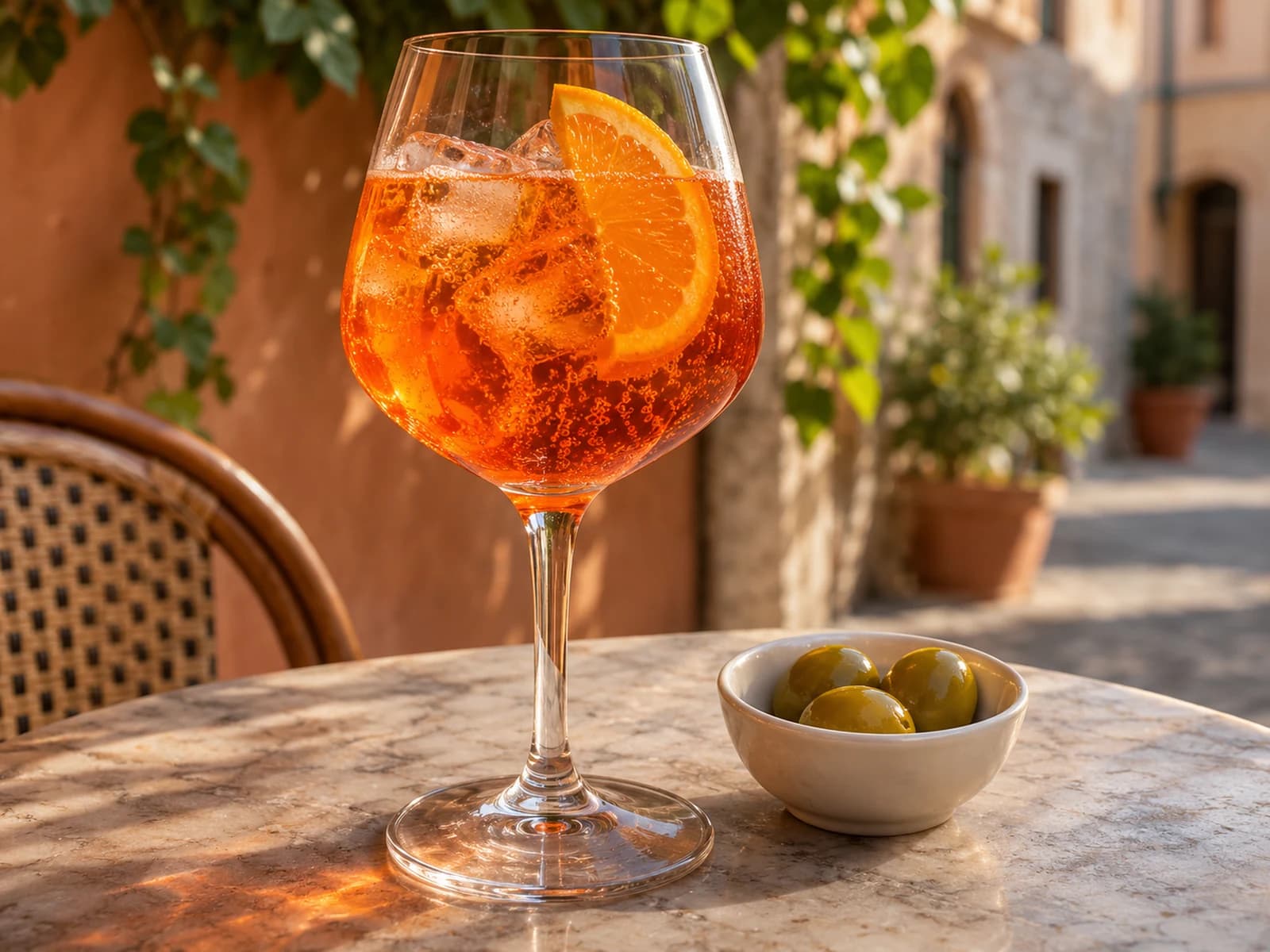
An Aperol spritz is an Italian aperitivo cocktail, meaning an alcoholic drink served before a meal. It is made from Aperol, Prosecco and soda water, and it comes to the table over ice in a large wine glass with an orange slice and sometimes an olive. Aperol is an Italian bittersweet aperitif, and Prosecco is an Italian sparkling wine.
Say AP-er-ohl sprits. Aperol takes its name from the French apéro, short for aperitif, and spritz comes from the German spritzen, meaning to spray or splash, which recalls the older custom of diluting wine with water. On menus the drink appears as Aperol Spritz, Frozen Aperol Spritz or simply Spritz. The bare word spritz can also mean a version built on another bitter liqueur such as Campari, Cynar or Select, so the full name tells you which drink you are getting.
The original spritz arose in Veneto in the 1800s, under Habsburg rule. Soldiers, merchants and officials found the local wines strong and asked their hosts to add a splash of water. Aperol was introduced in Padua in 1919 by the Barbieri brothers, and bitter aperitifs were added to the drink in Venice and Padua in the 1920s and 1930s. The modern recipe, with Prosecco replacing still wine, was set in the 1970s. The International Bartenders Association made the spritz an official cocktail in 2011, and the drink became widely popular outside Italy in the 2010s.
What does an Aperol spritz taste like?
An Aperol spritz tastes bittersweet and citrusy, with an herbal edge. Aperol is made with citrus oils, herbs and roots, and the orange aroma leads before a bitter finish stays on the palate. Prosecco adds wine character and bubbles, and soda makes the mixture lighter.
The drink is served cold over ice and has a lively, sparkling texture. An orange slice contributes peel aroma as well as color, and an olive alongside gives a salty, umami contrast to the sweet-bitter flavor. As the ice melts, the drink becomes gradually more diluted.
The frozen versions change the texture to an icy slush. A frozen drink listed with Cara Cara orange and lemon tastes more sharply citrusy than the classic. Classic and frozen versions on the same menu list the same core ingredients, Aperol, Prosecco, orange and soda, so the main difference is texture and temperature, with the same flavor family throughout.
Aperol spritz ingredients and how they combine
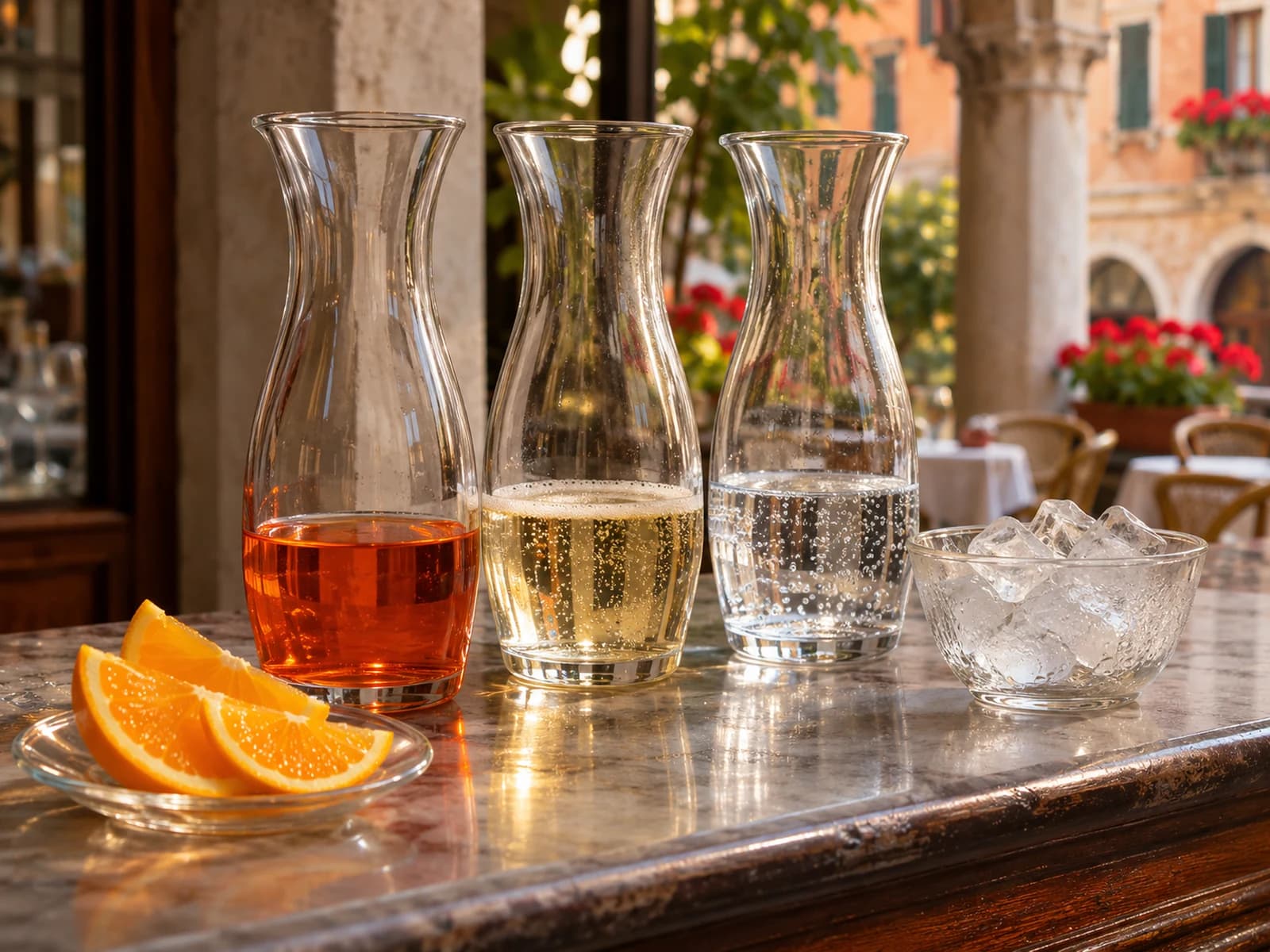
The core ingredients are Aperol, Prosecco and soda water, with ice and orange for serving. Aperol is an Italian bittersweet aperitif made with citrus oils, herbs and roots. Prosecco is a sparkling wine, so it adds alcohol as well as carbonation, while soda water supplies extra bubbles and dilution. The maker gives Aperol as 11% alcohol by volume and the finished spritz as about 9%.
The drink is built directly in the glass over ice and stirred gently, and nothing is cooked or shaken. Melting ice then dilutes the mixed drink gradually as it sits. The orange slice adds peel aroma but leaves the liqueur as the main source of the orange flavor.
Bars measure the drink differently, and one source notes that there is no single composition, so alcohol content varies widely from place to place. A pre-mixed bottle sold in the United States contains the same three core components, Aperol, sparkling wine and soda, in a sealed 20 cl container. That makes the bottle a consistent factory mix, while a glass at a bar depends on the pour.
Classic, frozen, citrus and ready-to-serve versions
American menus include the classic over-ice spritz and a frozen version listing Aperol, Prosecco, orange and soda. Another frozen version names Cara Cara orange and lemon, which makes its citrus profile different from a classic with a single orange slice. The ingredient list of a house frozen blend can include more than the classic drink does, so the classic description cannot tell you what a given frozen drink contains.
Italy has its own variations. The Venetian spritz is made with Select in place of Aperol, with Prosecco, soda water and a large green olive. The spritz bianco uses still white wine and sparkling water and is found mostly in Friuli-Venezia Giulia. Other relatives include the Istrian Aperol spritz made with teranino, the Italicus spritz, the Martini vermouth spritz, and Pirlo, a Brescia aperitivo made with still white wine.
In the United States, the drink also comes in sharing and take-home formats. A 64 fl oz pitcher of Aperol Spritz is listed as five to six drinks on a New York menu, and a ready-to-serve bottle holds 20 cl, or 200 mL. A coconut Aperol spritz, a separate flavored variation, also appears in a published nutrition table. Frozen, pitcher and bottled versions all contain alcohol.
How to drink it with orange or olives
An Aperol spritz is served over ice in a wine glass or rocks glass, and it is best sipped cold while the bubbles are still lively. A large wine glass leaves room for ice, the liquid and an orange slice. Because it is an aperitivo, it is meant to come before a meal rather than after it.
In Veneto, aperitivi are served with small snacks, and an olive or a nibble of something salty makes a natural partner for the sweet-bitter flavor. A plain olive offers salt and umami against the orange and bitter notes, and the orange slice can stay in the glass for aroma. The drink works on its own, so it needs no mixer or sauce.
Melting ice dilutes the drink the longer it sits, so a spritz left unfinished becomes thinner and loses some of its flavor. A shared pitcher is poured into individual glasses over ice. A frozen spritz is eaten with a straw or spoon in the style of a slush, and it melts as it warms.
Ordering a glass, pitcher or bottle in the United States
Look for Aperol Spritz on the cocktail or aperitivo list, and Frozen Aperol Spritz for a slushy drink. A name such as Coconut Aperol Spritz or a house spritz points to a flavored or modified recipe. A plain Spritz or Venetian Spritz may use Select or another bitter liqueur instead of Aperol, so ask which one is in the glass.
The classic 3:2:1 measure is 3 fl oz Prosecco, 2 fl oz Aperol and 1 fl oz soda before ice and orange, about 6 fl oz of liquid. The International Bartenders Association recipe is 9 cL Prosecco, 6 cL Aperol and a splash of soda water, so bars can measure it differently. A 64 fl oz pitcher is listed as five to six spritzes, and a premixed bottle holds 20 cl, or 200 mL.
A spritz is an aperitivo, so it is ordered before dinner and not as the main drink with a meal. For a group, a pitcher serves five to six drinks. Ask whether a house version adds juice, syrup or another spirit before choosing a size, and tell the server if you want the classic version.
Gluten, vegan ingredients and alcohol
The FDA lists nine major food allergens: milk, eggs, fish, crustacean shellfish, tree nuts, peanuts, wheat, soybeans and sesame. The maker says Aperol contains no nuts, but it gives no tree nut-specific or peanut-specific information and does not cover added mixers. At one large US chain, the nutrition table lists a coconut Aperol spritz, a separate variation, and that table does not list the nine major allergens. Ask about every added ingredient, and about shared bar tools, if an allergy is severe, because cross-contact can happen.
The maker says the classic Aperol spritz contains no gluten, that Aperol is suitable for vegans and that it contains no caffeine. Those statements describe the aperitif and do not cover every sparkling wine or every house variation, so a vegan order needs a suitable wine as well. Ask whether a house or frozen blend adds juice, syrup or another spirit.
Aperol is 11% alcohol by volume, and the maker gives about 9% for the mixed spritz; that is not a universal measurement for every bar pour. Frozen, pitcher and bottled versions contain alcohol too. Pregnant people should avoid alcohol, because no safe amount during pregnancy is known.
Which should you order?
Choose a classic spritz for bubbles and a clear bittersweet orange flavor, or a frozen version for a slushy texture. Choose a Cara Cara orange and lemon version for sharper citrus. A 64 fl oz pitcher is meant for five to six spritzes, while a ready-to-serve bottle holds 200 mL.
A useful question for the restaurant
Is this the classic Aperol, Prosecco and soda version, or does it include juice, syrup or another spirit?
Ordering suggestions reflect taste preferences, not a guarantee about the restaurant’s ingredients.
Common questions
How many calories are in an Aperol spritz?
A coconut Aperol spritz at one large US chain lists 260 calories for one drink. A classic eight-serving recipe lists 222 calories per serving, with about 6.2 fl oz of liquid before ice and an orange slice. Those are serving-specific values, so a pitcher or a house pour can differ.
What are Aperol spritz ingredients?
The classic contains Aperol, Prosecco and soda, served with ice and orange. The 3:2:1 reference is 3 fl oz Prosecco, 2 fl oz Aperol and 1 fl oz soda.
Is Aperol spritz gluten free?
The maker says the classic Aperol spritz contains no gluten. A house variation can add juice, syrup or another spirit, so ask about every added ingredient and shared tools if you have celiac disease or a wheat allergy.
Is Aperol spritz vegan?
Aperol itself is suitable for vegans, according to its maker. The cocktail is vegan only when the sparkling wine and any added mixer are vegan too.