
What Is Bruschetta? Bread, Tomatoes and Toppings
What is bruschetta, and which topping should I order?
Bruschetta is an Italian appetizer of toasted or grilled bread rubbed with garlic and dressed with olive oil. Tomato and basil is a familiar topping; American menus also offer cheese, mushrooms, cured meat and smoked salmon. Pronounced “broo-SKET-tah,” it pairs crisp bread with a soft, juicy topping.
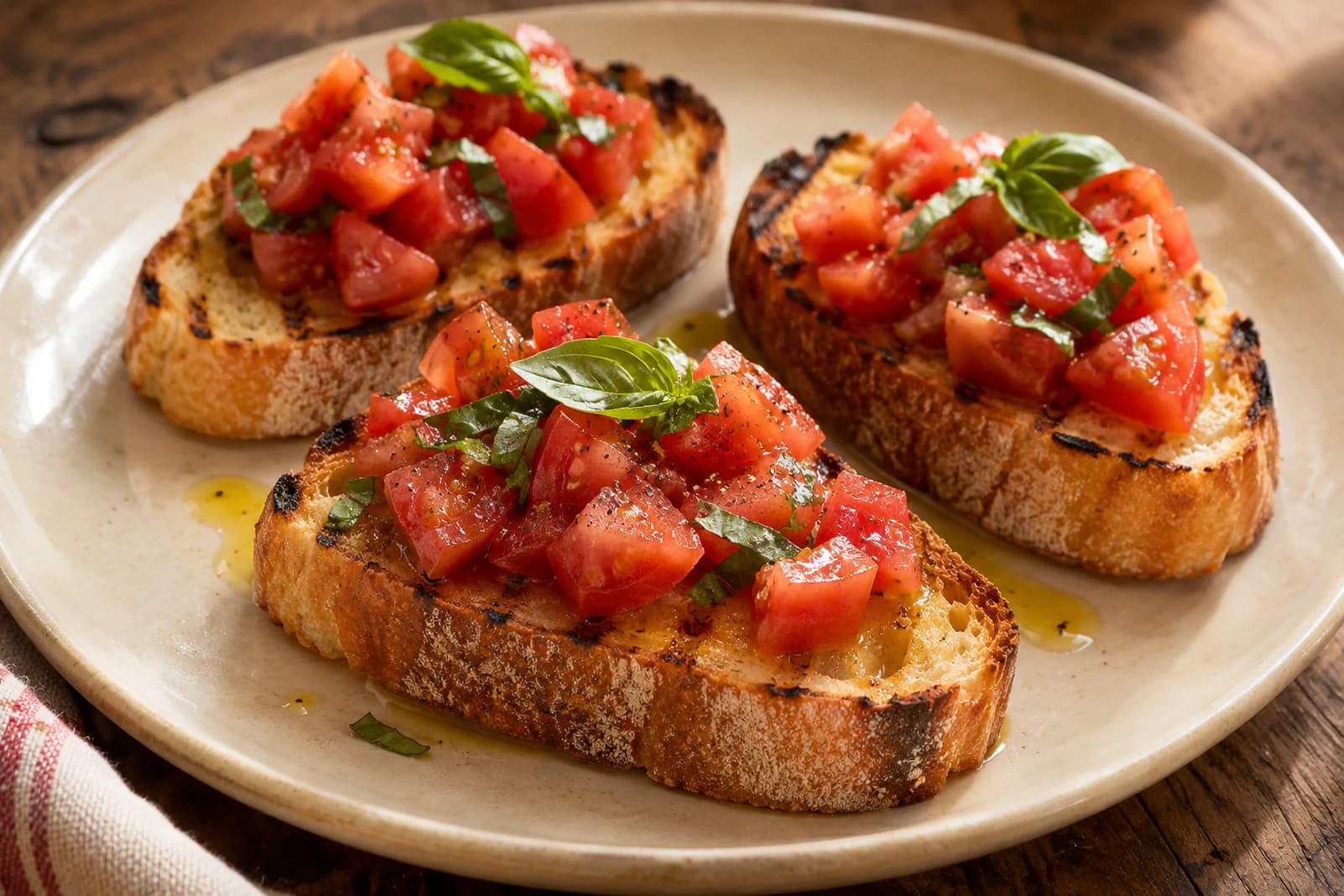
What is bruschetta, and what does the name mean?
Bruschetta is an Italian antipasto of grilled or toasted bread dressed with garlic, olive oil and salt. Tomatoes, vegetables, beans, cured meat or cheese go on top. The bread is part of the dish, so a bowl of chopped tomato sold by itself is only the topping.
The name comes from bruscare, a verb in the Roman dialect meaning to toast or roast over coals. The Italian pronunciation is broo-SKET-tah, with a hard “k” sound; American dictionaries also list a “sh” version. Plural bruschette is the Italian form and appears on some menus. Another Italian name for it is schiena d’asino, “donkey’s back,” and cooks sometimes use crostini or fettunta as near-synonyms. In a US restaurant you will see Bruschetta, Bruschette or Bruschetta Board.
Food writers trace the idea to ancient Rome, where a bread called clustrum was handed out at festivals such as Saturnalia, and bread with fresh olive oil is probably nearly as old as olive oil itself. Elizabeth David described bruschetta in English in 1954, noting that people in the olive-growing districts of Tuscany and Umbria ate it with newly made oil. In the United States the word also names a jarred tomato topping, a meaning Italian does not have.
What does bruschetta taste like?
Tomato bruschetta tastes bright, garlicky and lightly oily. Ripe tomatoes supply the acidity, and basil adds an herbal note. Garlic rubbed on the warm toast gives a sharp, savory edge, while salt draws the tomato flavor forward and olive oil softens the acidity.
The texture is a contrast between crisp toast and a soft, wet topping. The bread is crunchy at the edge and chewy inside. Tomato juice gradually softens it, which is why the bread is toasted firmly and why bruschetta tastes best soon after it reaches the table.
Most bruschetta is savory and mild, with no chile heat. Cheese toppings add creamy richness, and cured meats add a saltier bite. Pesto brings basil, hard cheese and pine nuts or walnuts. Toppings with dates, fig spread or apple turn noticeably sweet. For a familiar comparison, tomato bruschetta is closer to garlic toast with a fresh tomato salad on top than to a pizza slice.
Bruschetta ingredients and the toasted bread base
The basic ingredients are bread, garlic, extra-virgin olive oil and salt. Extra-virgin is the highest grade of olive oil, made from the first pressing without refining. Tomato versions add chopped tomatoes and usually basil. Pesto combines basil, garlic, olive oil, hard cheese and pine nuts, with walnuts as one alternative. Mascarpone is a soft cream cheese used as a mild, rich spread, and ricotta is a softer fresh cheese. Both add milk to the ingredient list.
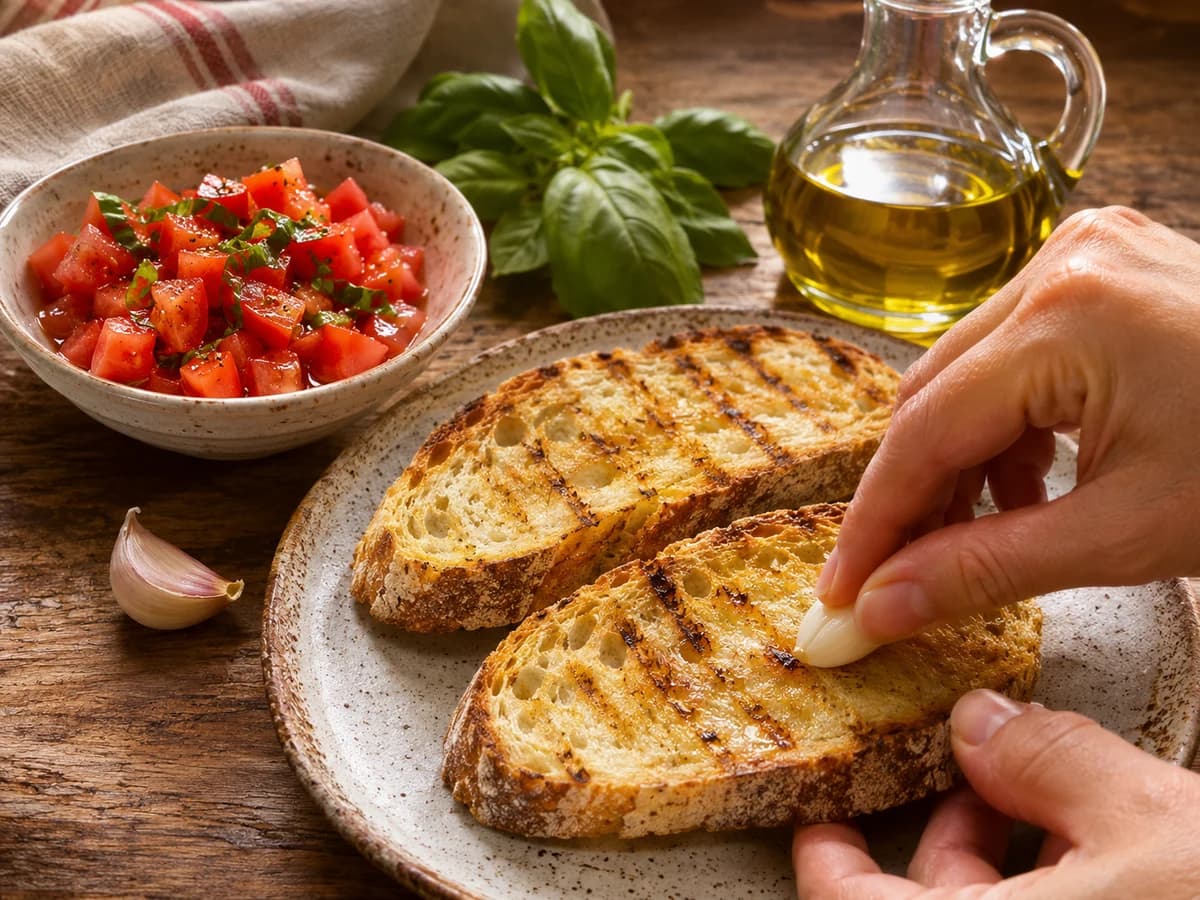
Toasting or grilling firms and browns the bread before the topping goes on; in Italy this is often done over a grill. Rubbing a cut garlic clove across the rough warm surface spreads garlic flavor without making a thick spread. Chopped tomatoes then add their own juice. Keeping that moisture under control protects the contrast between crisp toast and soft topping.
Versions differ by setting. A restaurant serves the toast with the topping already on it. In parts of Italy the bread is served with only oil and salt. Packaged versions work the other way: a 9.88-ounce US jar holds tomato, olive oil, garlic and basil as a topping, and you supply the toast. A catering platter is cut into small pieces, so one toast becomes several bites.
American bruschetta boards and topping combinations
The classic version is tomato, basil and garlic on toasted bread. American menus go well beyond it: mozzarella with tomato and basil, mushroom with mascarpone, Brie with apple and fig spread, ricotta with date and pistachio, and smoked salmon with pesto. Prosciutto with fig and mascarpone and salami with pesto are the cured-pork options.
Italy has its own regional versions. In Tuscany, fettunta (“greasy slice”) is usually served without a topping, especially in November, so people can taste the season’s first oil. In Abruzzo, ventricina, a spiced raw pork paste, is spread on bread that is sometimes grilled, a way to use stale bread. In Campania the tomato version is the most popular and is eaten when tomatoes are in season; other toppings there include anchovy and butter, garlic beans, bottarga and truffle.
In the United States you meet three forms. A restaurant appetizer comes with one or a few toasts. A board mixes several toppings on the same bread base. At the grocery store, jarred tomato bruschetta is sold as a topping for toast. A cheese-and-fruit topping may break some diners’ vegetarian rules, and a salmon topping makes the dish a fish dish.
Eating bruschetta while the bread stays crisp
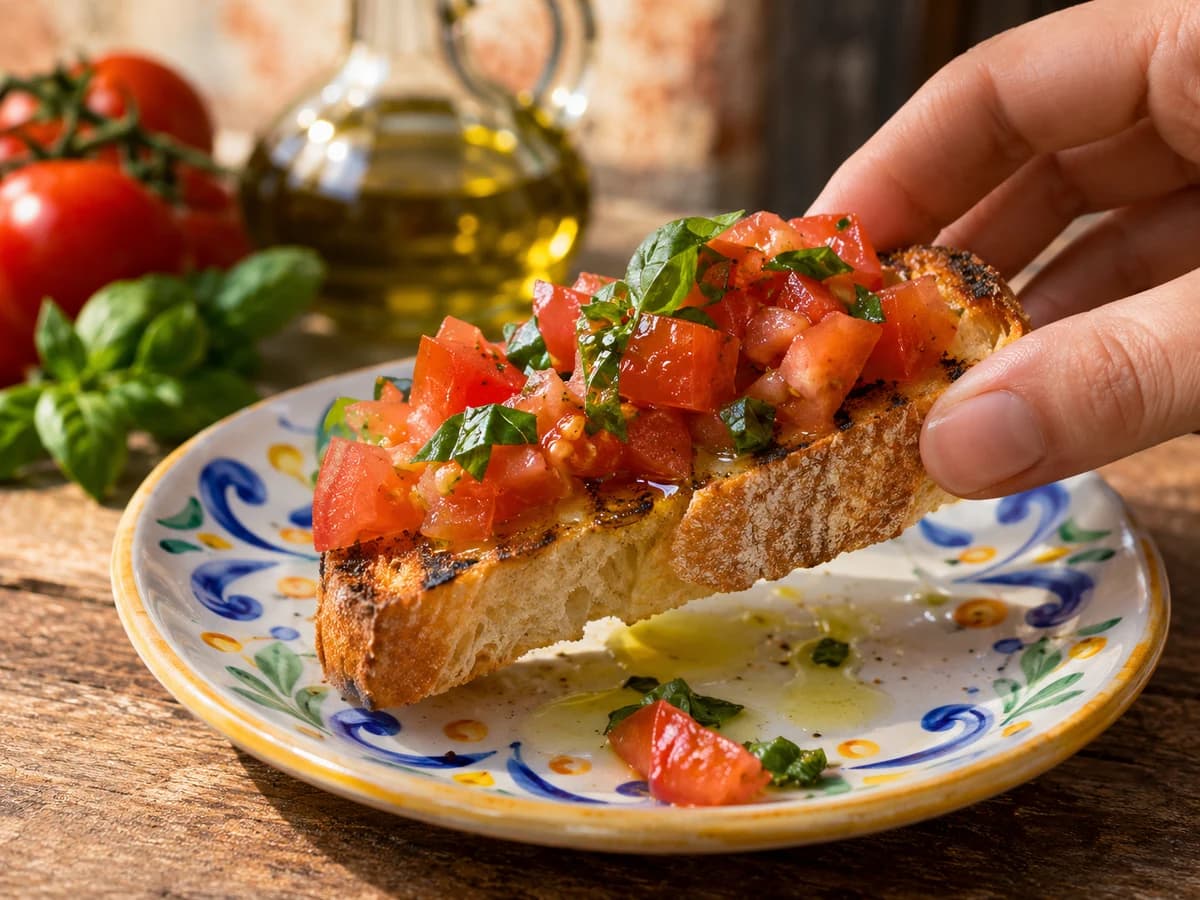
Bruschetta is an antipasto, a starter served before the main course, and it is normally finger food. Pick up a manageable piece and hold it level so the topping stays on the bread. If it is piled high, a knife and fork helps divide it without losing the tomatoes.
Olive oil and salt are already part of the dish, so it needs no dipping sauce. A board is meant to be shared at the table, and pairing it with a salad or another appetizer makes it part of a meal. When sharing, move your chosen pieces onto a small plate before biting so the topping does not drop.
Timing matters. Tomato juice and moist cheese soften the toast over time, so eat it soon after it is served. A soaked toast loses the contrast that defines the dish. For takeout, keeping the wet topping separate until you eat is the way to preserve a crisp base.
Ordering a bruschetta board in the United States
Look for Bruschetta, Bruschetta Board or a named topping under appetizers. The plural Bruschette may appear, and crostini sometimes describes a similar small toast. A name such as “Tomato Bruschetta” points to the classic; names with cheese, meat or fish in them change the allergen list.
Count matters more than weight. One US catering platter has 12 bruschette cut into 48 small pieces, which is different from 48 full toasts, and that is a catering format rather than a standard appetizer. Ask the number of toasts or pieces to see how many people a plate serves.
A board is usually a starter to share, and some places let you mix toppings on one board; ask whether flavors can be mixed. A shared board pairs well with a salad or another appetizer when you want a meal. For takeout, ask for the topping packed separately so the toast stays crisp.
Bread, cheese, nuts and smoked-fish considerations
Ordinary bruschetta contains wheat from the bread. Cheese toppings contain milk, salmon contains fish, and pistachio or pesto can add tree nuts, including pine nuts or walnuts. At one large US chain, Tomato Bruschetta is marked for milk, tree nuts and wheat/gluten. Mascarpone and ricotta are also milk products. Ask about the bread, spreads and shared preparation for an allergy.
Plain tomato bruschetta has no meat, but cheese, cured pork and salmon toppings do not fit a vegetarian or vegan diet, and pesto traditionally includes hard cheese. A vegan order needs the exact topping and bread confirmed. Gluten-free bread on the menu does not make the kitchen gluten-free: the FDA says to ask how a restaurant prepares the food, because shared surfaces and toasters can carry wheat, and swapping the bread alone leaves that risk in place.
During pregnancy, choose pasteurized soft cheese and avoid refrigerated smoked seafood unless it is in a thoroughly cooked dish. Toasting the bread does not cook a cold salmon topping. Choose deli-meat toppings reheated until steaming hot. Refrigerated ready-to-eat meat and smoked fish can carry Listeria even when the bread underneath is freshly toasted, and Listeria can still grow in the refrigerator.
Which should you order?
Choose tomato and basil for acidity and a fresh herb aroma, mushrooms and mascarpone for a soft creamy topping, or ricotta, date and pistachio for a sweet-salty combination with crunch.
A useful question for the restaurant
How many bread pieces are on the board, which toppings contain dairy or nuts, and can we choose the flavors?
Ordering suggestions reflect taste preferences, not a guarantee about the restaurant’s ingredients.
Common questions
How many calories are in bruschetta?
One serving of Tomato Bruschetta at a large U.S. chain has 770 calories. That version includes ricotta and pistachio pesto, so a tomato-only serving can differ substantially in calories.
Is bruschetta vegan?
The basic garlic, olive-oil and tomato version can be vegan when the bread also uses plant ingredients. Many American boards include cheese, cured meat or fish, so the topping name and the bread recipe both matter.
Is bruschetta gluten free?
No, the usual wheat-bread version is not gluten free. A bread substitution also needs a gluten-free topping and preparation that avoids crumbs and shared surfaces.
Does bruschetta have cheese?
Sometimes. Garlic, olive oil and tomato bruschetta can be made without cheese, while mozzarella, ricotta, Brie and mascarpone are common topping choices.