
What Is Prosciutto? Crudo, Cotto and How to Eat It
What is prosciutto, and should I order crudo or cotto?
Prosciutto is Italian ham, usually meaning thinly sliced, dry-cured prosciutto crudo on American menus. It tastes salty and gently sweet, with soft fat and a supple bite. Prosciutto cotto is a different, cooked ham. Choose crudo for a delicate antipasto or melon pairing, and cotto for a milder, moist sandwich filling.
What is prosciutto?
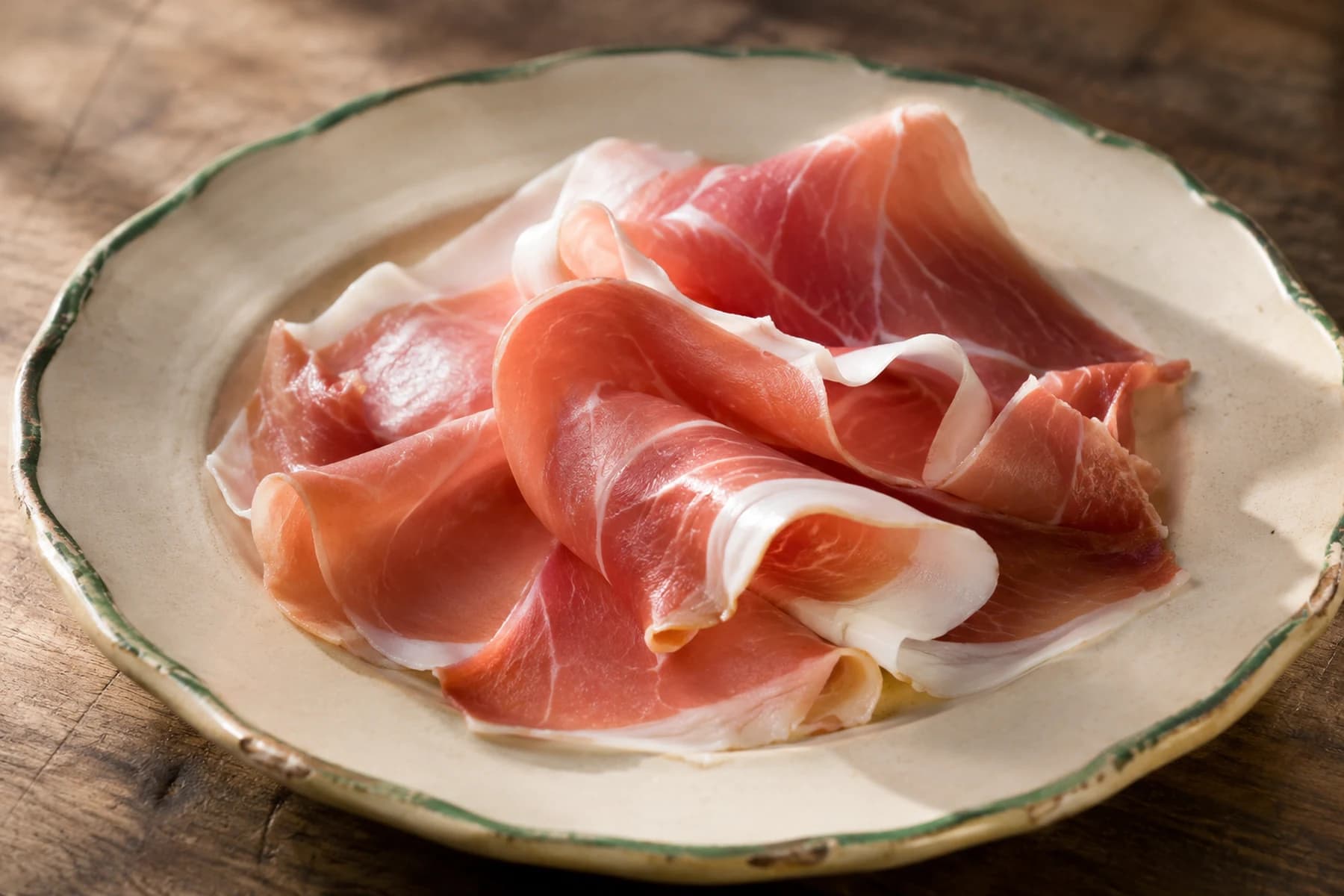
Prosciutto is the Italian word for ham, and on American menus it usually means prosciutto crudo: a pork hind leg that is salted and air-dried until it can be eaten raw, then sliced paper-thin. The slices are deep red to salmon pink with streaks of white fat. Prosciutto cotto, the cooked ham, is a different product with its own label.
It is pronounced pruh-SHOO-toh. The word comes from asciutto, meaning dry, a reference to the drying step in its making. Left unqualified in Italian, prosciutto means the raw dry-cured ham, while cotto marks the cooked version and affumicato the smoked one. Menus write it as prosciutto crudo, prosciutto di Parma, Parma ham, or inside a dish name such as prosciutto e melone.
Villagers dried pork legs to stretch their meat supply through the winter, a practice that dates to pre-Roman times, and the Parma area has a Roman tradition of drying pork legs for preservation. The name Parma Ham has been a protected designation of origin since 1996 and is reserved for hams that carry the five-point Ducal Crown brand. Plain prosciutto on a menu does not name a region.
What does prosciutto taste like?
Prosciutto crudo tastes salty and gently sweet, with a concentrated pork flavor. The salt comes from the curing. As the ham dries it loses more than a quarter of its weight in moisture, which concentrates the flavor, and Parma ham is described as full-bodied with a silky texture. The lean meat reads as sweet yet salty, and the fat melts on the tongue.
Sliced paper-thin, the white fat softens quickly while the rosy lean part stays supple and slightly chewy. Parma ham is served at room temperature, and its distinctive aroma develops during the salting and aging. A thick fold stacks several layers of lean meat together and feels chewier than a single flat slice.
Prosciutto is not ordinarily chili-hot. Some versions are seasoned with black pepper, garlic, juniper, or rosemary. Longer aging makes the flavor more complex, and San Daniele, made at higher altitude in Friuli Venezia Giulia, is described as darker and sweeter. Cotto is bright pink, lighter in flavor and cut into tender, moist slices closer to deli ham; it is sometimes seasoned with herbs, spices, or truffle.
Prosciutto ingredients and curing
Prosciutto di Parma uses only two ingredients, pork hind leg and pure sea salt, with no colorings or preservatives such as nitrites or nitrates. A U.S. packaged prosciutto lists pork ham, salt, less than 2% sugar, sodium nitrate, sodium nitrite, sodium ascorbate, natural flavorings, and a lactic acid starter culture; nitrate and nitrite are curing agents.
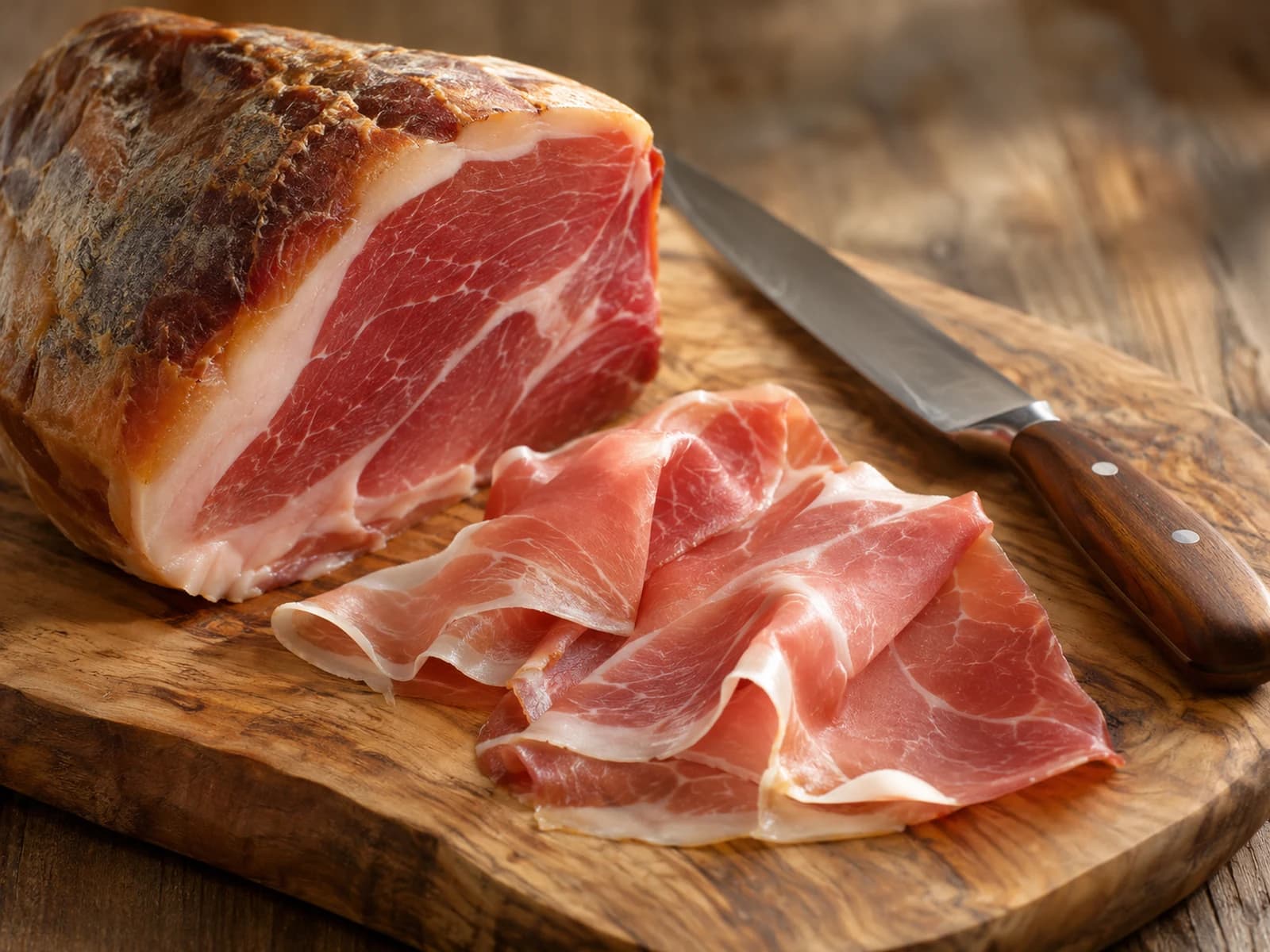
The legs are covered in salt and rested for a few weeks, and the salt draws out blood and moisture. They are then washed, seasoned by hand, and dry-aged under controlled conditions for 14 to 36 months. Curing is controlled so the ham absorbs only enough salt to preserve it, and the trimmed ham loses more than a quarter of its weight, which is why the flavor is so concentrated and the meat tender.
Cotto follows a separate path: it is slowly cooked at controlled temperatures and sometimes brined or seasoned with herbs, spices, or truffle. Younger crudo is used for cooking in dishes such as pasta and pizza, and longer-aged ham is saved for eating on its own. One 1 oz (28 g) serving of the packaged ham has 340 mg of sodium.
Crudo, cotto and restaurant combinations
Crudo is the raw, dry-cured ham served as an antipasto with melon, cheese, or breadsticks. Cotto is the cooked ham, often used in a panino, the Italian word for a sandwich. Affumicato is smoked prosciutto. Fresh ham that is not cured at all is a separate product, cooked whole or in pieces, for example braised.
Within crudo, regional names matter. Prosciutto di Parma DOP is made entirely in the province of Parma. San Daniele DOP comes from Friuli Venezia Giulia, Toscano is the Tuscan variety, and Modena and Carpegna are other named hams. Italian rules separate protected regional hams, with set areas, timing, methods, and aging, from other dry-cured hams sold as nostrano or di montagna.
American menus pair prosciutto with burrata, a fresh cheese from Puglia whose stretched mozzarella shell holds cream-soaked stracciatella, often with roasted asparagus and a lemon vinaigrette. It also appears on pizza, in pasta, and in sandwiches, and sliced packs sold in U.S. stores can carry the Ducal Crown logo in a black triangle on the front.
Eating thin slices with melon or bread
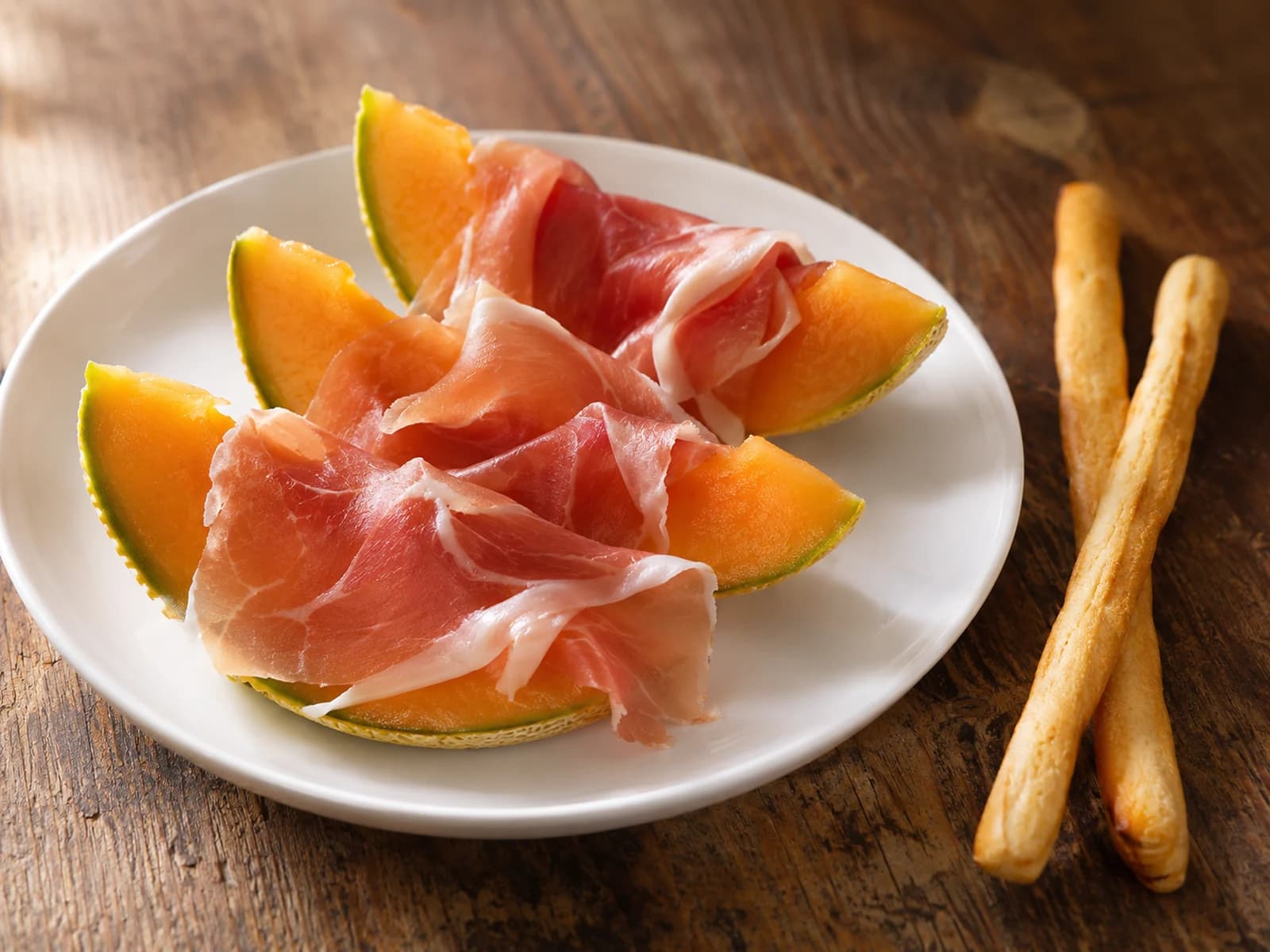
Prosciutto crudo is served in paper-thin slices at room temperature, and the band of white fat is meant to be eaten because it balances flavor and texture. A classic antipasto is three or four slices with Italian cheese and bread. The slices are also wrapped around breadsticks, lightly cooked asparagus, or grilled shrimp.
Fruit is the traditional partner: melon, fresh figs, ripe pears, papaya, pineapple, or kiwi. On greens it is served in slivers with Parmigiano-Reggiano curls, and in a panino it goes with mozzarella, tomato, and olive oil. White wine is the usual drink; floral white wines go with crudo, and crisp white wine with cotto. Diced prosciutto is also stirred into pasta, rice, risotto, or peas, or sautéed with onion, carrot, and celery as a flavor base.
On pizza, burrata is torn over the pie right after it leaves the oven, and prosciutto goes well with tomatoes and arugula there.
Ordering prosciutto on an American menu
Menu words to know: prosciutto crudo is the raw dry-cured ham and prosciutto cotto the cooked one. Prosciutto e melone is ham with melon, prosciutto e mozzarella adds a fresh milk cheese, and prosciutto e burrata pairs it with the creamy cheese. Parma ham is the protected name for hams carrying the Ducal Crown, so it is narrower than plain prosciutto. Ask whether the menu means crudo or cotto, because raw cured and cooked ham are handled differently in pregnancy.
No fixed weight applies to a menu portion. The classic antipasto is three or four slices with cheese and bread, and a charcuterie board is a selection of cured meats with accompaniments rather than a plate of prosciutto alone. Ask whether the ham is its own appetizer, part of a board, or a pizza topping, and how many people the portion serves.
Prosciutto is usually ordered with melon, burrata, asparagus with lemon vinaigrette, breadsticks, or cheese, or as a topping on pizza with arugula. If a dish has cheese or bread you want to skip, you can ask for the ham plated on its own, and ask what else is on the plate.
Gluten, allergens and cold-cured meat
Plain Parma ham is gluten free, but an ordinary prosciutto sandwich or pizza is not, because the bread or crust contains wheat; breadsticks are also a wheat product. Cheese adds milk, a charcuterie board may include tree nuts, prosciutto wrapped around fish contains fish, and a shrimp-wrapped version contains crustacean shellfish. At one U.S. pizza chain, the Prosciutto Arugula pizza lists milk and wheat in its allergen table. FDA lists milk, eggs, fish, crustacean shellfish, tree nuts, peanuts, wheat, soybeans, and sesame as the major allergens.
Prosciutto is pork, so it is neither vegetarian nor vegan. Parma ham contains only pork and salt, but packaged prosciutto can list added sugar, sodium nitrate, sodium nitrite, natural flavorings, and a starter culture, so read the label. For gluten, FDA allows a gluten-free label only for food under 20 ppm, and a restaurant dish is only as gluten free as its other ingredients and preparation.
During pregnancy, avoid cold deli meat unless it is reheated until steaming hot, because of Listeria risk; dry curing does not make crudo a cooked meat. Ask about shared slicers and preparation surfaces if cross-contact with an allergen matters, and ask for the packaged label when buying sliced ham to take home.
Which should you order?
Choose prosciutto crudo with melon if you enjoy salty meat against juicy sweetness, or with burrata for a creamy, richer pairing. Cotto gives a softer, milder ham flavor in a sandwich. For a first antipasto, three or four thin slices with bread are a useful portion reference; a mixed board also includes other foods.
A useful question for the restaurant
Is this prosciutto crudo or cotto, and does the plate include cheese, nuts or bread?
Ordering suggestions reflect taste preferences, not a guarantee about the restaurant’s ingredients.
Common questions
How many calories are in prosciutto?
USDA lists prosciutto at 195 kcal per 100 g (FDC 2705879). One thin slice is about 9.2 g, so a three- to four-slice antipasto portion is roughly 55 to 72 kcal; a U.S. packaged product lists 50 kcal per 1-ounce (28 g) serving. Cheese, bread, and other additions raise the total.
Is prosciutto spicy?
Usually no. Parma prosciutto is cured with pork and salt, without chili; any heat on the plate can come from a separate condiment.
What does prosciutto taste like?
It tastes salty and gently sweet, with concentrated pork flavor and fat that softens on the tongue. Ripe melon adds a separate juicy sweetness to the pairing.
Is prosciutto gluten free?
Plain Parma prosciutto is gluten free; an ordinary wheat-bread sandwich is not. For packaged foods, a gluten-free label requires less than 20 ppm gluten under the FDA definition, which is a separate issue from milk or nuts added to a ham board.