
Caprese Salad: Tomato, Mozzarella, and Basil
What is caprese salad, and what is in it?
Caprese salad is sliced fresh mozzarella, tomato, and basil with salt and extra-virgin olive oil. The red, white, and green plate comes from Capri, Italy, and it works as a starter or a light side dish. One serving has 124 calories in the version used here, and the standard version contains milk but no gluten ingredient.
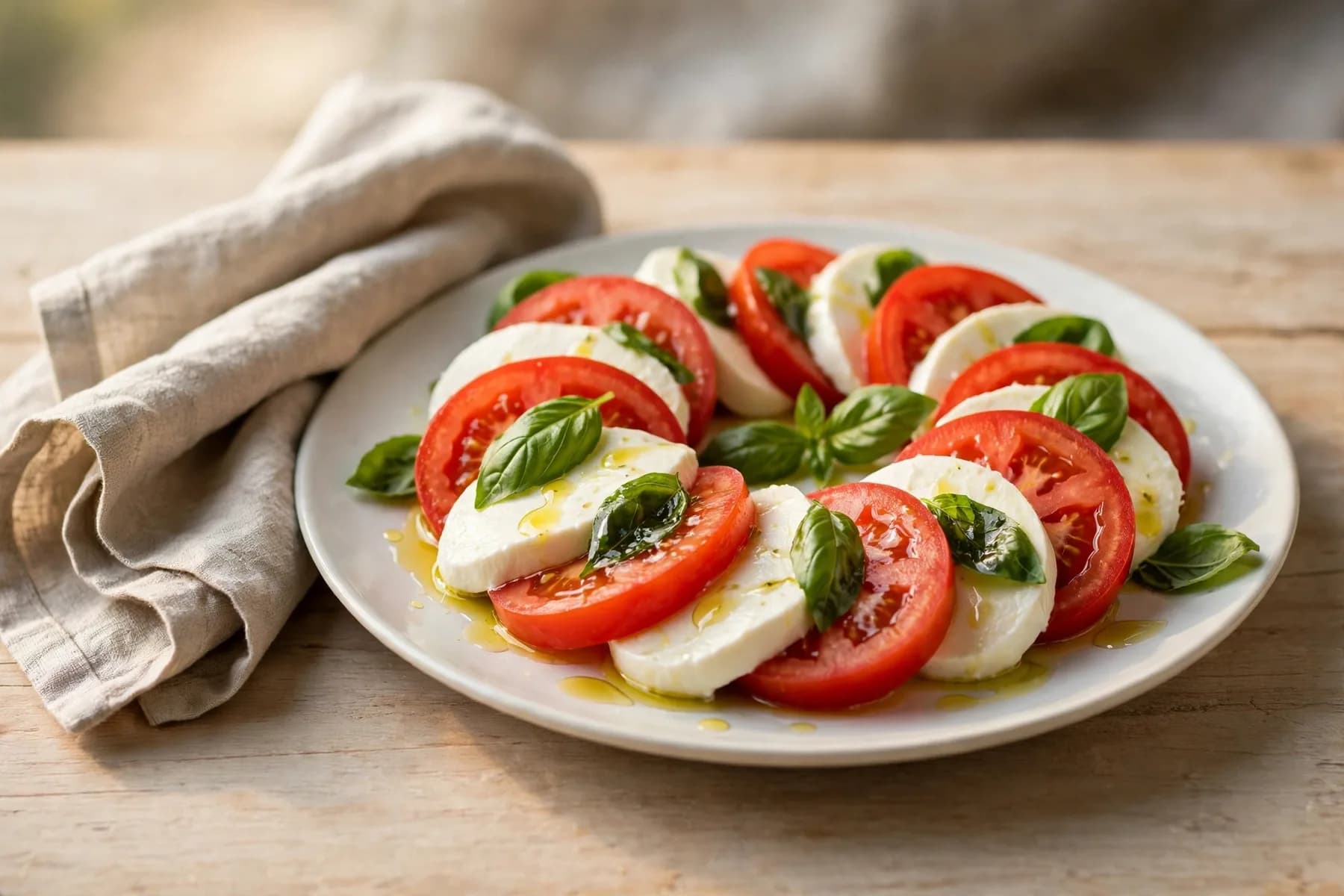
What it is
Caprese salad, or insalata caprese, is a cold Italian salad of sliced fresh mozzarella, ripe tomatoes, and basil leaves, seasoned with salt and finished with extra-virgin olive oil. Balsamic vinegar or a balsamic glaze appears in some versions, while the traditional Italian version uses olive oil alone. In Italy you usually meet it as an antipasto, a small first course.
The name points to Capri, an island in the Bay of Naples in Campania, where the salad is believed to have begun. Caprese means from Capri, and the red tomato, white mozzarella, and green basil match the colors of the Italian flag. One account says the colors were a deliberate patriotic gesture.
Several accounts tell the origin differently. One version places the salad at a dinner on Capri in 1920, where a chef served it as a light dish for the poet Filippo Tommaso Marinetti. Another version credits a builder from Capri who filled a sandwich with tomato, mozzarella, and basil during a lunch break in the late 1930s. The salad spread widely in the 1950s, when visitors to Capri carried it home.
What it tastes like
Ripe tomato brings sweetness and a bright acidity, and fresh mozzarella answers with a soft, milky flavor. Basil adds a fresh, peppery note with a slight licorice bite, and good olive oil adds a fruity richness that ties the plate together. Salt sharpens the tomato, and a little black pepper adds warmth at the edges.
Texture matters as much as flavor. Fresh mozzarella holds a high moisture content, so it feels soft and delicate against the juicy tomato, and the basil leaf stays tender on top. Mozzarella tastes best at room temperature, so cheese eaten straight from the refrigerator loses some of its delicate flavor.
The two cheese choices change the balance. Buffalo mozzarella tastes saltier and firmer, while fior di latte, made from cow milk, tastes more delicate. A balsamic glaze adds a sweet, tangy layer that the olive-oil-only version lacks, and a little oregano gives a warm, herbal note in place of basil.
How it is made
A classic plate needs ripe tomatoes, fresh mozzarella, basil leaves, extra-virgin olive oil, salt, and black pepper if you like it. Buffalo mozzarella, made from water buffalo milk, is the traditional choice in Campania, while fior di latte, made from cow milk, is the common alternative. Leave low-moisture mozzarella blocks made for pizza out of this salad.
Wash the tomatoes and the basil leaves, pat the basil dry, and let the mozzarella drain well after you take it from its water. Slice the tomato and the mozzarella, salt the tomato slices lightly, and let them rest briefly so they release some water. Then alternate tomato, mozzarella, and basil on a serving dish and drizzle the olive oil over the top just before serving.
The traditional Italian plate stops there, with olive oil as the only dressing, since vinegar is held to spoil the delicate flavor of fresh mozzarella. In the United States a balsamic glaze is a common addition, and bottled balsamic vinaigrette or pesto sometimes appears on top. A packaged version roasts the tomatoes and adds spinach and garlic, and its label lists milk as the only allergen.
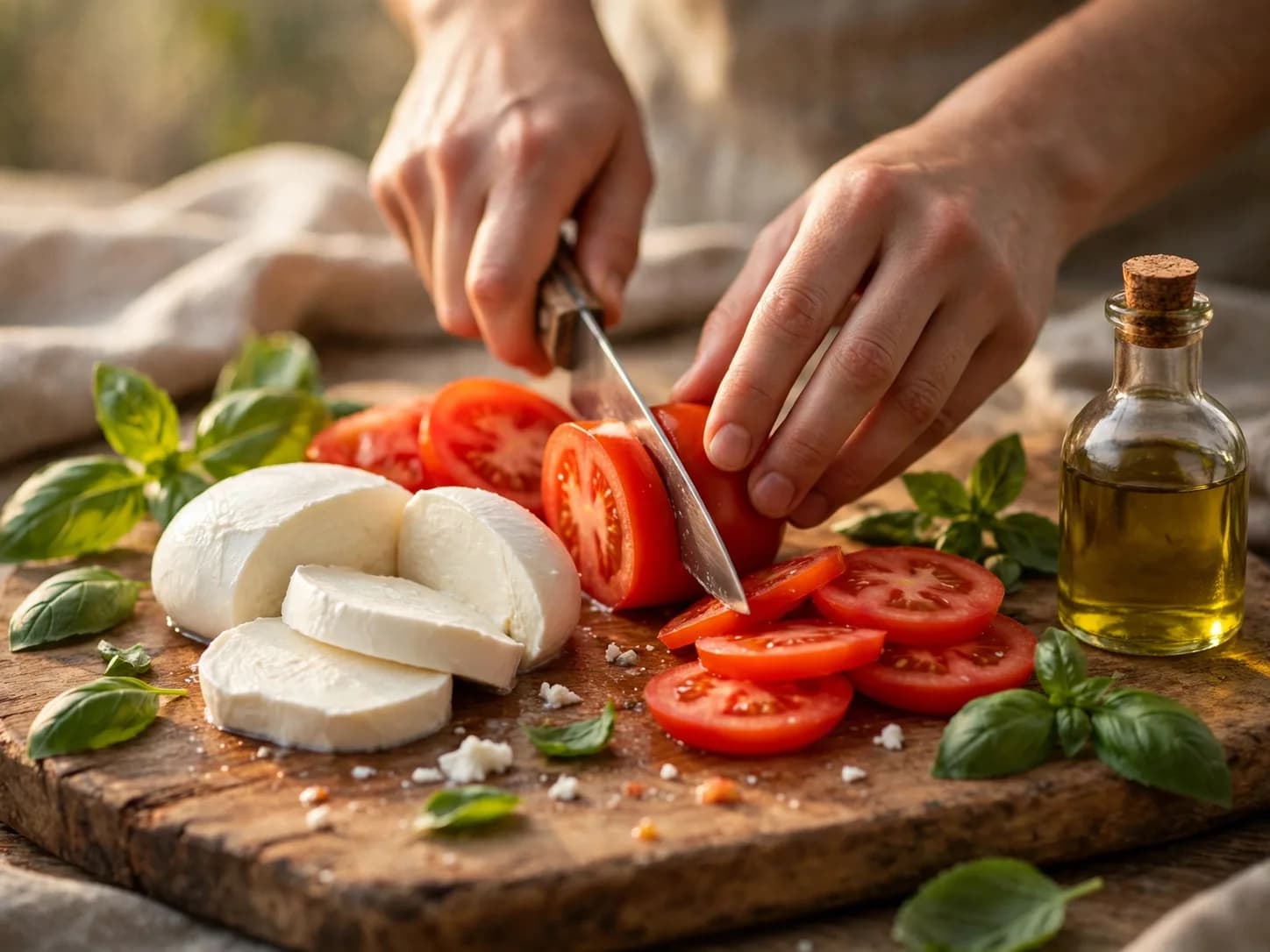
Versions you will meet
The classic plate alternates full slices of tomato and mozzarella on a serving dish, with a basil leaf between each pair. A bite-size version pairs cherry tomatoes with small mozzarella balls called ciliegine, and it suits a single portion or a party platter. Burrata makes a richer version, though it is much softer than mozzarella and keeps its shape poorly on a sliced plate.
Home versions in Italy sometimes add oregano, olives, chili peppers, or garlic. Oregano grew popular on Capri in the 1990s, and one Italian source advises using basil or oregano, since the two aromas cover each other when they share a plate.
In the United States the same flavors appear as skewers, as single portions served in a glass, and as a pasta salad. The tomato and mozzarella pairing also fills sandwiches and tops pizza, and in Argentina it fills empanadas. Supermarkets sell prepared versions too, including a roasted tomato version with spinach, garlic, and a white balsamic dressing.
How to eat it
In Italy the salad opens a meal as an antipasto, while in the United States it works as a side dish, a light lunch, or a whole plate on a hot day. Eat it soon after it is assembled, since the tomato and mozzarella release water after a few hours and the plate turns watery. Take tomato and mozzarella together in one bite.
Balsamic glaze, balsamic vinaigrette, or pesto can top the plate when you want more than olive oil, and a little extra salt goes on the tomato before assembly rather than on the cheese. At a barbecue the salad sits beside grilled food as a cool side dish.
Keep the basil whole or tear it by hand, since chopping it or swapping in pesto changes the dish. Add the basil, the oil, the salt, and the pepper just before serving, because basil wilts and darkens once it sits, and the tomato releases juice that pools on the plate.
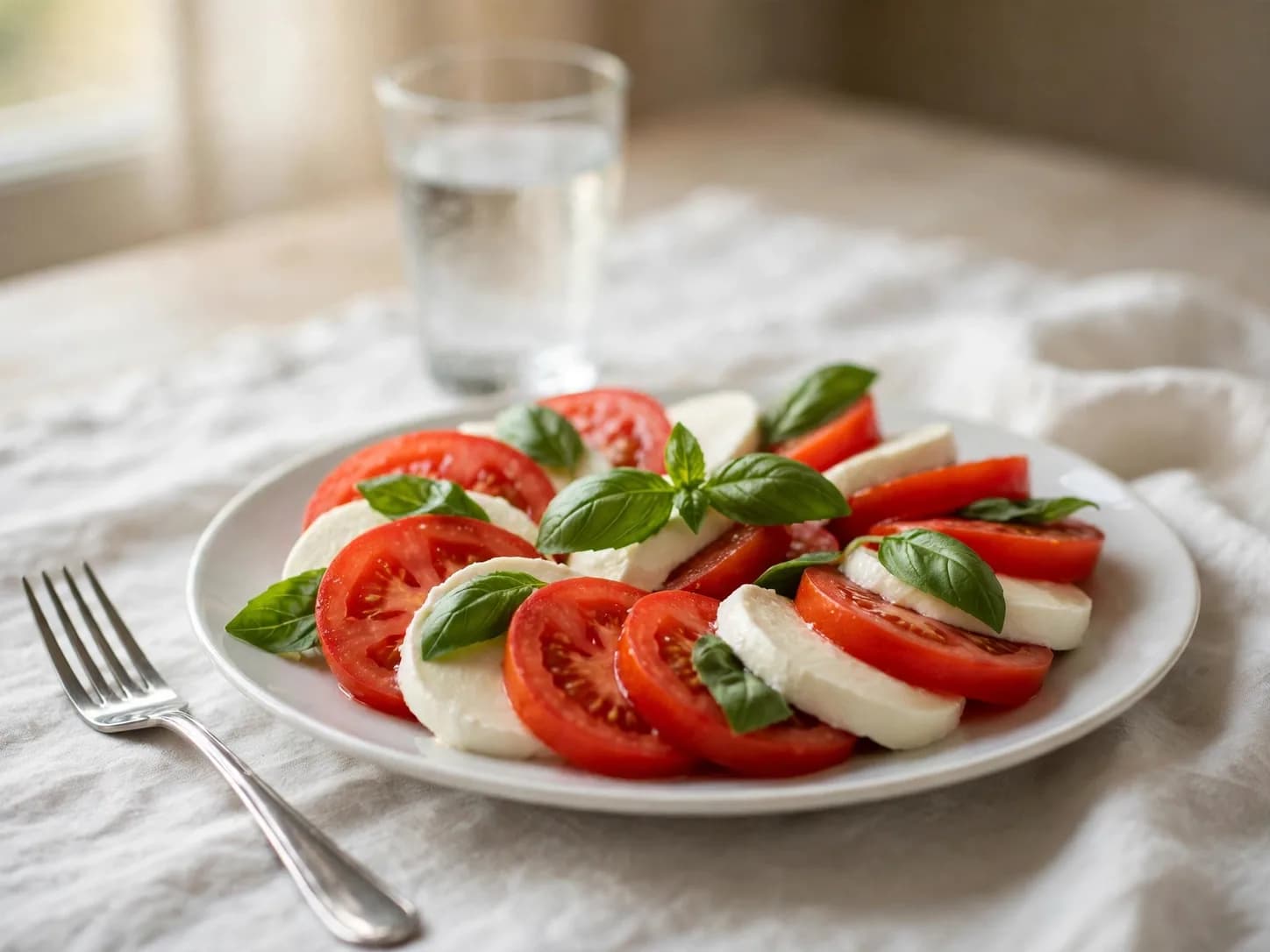
How to order it
Look for insalata caprese, caprese salad, or tomato and mozzarella salad on a menu. Burrata caprese means the kitchen swaps burrata for mozzarella, and caprese skewers mean bite-size tomato and mozzarella balls on sticks. Insalata tricolore is a different salad: it shares the flag colors but takes its green element from any green vegetable, while caprese always uses basil.
A full platter serves four people as a shared starter, and a single glass or a set of skewers serves one person. As a side dish, one portion goes with a main course, and as a light lunch, a whole plate works on its own.
You can ask whether the plate comes with balsamic glaze or olive oil only, and whether the cheese is mozzarella or burrata. You can ask for the balsamic on the side, so you can add as much as you like. If you avoid milk, tell your server before you order, since mozzarella sits at the center of the dish and a swap changes the plate.
Allergens and safety
Milk is the allergen to watch: fresh mozzarella is a milk cheese, and a packaged roasted tomato version lists milk as its only allergen. The standard plate has no egg, fish, shellfish, tree nut, peanut, wheat, soy, or sesame ingredient in it. Toppings and bottled dressings can change that picture, so a pesto topping or a house dressing deserves a look at its own label.
The standard plate contains no meat, and its only animal product is the cheese. It is not vegan as served, since mozzarella comes from milk. A vegan version swaps in a nut-based mozzarella, such as a macadamia version that slices like fresh mozzarella, though that swap brings tree nuts into the dish. The standard version has no wheat ingredient, so it carries no gluten ingredient of its own, while bread or croutons served beside it do.
Wash the tomatoes and basil under running water before you eat them, and skip soap or produce wash, since the FDA advises against both. Keep perishable produce in a clean refrigerator at 40°F or below, and keep the salad away from raw meat. Assemble the salad just before serving, and refrigerate leftovers: one Italian version keeps an assembled salad for one day, while another version keeps leftovers for up to two days, and either way the plate turns watery with time. Children, older adults, pregnant women, and people with weakened immune systems face higher risk from foodborne illness, so they should take extra care with raw produce.
Which should you order?
Choose the classic plate when you want tomato, mozzarella, and basil with olive oil alone. Choose a version with balsamic glaze when you want a sweet, tangy finish. Choose burrata when you want a softer, creamier center, and choose the bite-size skewers when you want a single portion at a party.
A useful question for the restaurant
Does this come with balsamic glaze or olive oil only, and is the cheese mozzarella or burrata?
Ordering suggestions reflect taste preferences, not a guarantee about the restaurant’s ingredients.
Common questions
How many calories are in a caprese salad?
One serving has 124 calories. The serving comes from a version that makes 12 servings from three tomatoes and one pound of fresh mozzarella, and it has 238 mg of sodium. A packaged roasted tomato version has 180 calories per 100 grams, so the number moves with the cheese, the oil, and the portion.
What are the ingredients in a caprese salad?
Ripe tomatoes, fresh mozzarella, basil, extra-virgin olive oil, salt, and pepper make up the classic plate. The tomatoes Italians reach for most often are large, round cuore di bue tomatoes, close to an American beefsteak tomato, while cherry and vine tomatoes are the ones used most often outside Italy. A homemade balsamic glaze adds honey to the vinegar, and a packaged version uses roasted tomatoes with garlic, spinach, and white balsamic vinegar.
Is caprese salad gluten free?
Yes, the standard version is gluten free. No ingredient in it comes from wheat, and the packaged version's ingredient list runs tomatoes, mozzarella, spinach, basil, and white balsamic vinegar. A vegan version made with macadamia mozzarella is gluten free and grain free too.
Is caprese salad vegan?
No, the standard version is not vegan. A vegan version swaps in a macadamia mozzarella made from soaked raw macadamias, plant milk, tapioca, coconut oil, and agar agar, which sets into a sliceable cheese. One vegan version serves four to six people as a side dish, and its leftovers keep for a few days in an airtight container in the refrigerator.
Can I make caprese salad in advance?
Yes, you can slice the tomatoes and mozzarella up to one day in advance and store them separately in the refrigerator. A balsamic reduction keeps much longer: you can make it up to two weeks in advance and keep it in an airtight container in the refrigerator, then let it warm to room temperature before drizzling. Leftover assembled salad goes into an airtight container in the refrigerator, though it turns watery after a day.
What is the difference between caprese salad and insalata tricolore?
Basil is what sets the two apart. Both salads show the red, white, and green of the Italian flag, and that shared look is why they get mixed up, while a tricolore takes its green from any green vegetable and a caprese takes it only from basil. The same tomato, mozzarella, and basil trio also turns up lightly cooked in sauces for gnocchi or ravioli.