
What Is Limoncello? Lemon Ingredients, Taste and Alcohol
What is limoncello, and what does it taste like?
Limoncello is a sweet Italian lemon liqueur made by infusing alcohol with lemon peel and adding sugar and water. It tastes intensely citrusy, with sweetness and alcoholic warmth, and is usually served chilled in a small glass. Crema adds dairy, while a spritz mixes limoncello with sparkling wine and soda.
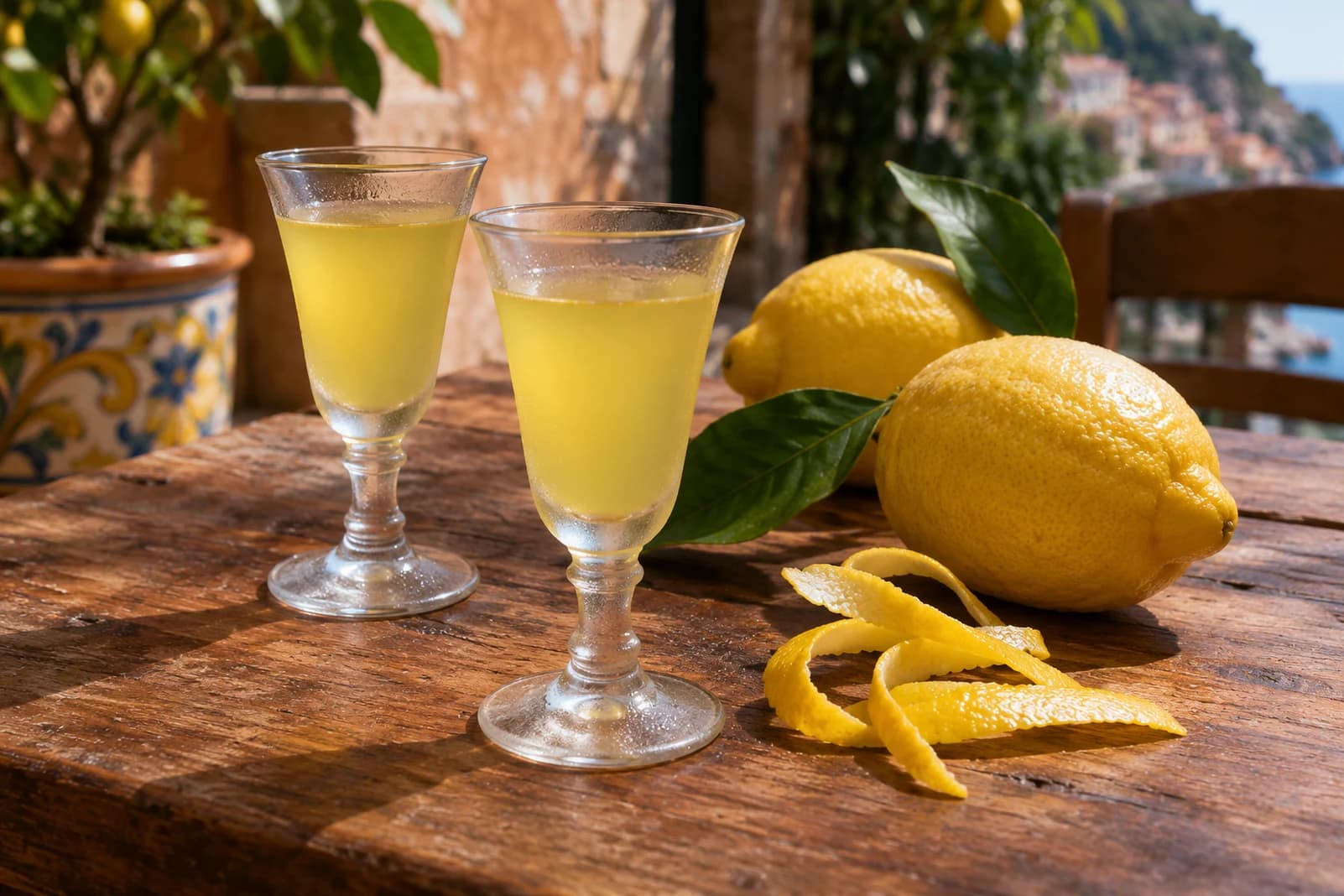
What is limoncello?
Limoncello is a sweet Italian liqueur flavored with lemon peel. Alcohol is infused with the peel, then sugar and water are added, and the result is poured in a small glass, usually well chilled. Producers link it to southern Italy and the Amalfi Coast, and bottled examples list 26% and 27% alcohol by volume (ABV).
Say “lee-mohn-CHELL-oh.” The name is limone, Italian for lemon, plus the diminutive ending -cello. Related liqueurs copy the pattern: arancello is orange-flavored, and pistachiocello is a nut-flavored relative. A liqueur combines alcohol with flavoring and sweetness, so a lemon-yellow glass on the menu is a sweet alcoholic drink and not juice.
Its origin is disputed. A trade group credits the grandmother of a guesthouse owner on Capri in the early 1900s, one writer places its invention in Sicily about a century earlier, and another says it began on the Amalfi Coast, where several villages and islands claim it and monks or fishermen may have made it earlier. Production today centers on the Gulf of Naples, the Gulf of Salerno, the Amalfi Coast, Sicily and Gargano, and it is Italy’s second-most popular liqueur.
What does limoncello taste like?
The dominant flavor is lemon peel, which brings fragrant oils and a zesty aroma, followed by sugar. The sweetness is the second main note and it softens the citrus, so the taste is closer to lemon candy or lemon syrup than to a squeezed lemon. Alcohol adds warmth even when the glass is very cold.
The texture is smooth and slightly syrupy, and the color is a bright, clear yellow. Crema di limoncello contains cream, so it is pale and opaque, fuller in the mouth and gentler in flavor. A spritz adds sparkling wine and soda, which brings bubbles and a lighter, less concentrated sip.
A typical bottled liqueur is around 30% ABV, higher than most wine, while the creamy style is often near 17%. A martini with a sugar rim tastes much sweeter than a small straight pour, and a sangria-style serving tastes more like fruit and wine.
Limoncello ingredients and the lemon-peel infusion
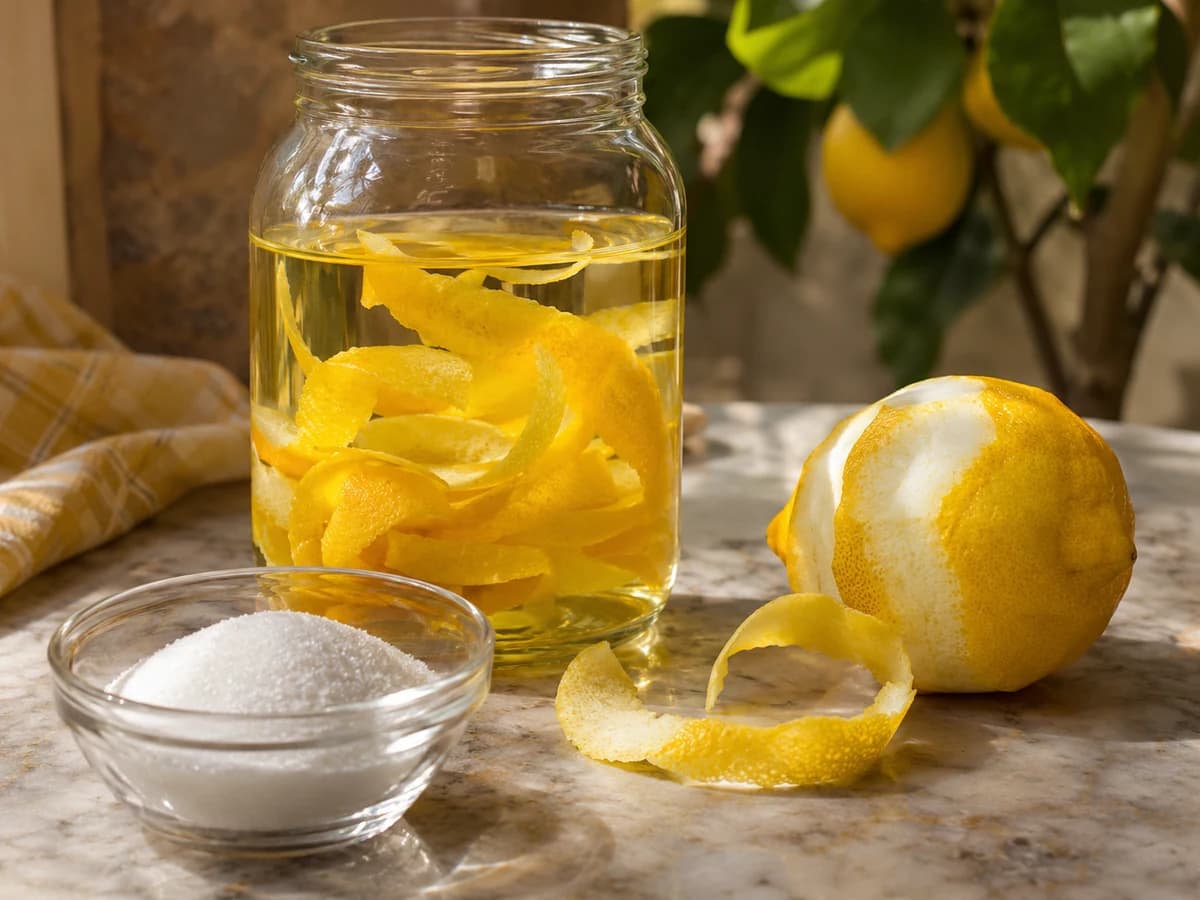
A basic limoncello has four ingredients: lemon zest, alcohol, sugar and water. Zest is the colored outer layer of the peel, where the aromatic oils sit. The white pith under it can add bitterness, so recipes remove it. Traditional versions use Femminello St. Teresa lemons, also called Sorrento or Sfusato lemons. Some commercial products also use lemon pulp and juice, and the lemons may come from different parts of southern Italy.
The key step is steeping the peel in alcohol. The oils dissolve into the spirit and give the liqueur its lemon aroma and yellow color. The liquid is then strained and combined with sugar syrup, which is sugar dissolved in water. The syrup is what makes it a sweet liqueur and brings the strength down from that of the raw spirit, which is why the bottled drink lands near 26 to 30% ABV.
Restaurant, traditional and bottled versions differ. A restaurant may pour a bottled liqueur, or it may list a wine-based limoncello, which has a lower strength than a spirit-based one. Cocktails add fresh lemon juice for acidity that is separate from the peel flavor. Crema versions add cream, and ready-to-drink Italian lemonade pairs limoncello with vodka and lemon juice. Home versions vary widely in strength and sweetness.
Straight, crema, spritz and lemon cocktails
The main versions are straight limoncello, crema di limoncello with cream, and mixed drinks. A spritz combines the liqueur with sparkling wine and soda water. Along the Ligurian Riviera, spritz-style drinks use prosecco or diet tonic, and on the Amalfi side they use lemonade or soda water. A commercial alcohol-free limoncello alternative also exists.
The creamy style is often near 17% ABV, while the straight version is typically about 30%.
American menus and shops offer straight limoncello, dairy crema, bottled or canned spritz, lemon martinis and limoncello sangria. Sangria can add white wine, fruit and extra sweeteners, and a martini-style version can have a sugar rim and a lemon ice-pop garnish. Ready-to-drink Italian lemonade is sold with vodka and lemon juice. These are full cocktail recipes, so each can differ sharply from a small straight pour in strength, sweetness and ingredients.
Drinking limoncello chilled
Limoncello is a drink, so the only technique is sipping. It is traditionally served chilled as an after-dinner digestif, either straight or in a mixed drink. A small cordial glass suits the concentrated original, and small sips let the peel aroma and the sweetness show together. On a menu, “digestivo” means an after-dinner drink and carries no claim about digestion.
Producers suggest drinking it on ice or topped with soda, and a spritz is built in a tall glass with sparkling wine and soda water. Cream versions are also served as after-dinner liqueurs, often alongside dessert or coffee.
The usual mistake is treating a straight pour like a tall drink. A concentrated liqueur of around 30% ABV is meant for small sips, and the sweetness can hide how strong it is.
Ordering limoncello in the United States
Menu terms to distinguish are “limoncello,” “crema di limoncello,” “limoncello spritz,” and “limoncello martini.” “Limoncello” alone is the straight liqueur, “crema” adds cream, “spritz” adds sparkling wine and soda, and “martini” is a shaken cocktail that may carry a sugar rim. A line reading “wine-based limoncello” is a different, lighter product than a bottled spirit-based liqueur, and “Italian lemonade” is a mixed drink with vodka and lemon juice.
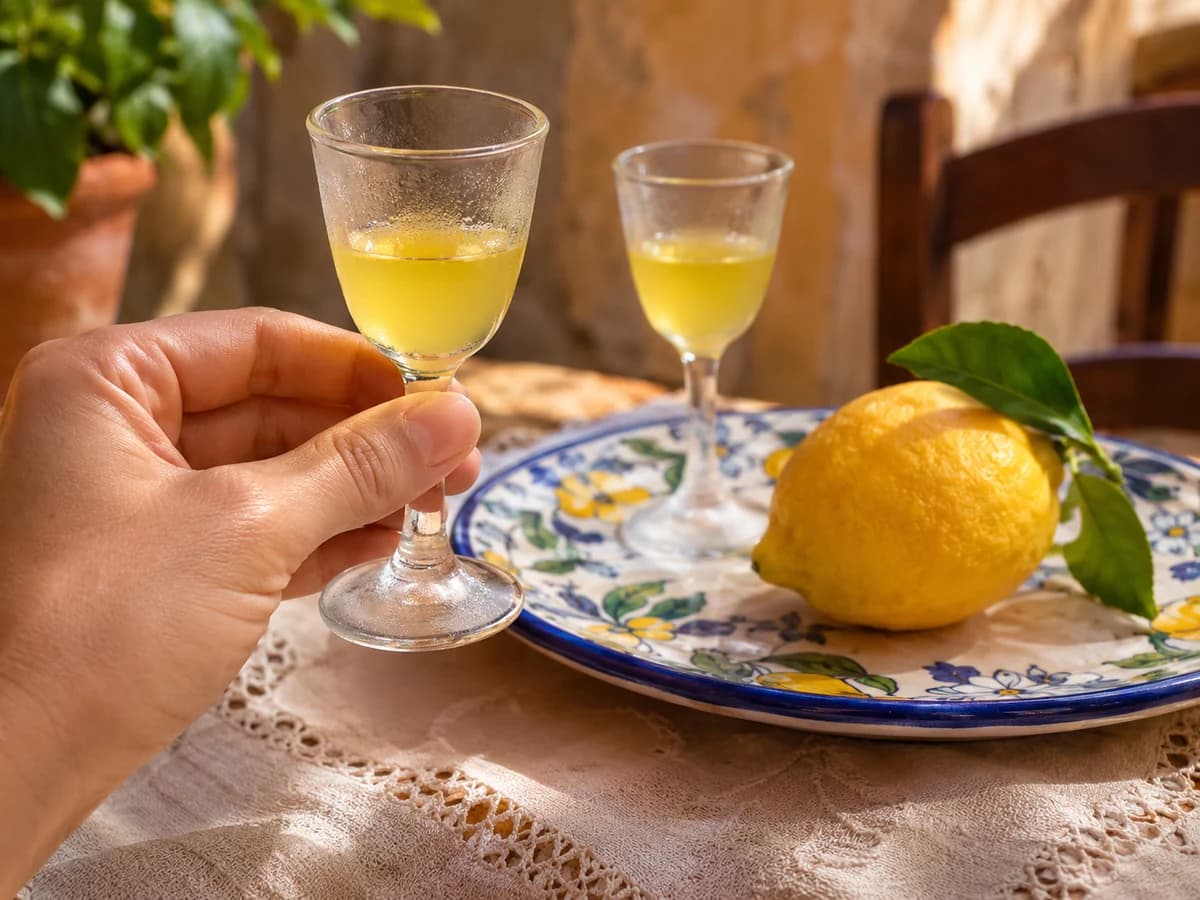
A straight pour is a small measure of liqueur, served in a small cordial glass, while a tall spritz is a full-size drink with wine and soda. Glass size does not tell you how much liqueur is inside, so ask for the pour in ounces and the bottle’s ABV if you need a specific measure.
Limoncello is commonly ordered after dessert or with coffee, and a spritz is the usual choice before a meal or on a warm day. To adjust, you can ask for it neat and chilled, over ice, or topped with soda for a longer drink. Alcohol-free versions and cream versions are separate items, so name the one you want when you order.
Milk, gluten requests and alcohol avoidance
Plain limoncello is commonly made with lemon zest, alcohol, sugar and water, so it contains none of the nine major allergens by recipe. Crema di limoncello contains milk and is not vegan, and a cocktail recipe can bring in egg or wheat, and nut-flavored relatives such as pistachiocello are tree nut products. One US chain’s nutrition table lists a limoncello spritz without marking any major allergen, but it does not stand in for a full recipe check at your own restaurant. Fish, shellfish, peanut, soy and sesame are not part of a standard limoncello.
One bottled limoncello is labeled vegan friendly, and one US maker states its original limoncello is gluten free. Those statements apply to that bottle, not to every cocktail made with it. For an allergy or gluten-free request, confirm the complete recipe and shared bar equipment, because the FDA treats gluten-free as a defined claim and swapping one ingredient cannot assure it.
People who are pregnant or trying to become pregnant should avoid alcoholic limoncello and cocktails: the CDC says there is no known safe amount or safe time for alcohol during pregnancy. At around 30% ABV, a small pour is still a strong drink. An alcohol-free alternative must be explicitly labeled, including the other ingredients used in a mixed drink, and a yellow color, lemon garnish or lemonade name does not identify one.
Which should you order?
Choose plain chilled limoncello for concentrated lemon aroma without bubbles, crema di limoncello for a richer dairy-cream texture, or a spritz for wine, soda and effervescence. A lemon martini can add syrup and fresh juice for more sweetness or acidity. Choose a product explicitly labeled alcohol free if you avoid alcohol.
A useful question for the restaurant
Is this straight limoncello, dairy crema or a cocktail, and what is the pour size and alcohol content?
Ordering suggestions reflect taste preferences, not a guarantee about the restaurant’s ingredients.
Common questions
How many calories are in limoncello?
At one U.S. chain, one limoncello spritz is listed at 130 calories. A published homemade limoncello recipe estimates 202 calories per 2-fluid-ounce serving, about 59 milliliters; that is a recipe estimate, not a measurement of the chain drink.
Does limoncello contain lemon juice?
No, a peel-based limoncello can get its lemon flavor without fresh juice. A juice-added product or cocktail can taste sharper, so lemon aroma alone does not tell you the amount of juice in the glass.
Is limoncello vegan?
Some plain commercial limoncellos are specifically labeled vegan friendly, so a vegan option does exist. That statement does not cover a dairy crema or a cocktail that adds dairy; use the statement for the actual bottle and finished drink.
Is limoncello gluten free?
Some plain bottles are labeled gluten free. That label alone cannot show whether a finished spritz is gluten free, because its other mixers and shared tools need their own assessment.