
What Is Lasagna? Ingredients, Calories and Diets
What ingredients are in lasagna?
Lasagna is an Italian baked dish of broad pasta sheets layered with sauce and filling. Meat versions can use beef or sausage, tomato sauce, ricotta and mozzarella; Bolognese lasagne use meat ragù and béchamel. Regular wheat-pasta and cheese versions contain gluten and milk, including many vegetable lasagnas.
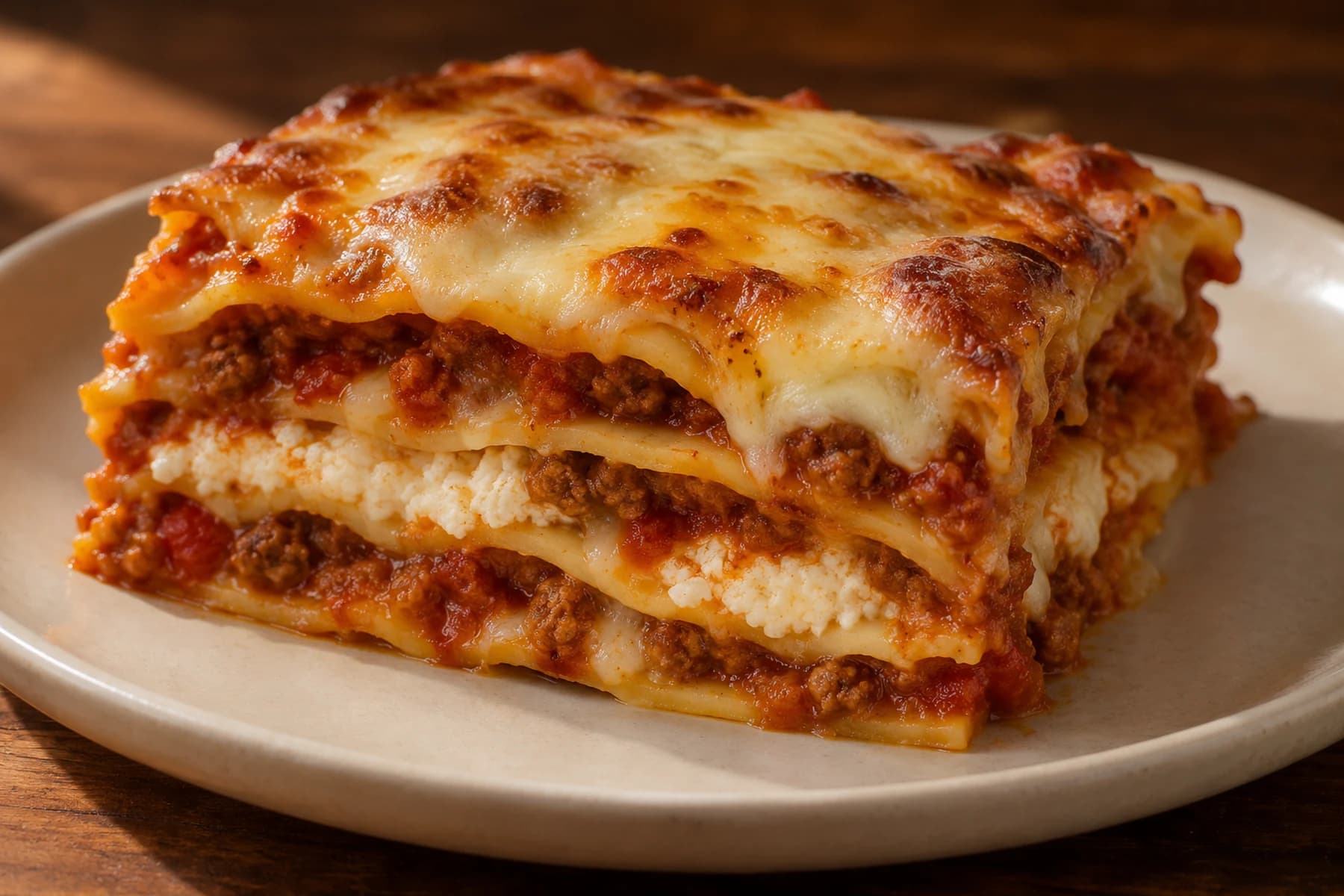
What is lasagna?
Lasagna is an Italian baked dish of broad pasta sheets layered with sauce and filling, cut into squares or rectangles and served as a slice. Italian tradition describes it as pasta, ragù and béchamel, while American menus build on the same layered frame with tomato sauce, meat, ricotta and mozzarella.
Say luh-ZAHN-yuh; the written g is silent. Italian dictionaries list lasagna as the headword, but lasagne, the plural, is the form recipes and the press use most often for the cooked dish, and the two are treated as synonyms. A menu may print Lasagna, Lasagne or Lasagne al Forno, meaning baked lasagne. The singular can also name the pasta sheet itself, and one variant, lasagna al cioccolato, is a sweet dessert.
The origin of the word is uncertain. Proposals include Latin lasanum, a cooking pot; a Greek word for a cooking tripod; a Gallic word tied to losanga, the diamond shape; and an Arabic word for an almond sweet served in square slices. Lasagne appear as a festive dish in Bologna records from 1282. A Neapolitan court cookbook of the early 1300s describes them with cheese and spices but no béchamel, which arrived in the 1700s. An English dictionary of 1598 defined lasagna as a kind of thin pasta, and a Neapolitan cookbook of 1634 gives the first baked version with mozzarella.
What does lasagna taste like?
Lasagna is rich and savory. In a tomato version, the sauce adds acidity beneath the meat and cheese. Ricotta contributes a soft, slightly grainy filling, melted mozzarella forms a stretchy layer, and grated Parmigiano Reggiano adds the salty flavor of aged cheese. A Bolognese version gets its savor from slow-cooked meat ragù and its buttery, nutmeg-scented creaminess from béchamel.
The pasta sheets turn soft and the sauce stays moist between the layers. The browned top and exposed edges are firmer than the center. The dish is served warm, and a brief rest after baking helps the layers hold together on the plate. Herbs mixed into ricotta and seasoning in sausage add aroma on top of the tomato and cheese.
A white-sauce vegetable lasagna centers on milk and vegetables, and the word vegetable does not describe a single sauce. Naples is known for white lasagne with Neapolitan ragù, meatballs, ricotta, provola and pecorino, a carnival dish. None of the defining ingredients of the Bolognese or cheese versions is a chili, so heat depends on the seasoning of the sausage or sauce on a given menu.
Lasagna ingredients and how the layers form
The core structure is broad pasta sheets alternating with sauce and filling. Ordinary sheets use wheat; Bologna's fresh green pasta also contains egg and spinach. Ragù is a slowly cooked meat sauce, and béchamel is milk thickened with butter and flour. Ricotta is a soft dairy cheese used in many American fillings, mozzarella melts into the layers, and Parmigiano Reggiano adds a concentrated aged-cheese flavor. Neapolitan versions add meatballs, provola and pecorino.
Stacking is what makes the dish a lasagna. Sheets, sauce and filling are assembled in layers, and baking brings them together and browns the top. That browning is why the corners and edges are firmer than the middle, while the moisture of ragù and béchamel softens the sheets. The Bolognese recipe specifies at least six layers, not a count that applies to every lasagna.
A restaurant plate is cut from a baking dish and varies with the kitchen's choices of meat, cheese and sauce. The Bolognese tradition is fixed more tightly: in 2003 the Accademia Italiana della Cucina registered its green lasagne recipe with the Bologna Chamber of Commerce. Packaged lasagna is a third case, such as a frozen meat version built from beef, mozzarella and tomato sauce with soy sauce in the seasoning, sold in a tray divided into several portions.
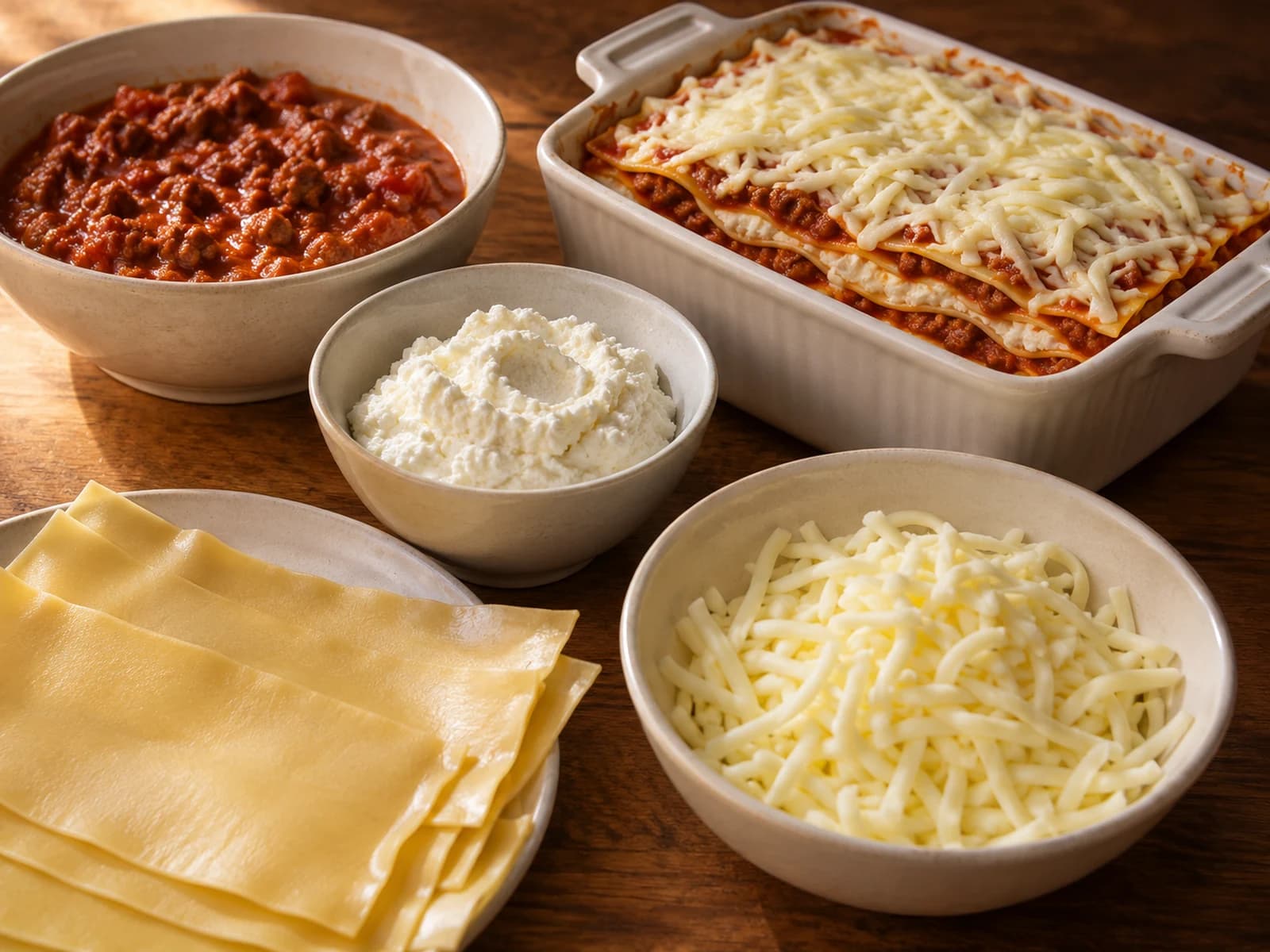
Meat, cheese, vegetable and vegan versions
The main split is by filling. A meat lasagna can combine beef, Italian sausage, herb ricotta and marinara. Five-cheese lasagna combines ricotta, mozzarella, Romano, Parmesan and Asiago with tomato sauce. A vegetable version can use carrots, broccoli and spinach in a white cheese sauce rather than red tomato sauce. The Bolognese style differs from all of these because it uses green pasta, ragù and béchamel.
Regional versions follow different traditions. Bologna's green lasagne contain spinach and are served with ragù, Parmigiano Reggiano, butter and béchamel. Naples' white lasagne, a carnival dish, use Neapolitan ragù, meatballs, ricotta, provola and pecorino. A sweet chocolate lasagna also exists, which shows the name can describe layered dishes beyond savory pasta.
In the United States, meat lasagna with tomato sauce and ricotta is the version most menus resemble, and supermarkets stock frozen trays in meat, cheese and vegetable styles. A packaged meat version lists beef, mozzarella, tomato sauce and soy sauce. A vegan, gluten-free product uses rice pasta, tofu, plant-based mozzarella-style shreds, zucchini and spinach. Tofu is soybean curd, so this substitution adds soy.
Eating a layered slice
Use a fork to cut through the layers and gather pasta, sauce and filling in the same bite. A knife helps with a firm browned edge or a tall slice. The tomato sauce left on the plate is part of the dish and can be eaten with the pasta.
A brief rest after baking lets the layers settle, and the dish is still served warm. If the center is very hot, divide a bite before eating it. A slice that spreads after cutting still holds the same layers as a neater rectangle, so the shape does not mean the dish was made badly.
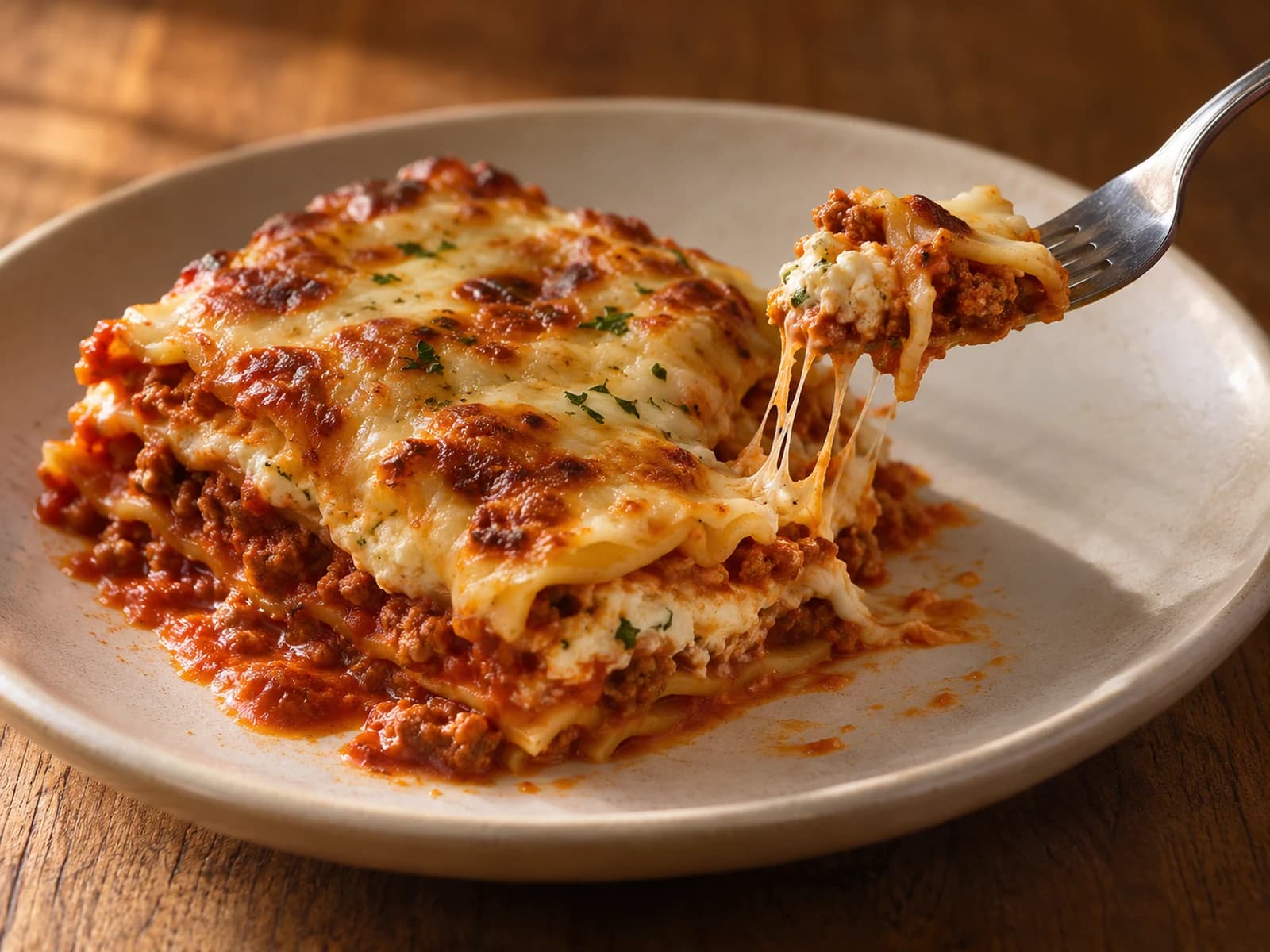
Ordering lasagna in the United States
Look for Lasagna, Lasagne al Forno, Meat Lasagna or Vegetable Lasagna. Lasagne verdi alla bolognese means green lasagne in the style of Bologna, with spinach pasta, ragù and béchamel. A name like Meat Lasagna can list beef, Italian sausage, herb ricotta and marinara, so read the filling instead of assuming every red sauce is meatless.
A restaurant entrée is a plated portion. Family-size frozen trays are divided differently: the cheese and vegetable trays list about four portions of 239 g and 230 g, and a vegan retail tray is 9 oz, or 255 g, for one portion. A frozen portion and a restaurant slice are not the same size, so compare the weight on the label before you plan a meal for several people.
Ask whether a vegetable option contains dairy or egg, because cheese sauce adds milk and fresh pasta can add egg. If you need a gluten-free adaptation, ask whether both the pasta and the white sauce change, not only the visible noodle sheets. Ask for a portion with the filling you want and a clear description of the sauce before you order.
Wheat, milk, egg and soy
Regular lasagna is not gluten free: wheat pasta and flour-thickened béchamel contain gluten. Cheese and béchamel contain milk, fresh pasta can contain egg, and soy sauce in meat-sauce seasoning or tofu adds soy. Packaged meat, cheese and vegetable lasagna labels list wheat and milk, and the meat label also lists soy. At one large U.S. Italian chain, Lasagna Classico lists dairy, wheat, gluten, soy and sesame, and the same guide warns about cross-contact in shared preparation areas.
A vegetable lasagna can contain dairy and egg, and removing meat alone does not make a cheesy lasagna vegan. The checked vegan, gluten-free product uses rice pasta and tofu, contains soy, and warns of possible contact with wheat, milk and tree nuts. Gluten comes from wheat, so a gluten-free order involves the noodle sheets, the flour in the béchamel and any thickened sauce. Ask which of these were changed and whether preparation is shared.
For an allergy, ask about the full filling, sauce and shared preparation, because a short menu name does not list every ingredient. Pregnant diners should order meat and egg components fully cooked and hot, choose pasteurized dairy, and avoid raw or undercooked additions.
Which should you order?
Choose meat lasagna for beef or sausage in tomato sauce, five-cheese for a cheese-forward version, or vegetable lasagna for spinach, broccoli and carrots. Bolognese style uses ragù and béchamel. For a vegan or gluten-free meal, choose a product or menu item specifically labeled for that diet.
A useful question for the restaurant
Does this lasagna contain wheat, egg, milk, soy or sesame, and is the vegetable option vegetarian or vegan?
Ordering suggestions reflect taste preferences, not a guarantee about the restaurant’s ingredients.
Common questions
How many calories are in lasagna?
USDA FDC 2708752 lists a 206 g piece of restaurant meat lasagna at about 381 kcal, or 185 kcal per 100 g. A packaged meat lasagna lists 270 kcal for 1 cup (215 g), while a 255 g vegan, gluten-free tray lists 330 kcal.
Does lasagna have ricotta?
Often, but not every version does. Many U.S. meat and cheese versions use ricotta, while the registered Bolognese version uses béchamel and Parmigiano Reggiano.
Is lasagna gluten free?
No, regular lasagna uses wheat pasta, and béchamel also uses flour. A rice-pasta product labeled gluten free can omit wheat, but its tofu supplies soy and its label warns of possible wheat contact.
Is lasagna spicy?
Usually no. Common five-cheese tomato and vegetable cheese-sauce versions focus on tomato, dairy and vegetables, not chile; a menu item explicitly labeled spicy can be hotter.