
What Is Pesto? Genoese Ingredients and Gluten
What is pesto made of, and is it gluten free?
Pesto is an Italian pounded sauce. The classic Genoese version blends basil, pine nuts, garlic, olive oil, coarse salt, Parmigiano Reggiano and pecorino. It contains milk and tree nuts; the sauce itself has no wheat ingredient, but pesto served on ordinary pasta does.
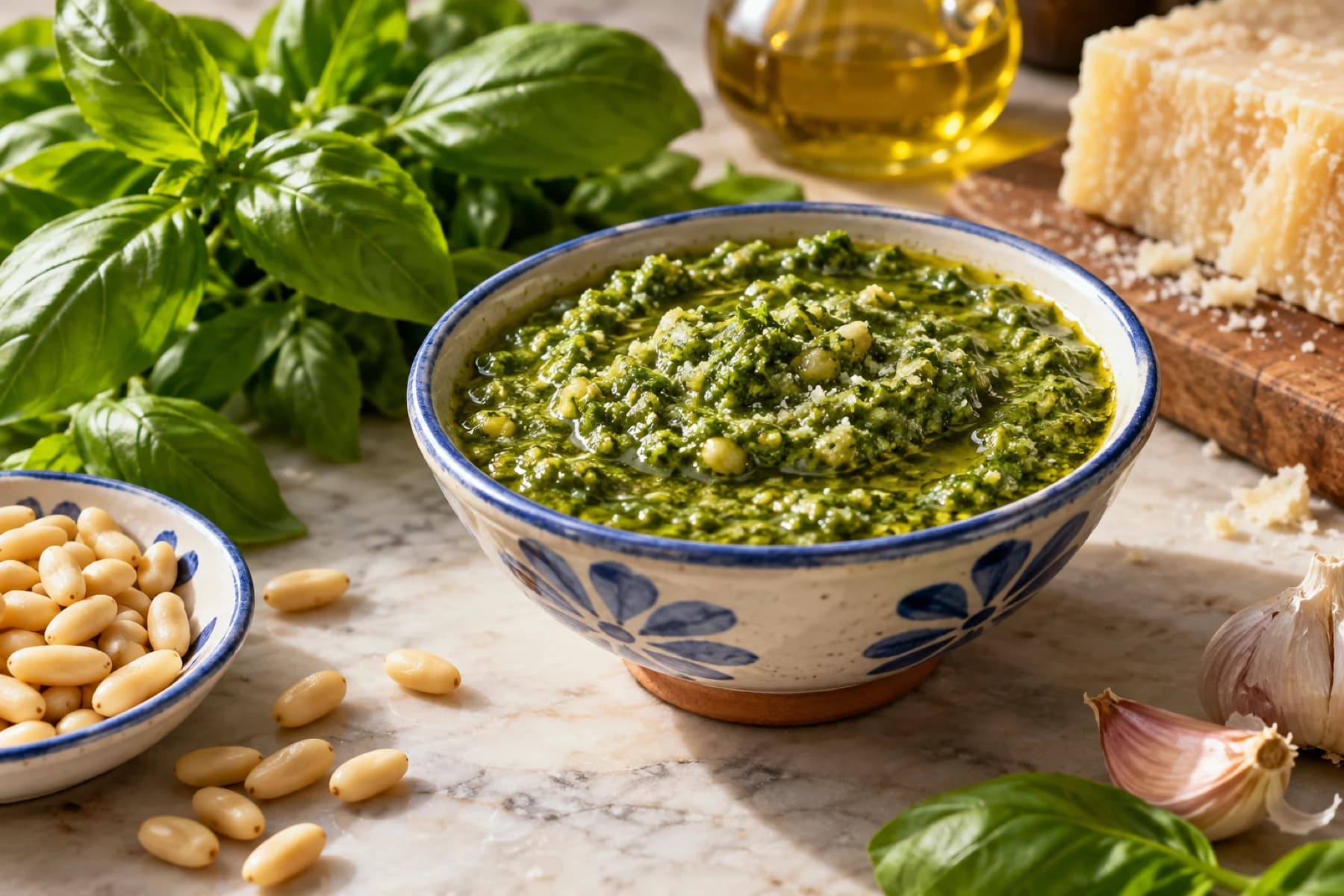
What is pesto alla genovese?
Pesto alla genovese is the basil sauce of Genoa, a port city in Liguria on Italy's northwestern coast. Its seven traditional ingredients are Genoese basil, extra-virgin olive oil, pine nuts, garlic, coarse salt, Parmigiano Reggiano and Sardinian pecorino. They are crushed together without cooking into a thick green paste, which is tossed with the pasta. On a plate of trofie al pesto, trofie are the short twists of pasta and pesto is the sauce that coats them.
The word pesto, pronounced PEH-stoh, comes from the Genoese verb pestâ, Italian pestare, meaning to pound or crush. It shares a Latin root with the English word pestle. Genovese names the Ligurian style, and pesto on its own usually means this version. A menu that says only basil pesto names the herb but leaves open which nuts and cheeses went in. Pesto alla trapanese, also called pesto alla siciliana or pesto rosso, is a different Sicilian sauce, and pesto cream is a menu item that adds cream.
Pesto has older relatives. Ancient Romans ate a paste called moretum, made from garlic, cheese, herbs and olive oil, sometimes with pine nuts, and medieval Genoa had agliata, a mash of garlic and walnuts. Basil, the main ingredient of modern pesto, first appears in writing in the 1850s, in an 1852 Genoese cookbook by Emanuele Rossi and an 1863 one by Giovanni Battista Ratto. An American recipe with butter and cream appeared in 1928, and a magazine recipe by Angelo Pellegrini followed in 1946. Pesto became popular across North America in the 1980s and 1990s.
What does basil pesto taste like?
Fresh basil leads, with a soft herbal sweetness that is far from the heat of a pepper sauce. Garlic sits behind the basil. Pine nuts add a mild, rich note, and the two grated cheeses contribute salt and umami. Extra-virgin olive oil goes in last, in drops, and rounds out the paste.
The crushing shapes both texture and aroma. The traditional method uses a gentle, prolonged rotary motion that tears the leaves, which preserves the basil's essential oils. The sauce is made at room temperature and finished quickly to limit oxidation. When the paste is too thick, a little hot pasta cooking water loosens it enough to coat the pasta.
Classic basil pesto has no chile and is usually mild. Pesto alla calabrese, from Calabria, uses grilled bell peppers and black pepper and tastes spicy. Pesto alla trapanese swaps pine nuts for almonds, adds fresh tomato and uses much less basil, so the tomato brings acidity and red color rather than heat. Extra grated cheese at the table makes the finished plate saltier, so taste the dressed pasta first.
The seven Genoese pesto ingredients
Genoese basil is a small-leaf variety with its own protected name. The oil is extra-virgin olive oil, preferably from Liguria or a neighboring region. Parmigiano Reggiano is an aged cow's-milk cheese, and pecorino is made from sheep's milk; the traditional choice is Sardinian pecorino. Pine nuts come from Pinus pinea trees grown around the Mediterranean. Grana Padano is an accepted substitute for the Parmigiano.
In the mortar method the basil is washed and dried, and garlic and coarse salt are crushed into a cream first. The pine nuts go in next, then the basil, added gradually, then the cheeses, and finally the oil, poured in drops. The marble mortar and wooden pestle work with a gentle rotation that tears the leaves and preserves their aromatic oils.
A restaurant kitchen may use a food processor or blender, which the Genoese consortium accepts but says changes flavor and color. It also warns about products labeled Pesto Genovese that contain ricotta, cashews or seed oil in place of extra-virgin olive oil. Packaged versions, such as a 6.5-ounce jar of rustic basil pesto sold in the United States, are made for pasta, sandwiches and pizza.
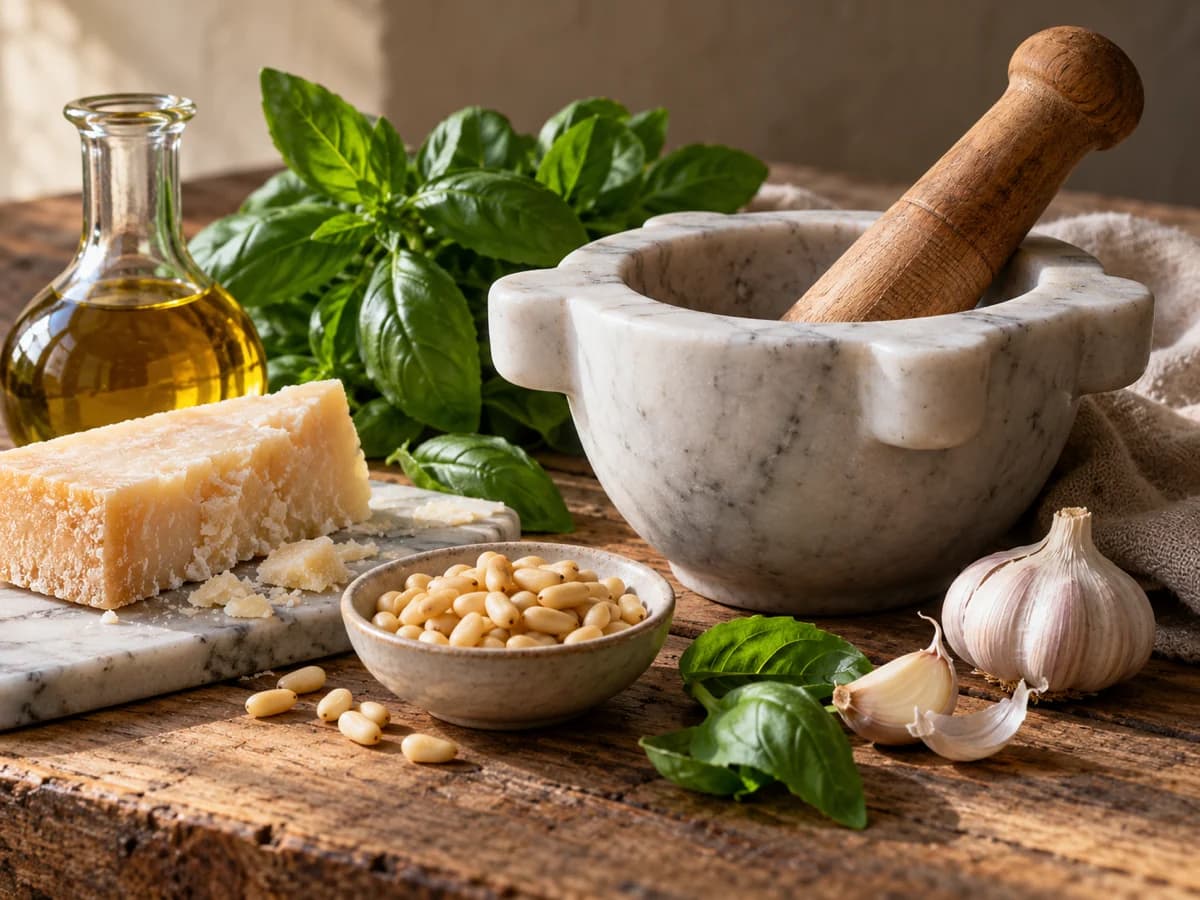
Green pesto and Sicilian tomato pesto
Pesto alla genovese is green, made with basil, pine nuts and two cheeses. Pesto alla trapanese, from Trapani in Sicily, is red, with tomato and almonds, much less basil, garlic and pecorino. Pesto alla calabrese, from Calabria, uses grilled bell peppers and black pepper.
Provence in France has pistou, usually olive oil, basil and garlic without cheese, which flavors the vegetable soup soupe au pistou. In Liguria, pesto also goes into minestrone, and Genoese pesto dresses pasta such as trenette, lasagne, trofie and mandilli de saea.
Outside Italy, almonds, cashews or walnuts often replace pine nuts, and parsley, cilantro, dill or spinach can replace part of the basil. Vegan versions may use miso paste and nutritional yeast in place of cheese. In the United States a jar of basil pesto is sold for pasta, sandwiches and pizza.
Trofie, potatoes and green beans
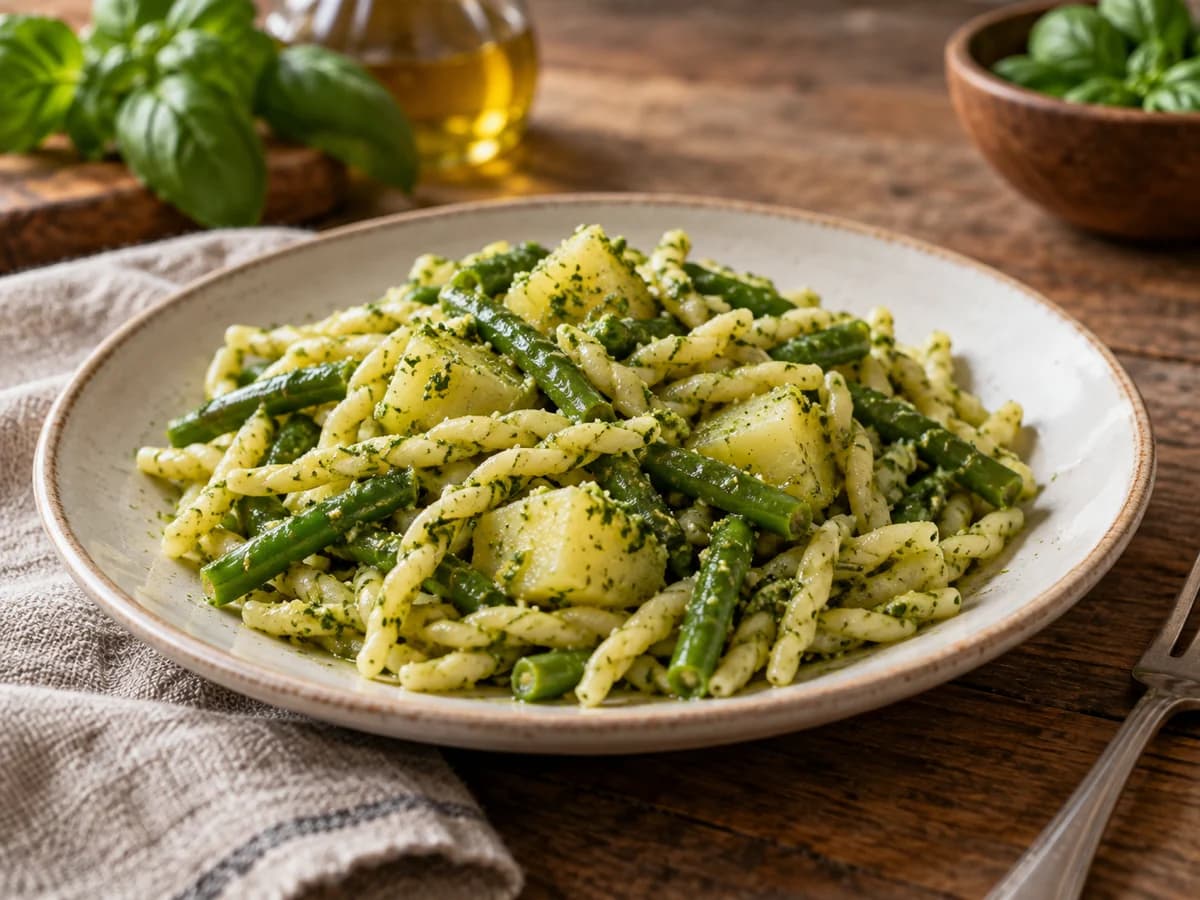
Trofie al pesto arrives as short twisted pasta coated in green paste. In Liguria it is often served with potatoes and green beans cooked in the same pot as the pasta, a classic Genoese tradition that is not part of the seven-ingredient sauce. Potato chunks add starch to the cooking water, which makes the result creamier.
Packaged pesto is spread on sandwiches and pizza as well as tossed with pasta.
Thick pesto is thinned with a little reserved pasta water before it is tossed, so that it coats the pasta, potatoes and beans. Extra grated cheese at the table makes the plate saltier. Leftover homemade pesto is kept in a tight container under a layer of olive oil; it stays in the refrigerator for up to a week or can be frozen.
Ordering pesto pasta, sandwiches and pizza
Pasta al pesto names the sauce; trofie al pesto also names the short twisted pasta. Pesto alla genovese points to the Ligurian sauce, while basil pesto names only the herb. Pesto rosso and pesto alla trapanese are the tomato-and-almond style. Chicken pesto pasta and pesto cream pasta signal ingredients beyond the sauce. The Genoese consortium notes pesto products made with cashews, ricotta or seed oil, so the label alone does not list the seven traditional ingredients.
For scale, a USDA entry for pesto sauce lists one tablespoon as 16 g, and a packaged jar of basil pesto holds 6.5 ounces, about 184 g.
A Ligurian-style plate can include potatoes and green beans. Pesto also appears with chicken, or with shrimp and tomatoes in a pesto cream sauce. Ask whether chicken, extra cheese or cream is included, and which nuts are in the sauce. To get basil flavor without cream, ask for pasta al pesto and not pesto cream sauce.
Is pesto gluten free or vegetarian?
Classic Genoese pesto contains milk, from Parmigiano Reggiano and pecorino, and tree nuts, since FDA lists pine nuts as tree nuts. Ordinary dried pasta adds wheat, and fresh egg pasta adds egg as well. At one large US chain, a basil pesto cavatappi lists milk, egg and wheat/gluten in both its regular and small portions. A pesto cream pasta with shrimp and tomatoes also contains crustacean shellfish. Pesto made with cashews or almonds in place of pine nuts still contains tree nuts.
The seven-ingredient sauce has no gluten ingredient, but pasta and bread add wheat. FDA says a food labeled gluten-free must contain less than 20 parts per million of gluten, and restaurants that make gluten-free claims should follow that definition. With gluten-free pasta, shared cooking water, strainers and the utensils that toss the sauce still matter for celiac disease. Pesto is not vegan because of its cheeses; vegan versions may use miso paste and nutritional yeast. Parmigiano Reggiano is made with calf rennet, so traditional pesto does not suit vegetarians who avoid animal rennet.
For a nut allergy, ask for the exact recipe and whether a shared blender or mortar has held another nut. A cheese-free sauce may still contain tree nuts, and leaving off whole nuts used as a garnish does not remove those ground into the sauce. Classic pesto is made without cooking, and Parmigiano Reggiano is made from unpasteurized cow's milk. Anyone who has been told to avoid unpasteurized dairy, such as during pregnancy, should ask which cheeses are in the sauce.
Which should you order?
Choose pesto alla genovese for basil, pine nuts and two aged cheeses. Choose a packaged basil pesto when you want a ready-to-use sauce for pasta, sandwiches or pizza.
A useful question for the restaurant
Which nuts and cheeses are in your pesto, and does the pasta contain wheat or egg?
Ordering suggestions reflect taste preferences, not a guarantee about the restaurant’s ingredients.
Common questions
How many calories are in pesto?
USDA FoodData Central 2710175 lists pesto sauce at 580 kcal per 100 g, or about 93 per 16 g tablespoon. That measures sauce, not a prepared meal. At one large US chain, a regular basil pesto cavatappi has 860 calories and the small size has 430.
Is pesto gluten free?
Classic Genoese pesto can be gluten free at the ingredient level because it has no wheat ingredient, but ordinary pesto pasta and toast contain wheat. A gluten-free pasta order also needs separate cooking water and utensils.
Is pesto vegan?
Traditional Genoese pesto is not vegan because it includes Parmigiano Reggiano and pecorino. A vegan pesto needs a different sauce without both cheeses.
Is pesto spicy?
Classic basil pesto has garlic but no chile, so it is usually mild. The sharpness comes from garlic and salty aged cheese.