
What Is Bolognese? Ingredients, Taste and Calories
What is bolognese?
Bolognese is a slow-cooked meat ragù from Bologna, made with beef, pork pancetta, finely chopped vegetables, wine and tomato; milk is optional in the 2023 reference. Spaghetti bolognese puts that sauce on long pasta. Bologna traditionally pairs ragù with egg tagliatelle, while US menus also sell spaghetti with meat sauce.
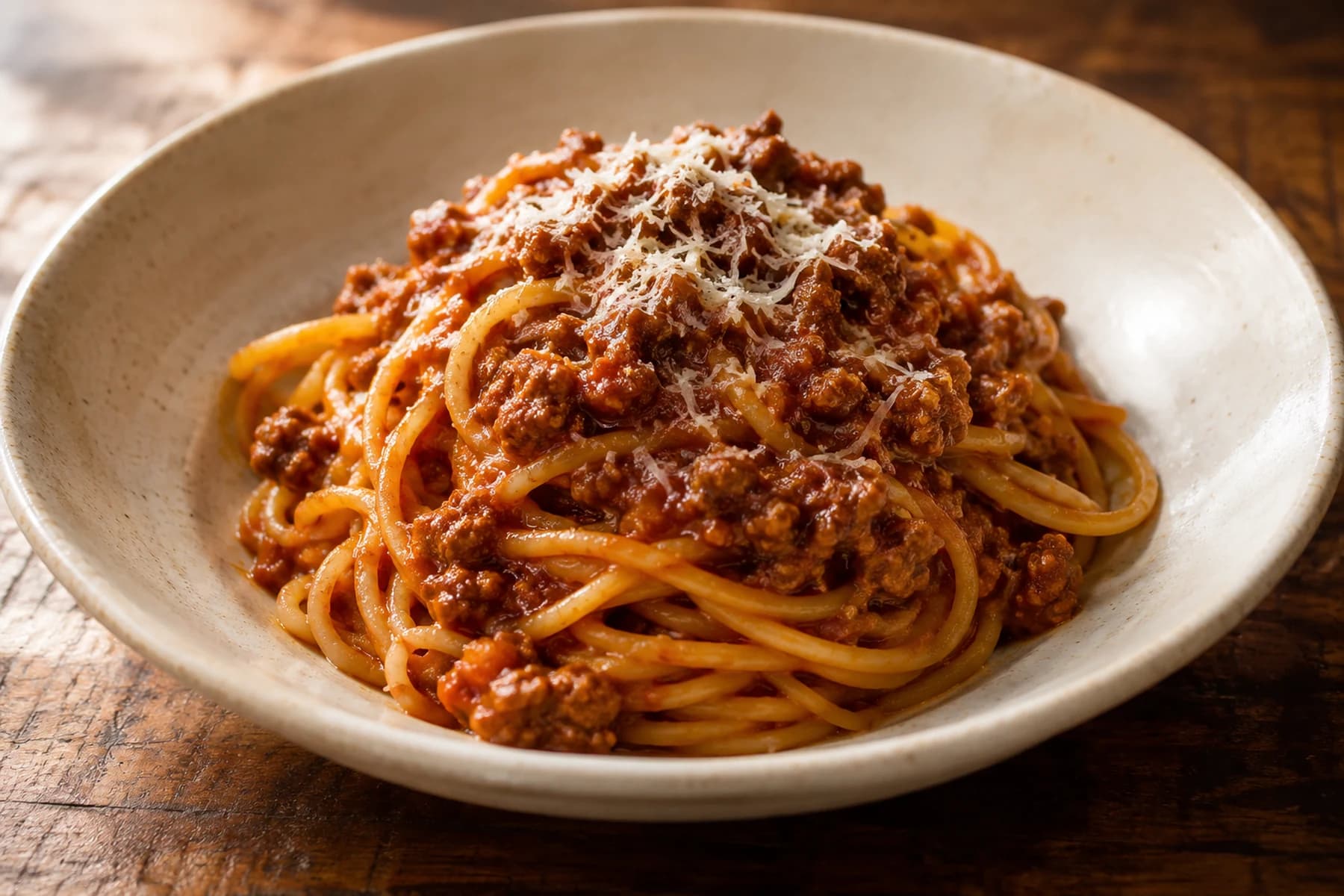
What is bolognese?
Bolognese (boh-luh-NEEZ) is a meat ragù from Bologna in northern Italy. Ragù is a meat sauce cooked slowly until it is thick, and the Bologna version is built from minced beef, pancetta, a finely chopped base of onion, carrot and celery, wine, tomato and, optionally, milk. Spaghetti bolognese puts that sauce on long, thin pasta and usually finishes it with grated cheese.
Bolognese means "in the style of Bologna." The full Italian name is ragù alla bolognese, and in Bologna itself people simply call it ragù. The word is related to the French ragout, a stew of small-cut ingredients that was popular in the 18th century. On a US menu the same sauce appears as Spaghetti Bolognese, Spaghetti with Meat Sauce, Tagliatelle al Ragù or Pappardelle Bolognese.
The earliest known ragù served with pasta dates to the late 1700s in Imola, near Bologna. Pellegrino Artusi published a bolognese recipe for maccheroni in 1891, and tomato was added over time, with fresh egg tagliatelle becoming the preferred pasta. In 1982 the Italian culinary academy deposited a classic recipe with the Bologna Chamber of Commerce, and it issued an updated version in 2023. Spaghetti with the sauce is an export: Italians generally see it as inauthentic, and its origins are unclear. It may trace to Italian emigrants in the Americas in the early 20th century or to post-war immigrant restaurants in Britain. The earliest known mention is a 1917 cookbook for American kitchens that recommended the sauce for macaroni or spaghetti.
What does bolognese taste like?
Bolognese tastes meaty and savory. Onion, carrot and celery soften into the sauce and add a gentle sweetness, while tomato and wine put some acidity behind the meat. Pancetta, which is cured pork belly, adds a salty, cured-pork depth, and black pepper gives a light bite. Milk, when it is used, rounds off the tomato's sharpness.
The texture is thick and glossy, with small pieces of meat that are made to cling to the pasta. The vegetables are cooked until they melt into the sauce, so there is no raw crunch. It is served hot, and grated Parmesan or Grana Padano adds a salty, aged-cheese finish on top.
The sauce is savory rather than spicy. In the Bologna style tomato is a supporting ingredient, so the meat leads. Outside Italy, bolognese usually means a tomato-based meat sauce closer to the tomato-rich Neapolitan ragù from southern Italy, which tastes brighter and redder. A braised-beef version served with wide ribbons has pulled meat in place of fine ground beef, and the texture is different.
Bolognese ingredients and slow cooking
The 2023 reference lists beef, pancetta, onion, carrot, celery, wine, strained tomato, tomato paste, broth, olive oil, salt and pepper, with milk optional. The finely chopped onion, carrot and celery base is called soffritto. Strained tomato, also called passata, gives body, and tomato paste adds concentrated tomato flavor. Other sources describe the meat as beef or veal, often with some fatty pork.
The meat is browned and then simmered with the vegetables and liquids for about 2 to 3 hours. That long, gentle cooking is what turns the pieces of meat and vegetables into one thick, cohesive sauce. The wine cooks off before the tomato and broth go in, and any milk is added halfway through and allowed to evaporate. That is why milk softens the tomato's acidity without leaving a creamy sauce.
A restaurant plate may skip the slow simmer or change the meat. US menus list beef-only meat sauce and beef with Italian sausage, and one lasagna uses turkey sausage. Jarred sauces follow their own recipes: one 24-ounce jar of bolognese lists beef, pork, pancetta, Romano cheese and soy flour. The Bologna reference is one regional version, and there is no single definitive recipe.
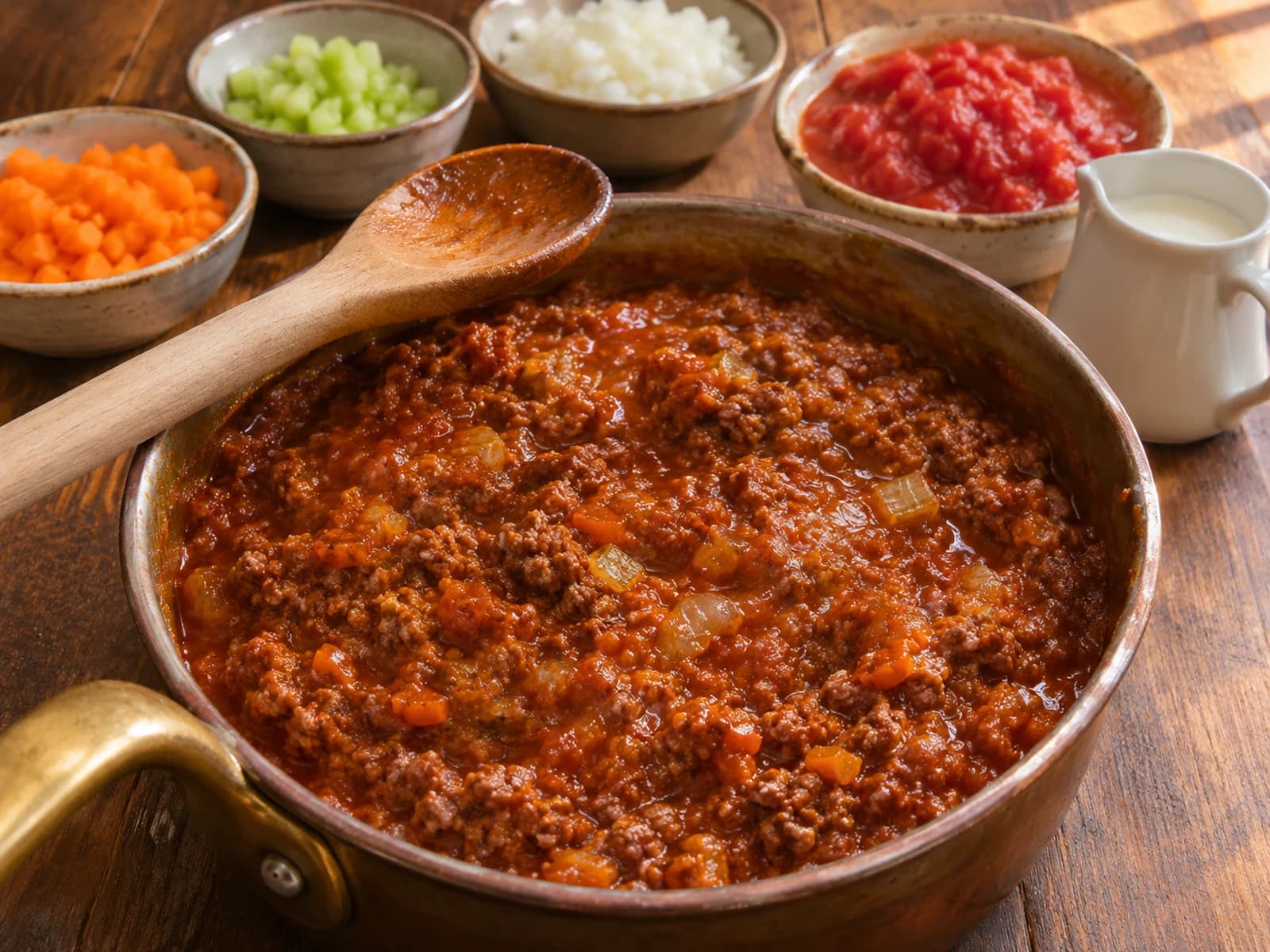
US restaurant and packaged bolognese
In Bologna, ragù is traditionally served with egg tagliatelle, flat ribbons made from flour and egg and cut about 8 millimeters wide. Pappardelle, fettuccine, rigatoni and penne are accepted alternatives. Spaghetti with bolognese is the version most familiar in the US, and spaghetti with meat sauce is usually a more tomato-forward cousin of it.
Ragù also goes into lasagne alla bolognese, which is layered with béchamel sauce. The tomato-rich Neapolitan ragù from southern Italy is a separate regional sauce, and it is the closer relative of what many English-speaking countries call bolognese. A braised-beef bolognese with pappardelle is one wide-pasta version, and another wide-pasta version adds Grana Padano and oregano.
US menus offer beef-only spaghetti meat sauce, beef-and-Italian-sausage sauce on spaghetti and in baked lasagna, and a turkey-sausage bolognese lasagna layered with pistachio pesto, spinach, ricotta and mozzarella. At one large US chain, the basic spaghetti plate comes with meat sauce, while meatballs or Italian sausage are separate additions. In the grocery store, a jarred bolognese keeps for 5 to 7 days in the refrigerator after opening.
Eating spaghetti with meat ragù
Twirl a small forkful of spaghetti against the plate so the strands pick up some of the ragù. The sauce is meant to accompany the pasta, so it helps to take sauce along with the strands instead of eating all the noodles first and leaving a pile of meat behind.
The pasta shape changes each bite. Flat tagliatelle and broader pappardelle carry sauce across a wider surface, so they pick up more of it than spaghetti does. Grated cheese on top adds salt and dairy flavor, and more cheese makes the plate saltier.
In Italy, ragù is traditionally served with tagliatelle and is not typically served with spaghetti, so ordering tagliatelle al ragù there gives the regional version.
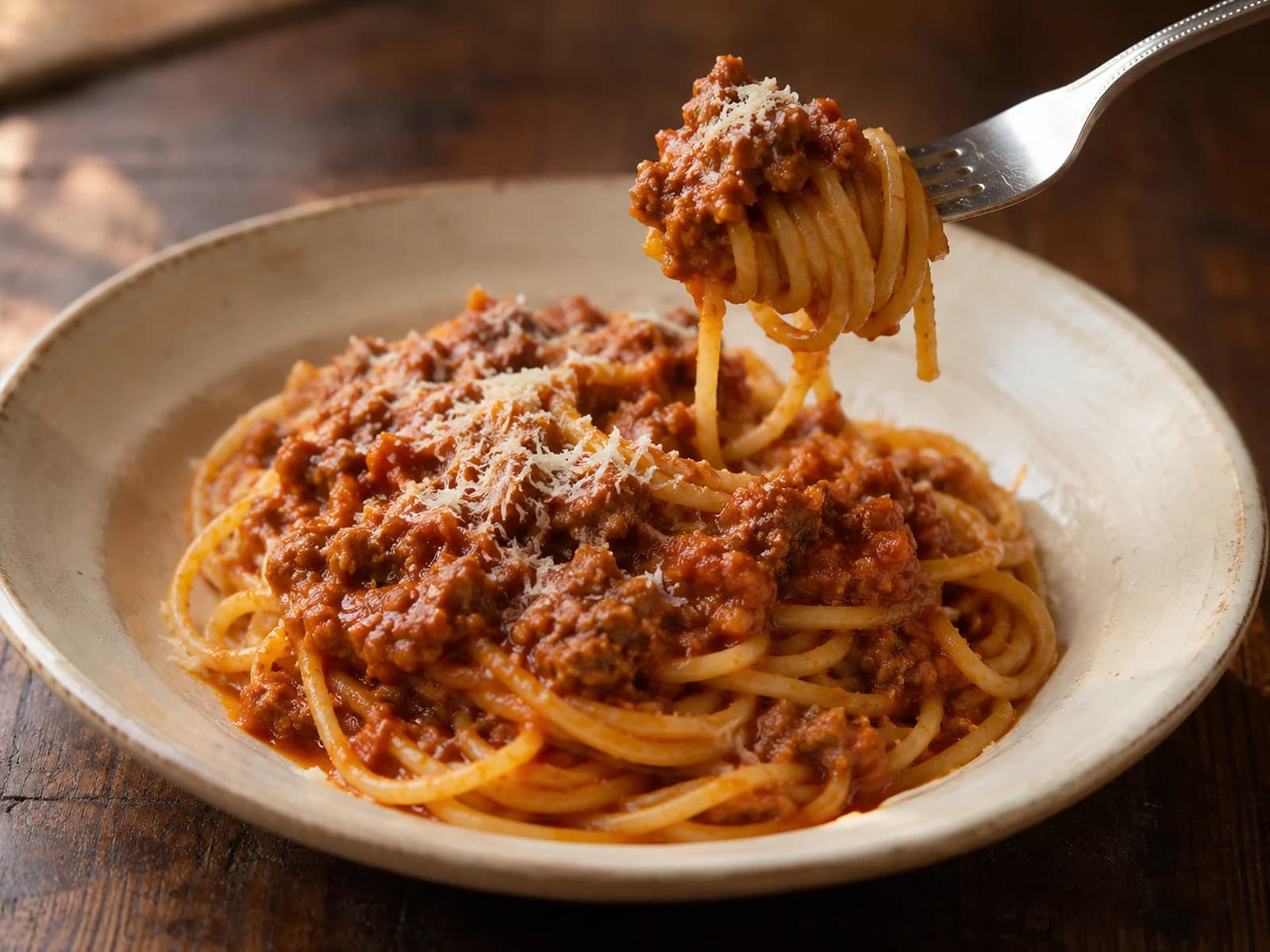
How to order bolognese in the US
The menu words are Spaghetti Bolognese, Spaghetti with Meat Sauce, Tagliatelle al Ragù and Pappardelle Bolognese. The pasta name tells you the shape: long strands, egg ribbons or broad ribbons. It does not tell you whether the meat is beef, pork or turkey. Meatballs are a separate format from the small pieces of meat in a ragù, so a meatball add-on is a different item.
Portions vary by menu. A family-style menu in the US lists pasta for 2 to 3 or 4 to 5 diners, and another offers spaghetti pans for 4 to 6. Ask which size you are ordering when a menu offers both.
Meatballs and Italian sausage are the common extras, and they are added to the plate for an extra price. Ask which meats, cheese and pasta come in the base order before you add anything. Egg pasta such as tagliatelle changes the allergen picture, so confirm it when you order a ragù with ribbon pasta.
Is bolognese gluten free? Allergens and meat safety
Regular spaghetti bolognese is not gluten free because the pasta contains wheat, and egg tagliatelle also contains egg. Milk may be in the ragù or in the grated cheese on top. The allergen guide of a large US chain lists wheat, gluten and soy for spaghetti with meat sauce, and adding meatballs adds milk and egg. A packaged bolognese sauce lists milk and soy. A pistachio-pesto lasagna variation contains tree nuts, even though the name of the meat sauce does not mention them. The nine major allergens are milk, egg, fish, crustacean shellfish, tree nuts, peanuts, wheat, soy and sesame, and shared restaurant kitchens may handle fish, shellfish, peanuts and sesame alongside the others, so a meat-only ingredient list does not rule out cross-contact.
Traditional bolognese contains beef and pork and is not vegetarian or vegan. Removing the visible meat does not remove the meat broth, milk or cheese already in the sauce. Gluten is found in wheat, rye and barley, and the FDA sets the standard for what a gluten-free label means. A gluten-friendly menu label does not mean a gluten-free kitchen, so ask about the sauce, the pasta, the toppings and shared preparation if you need to avoid gluten.
Bolognese is normally simmered thoroughly, but raw or undercooked meat can carry Toxoplasma, a parasite, and the FDA advises pregnant diners and others at risk to choose fully cooked meat. An undercooked adaptation of the sauce does not carry the same assurance as a long simmer. A jarred sauce also has to be refrigerated after opening.
Which should you order?
Choose spaghetti with meat sauce for long strands and a tomato-forward plate. Choose tagliatelle al ragù for egg ribbons that hold more sauce.
A useful question for the restaurant
Which meats and toppings are in this plate, and does it contain milk, egg, soy or wheat?
Ordering suggestions reflect taste preferences, not a guarantee about the restaurant’s ingredients.
Common questions
How many calories are in spaghetti bolognese?
A restaurant serving can vary with pasta, meat and toppings. At one large US chain, one Spaghetti with Meat Sauce order has 640 calories; adding three meatballs brings it to 1,120 calories, and adding two Italian sausages makes it 1,110 calories. A 4-to-6-serving family pan with meat sauce has 2,840 calories in total.
Is bolognese gluten free?
No, regular spaghetti bolognese is not gluten free because spaghetti is wheat pasta. Egg tagliatelle contains wheat and egg as well. A gluten-free pasta substitution needs a separately verified sauce and preparation.
Is bolognese vegan?
Traditional Bolognese is not vegan: the reference contains beef and pancetta, and may include milk. A vegan version needs a plant-based sauce and pasta without egg or dairy.
Is bolognese spicy?
Usually no. The 2023 Bologna reference uses black pepper, not chile, so heat is not a standard feature of the sauce.