
What Is Tiramisu? Ingredients, Alcohol and Calories
What goes into tiramisu, and does it contain alcohol?
Tiramisu is a cold Italian dessert of coffee-soaked ladyfingers, mascarpone cream and cocoa. The Treviso style uses raw egg yolks and no alcohol; other versions can use Marsala, coffee liqueur or rum. Traditional tiramisu contains milk, egg and wheat, and one US chain also lists soy. A restaurant slice can range from 470 to 950 calories.
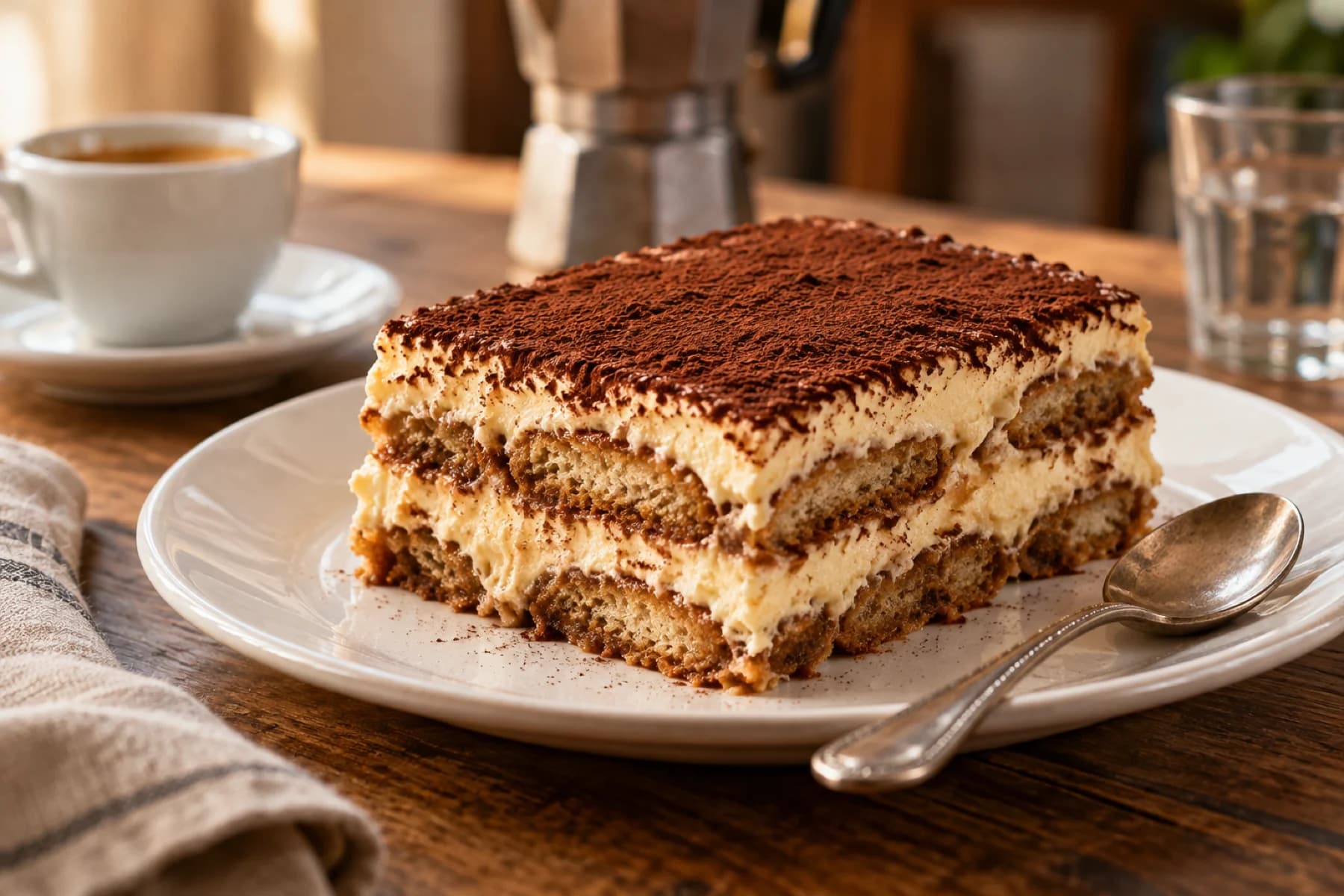
What is tiramisu?
Tiramisu (tih-ruh-MEE-soo) is a cold Italian dessert of coffee-soaked ladyfingers layered with mascarpone cream and finished with unsweetened cocoa. Mascarpone is a soft, rich cheese from Lombardy, and savoiardi is the Italian word for ladyfingers, the dry sponge biscuits associated with the royal house of Savoy. The first version served in Treviso was round; modern ones are often cut from a rectangular or square pan and eaten with a spoon.
The name comes from the Italian tirami su, roughly “pick me up” or “pull me up”; in the Venetian dialect of Treviso it is tiremesù. Menus spell it tiramisu or tiramisù, and a flavor often follows the name, as in pistachio tiramisu or strawberry tiramisu. English dictionaries first record the word in 1982.
Two regions claim the dessert. In Veneto, a Treviso restaurant is credited with creating the modern version in December 1969 and putting it on the menu in the early 1970s; the idea grew out of sbatudin, a farmhouse cream of egg yolks and sugar. In Friuli-Venezia Giulia, a restaurant in Pieris near Gorizia served a dessert of cream, sponge cake and Marsala from 1939 that was reportedly renamed tirime su in 1945, and in 2017 the Italian ministry listed tiramisu as a traditional Friulian product. In the United States, tiramisu was almost unknown at the start of the 1980s. It spread with the fashion for northern Italian cooking in new fine-dining Italian restaurants, helped by mascarpone imports that began that decade.
What does tiramisu taste like?
Tiramisu tastes sweet, milky and rich from the egg-yolk and mascarpone cream, with the roasted, slightly bitter flavor of coffee soaked into the biscuits. The unsweetened cocoa on top adds a dry, gently bitter finish. Marsala beaten into the cream adds a wine note to the pale layer, while rum or coffee liqueur in the coffee soak flavors the biscuit layer instead.
The texture moves between a soft, even cream and very soft, moist biscuit. The Treviso method chills the dessert for at least 10 hours so the layers settle together, and it is served cold. Modern versions that fold in whipped cream or whipped egg whites come out lighter and airier than the dense yolk-and-mascarpone original.
Sweetness comes from the sugar beaten into the cream. Treviso-style tiramisu tastes of coffee and cream, while versions with Marsala, rum or amaretto carry the flavor of the alcohol as well. Flavored versions with chocolate, lemon, strawberry or coconut change the dessert so much that the coffee taste may be gone altogether.
Tiramisu ingredients and how the layers become soft
The Treviso recipe has six ingredients: egg yolks, sugar, mascarpone, coffee, savoiardi and unsweetened cocoa. Yolks are the only egg in the cream, a descendant of sbatudin, the farmhouse mix of yolks and sugar. The coffee is moka coffee, brewed strong in a stovetop pot, and savoiardi are baked biscuits of wheat flour, eggs and sugar that stay firm enough to be dipped.
The yolks and sugar are beaten until pale and larger in volume, then mixed with the mascarpone. The ladyfingers are baked, but the filling is never heated, so the cream stays raw. A quick dip lets each biscuit absorb coffee while it can still be lifted into the dish. After layering, the dessert rests in the refrigerator for at least 10 hours or overnight, which softens the biscuit enough to take up with the cream on one spoon, and the cocoa goes on last.
Traditional tiramisu has no whipped cream and no liqueur. Other versions add heavy cream, whipped egg whites, Marsala, coffee liqueur or rum, and some heat the yolks just enough to pasteurize them. A cream version whisks liquid cream, mascarpone, sugar and Marsala together with no egg in the filling, although ordinary ladyfingers underneath still contain egg. A children's version replaces the espresso with lightly sweetened barley coffee.
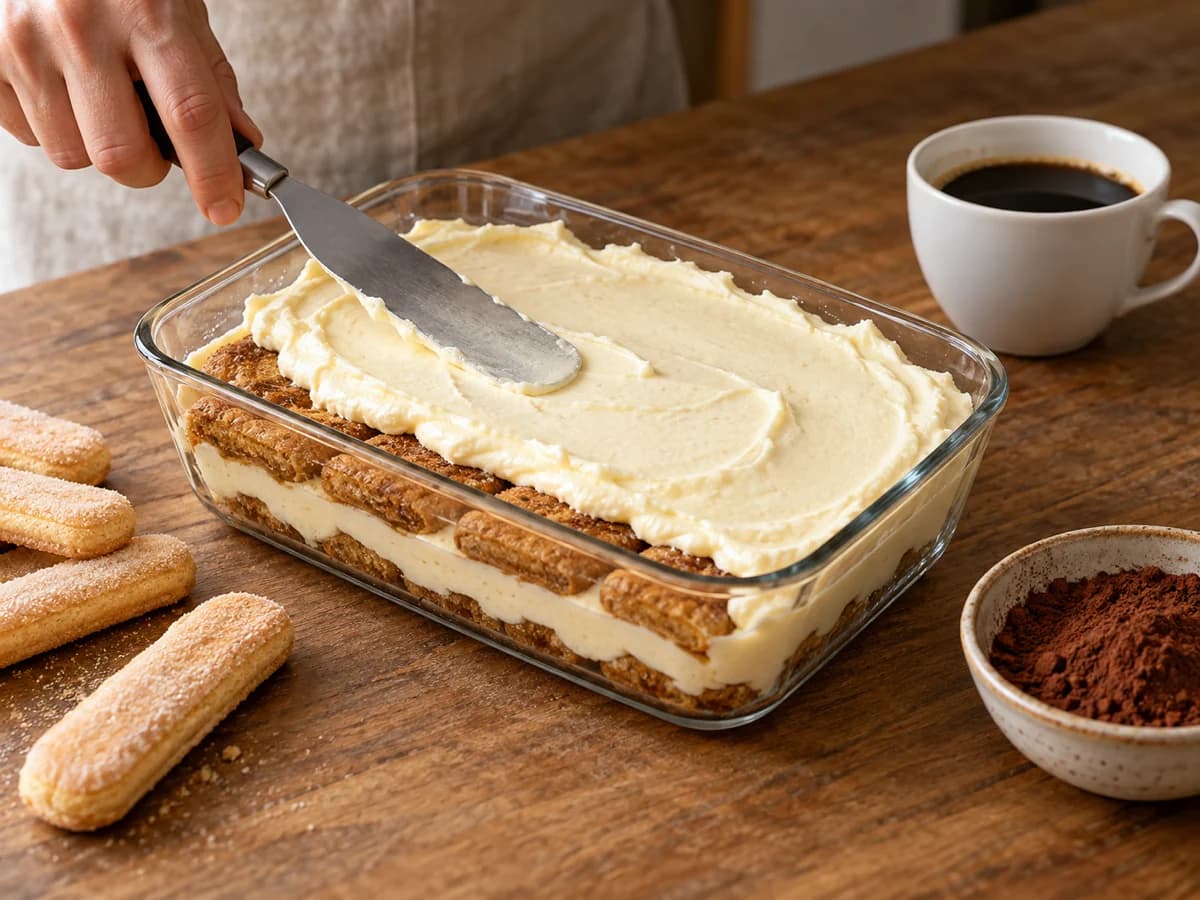
Treviso style, cream and flavored versions
Treviso-style tiramisu has no alcohol and no cream. Other versions put Marsala in the cream, coffee liqueur or rum in the coffee soak, or both; amaretto, brandy, Madeira and port also appear. A cream-based version replaces some or all of the yolk cream with whisked cream, and a vegan version uses plant cream with a separately baked egg-free sponge.
The dessert overlaps with older Italian sweets: some trace it to sbatudin, and others call it a variation of zuppa inglese. Flavored versions with chocolate, lemon, strawberry, pineapple, banana, raspberry or coconut replace the coffee, and panettone can stand in for the ladyfingers.
US menus list the spoon dessert as well as tiramisu cake, tiramisu cheesecake and tiramisu ice-cream cake, which borrow the coffee-and-mascarpone flavor in a different format. Pistachio and berry versions also appear, and pistachio is a tree nut. Supermarkets sell a 17.6-ounce frozen tiramisu of coffee-soaked ladyfingers, mascarpone and cocoa.
How to eat tiramisu and choose a pairing
Serve tiramisu cold. Take a spoonful through both the cream and the biscuit instead of tasting only the cocoa on top, and use a small first bite when the dusting is heavy, because unsweetened cocoa is dry and bitter.
Espresso repeats the roasted coffee note already in the dessert, while water is a neutral match for sweet cream and bitter cocoa. Because the dessert rests at least 10 hours before serving, the biscuit layer is meant to be soft all the way through, and it is eaten cold from the refrigerator.
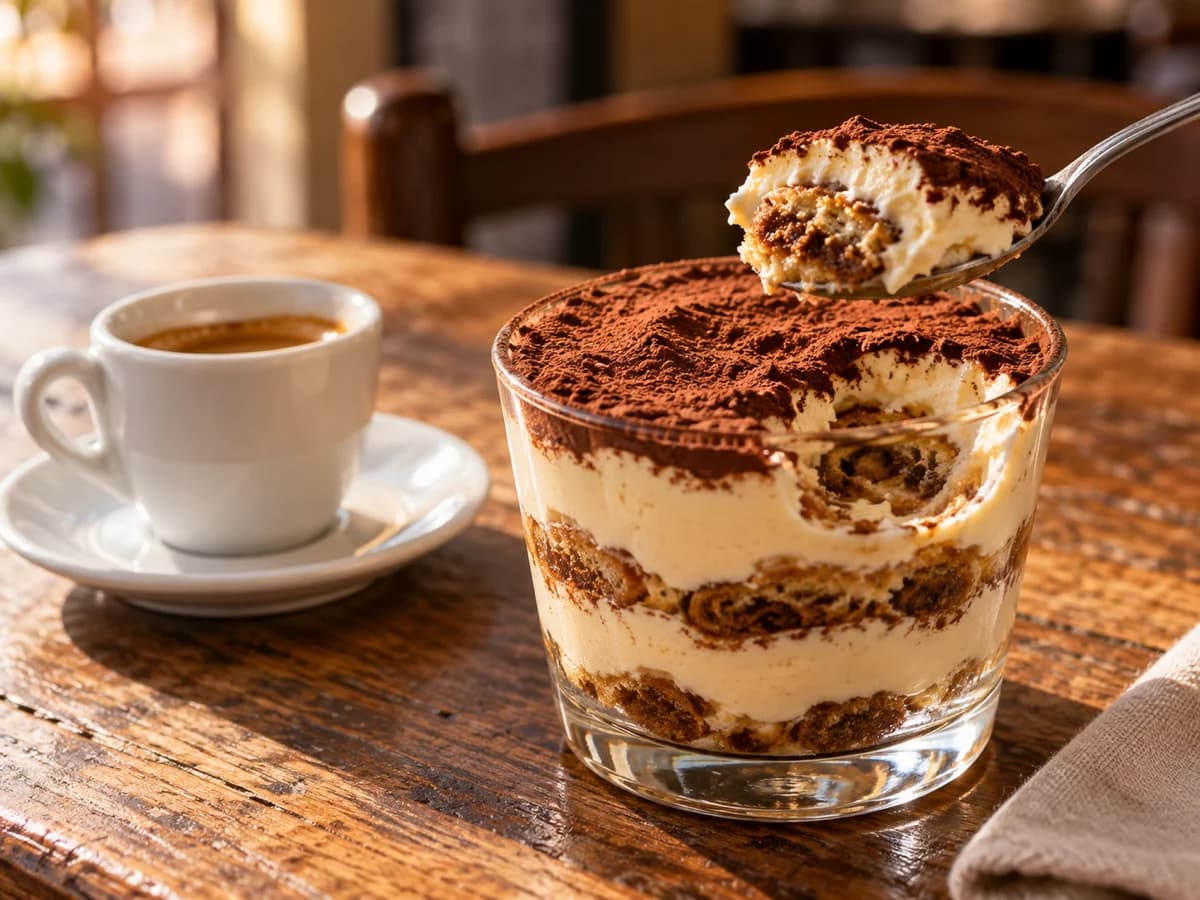
How to order tiramisu in a U.S. restaurant
Look for tiramisu or tiramisù on the dessert list. A description of ladyfingers or savoiardi, coffee and mascarpone points to the usual spoon dessert, while tiramisu cake and tiramisu cheesecake are different formats that borrow its flavors. A chain's menu describes ladyfingers, espresso with liqueur, mascarpone and rum, so ask whether the cream or the coffee soak contains alcohol when that matters.
A flavor added to the name, such as pistachio or berry, changes the main taste and can add allergens. Packaged tiramisu comes in a 17.6-ounce (about 500 g) box that its label divides into servings, so it is a shared dessert.
Tiramisu is usually the last course and is often ordered with espresso. For pregnancy or anyone at higher risk from foodborne illness, ask whether an unheated egg filling uses pasteurized egg yolks.
Eggs, milk, gluten and vegan tiramisu
Traditional tiramisu contains milk, egg and wheat: mascarpone is dairy, the yolks and the ladyfingers contain egg, and the ladyfingers are made with wheat flour. A chain's allergen table for its tiramisu also lists soy and gluten. A packaged tiramisu sold in US supermarkets lists milk, wheat and egg. Of the nine major allergens named by FDA, fish, crustacean shellfish, peanuts and sesame are not part of the six Treviso ingredients, but pistachio versions add tree nuts. Flavored products and shared preparation can change the allergen profile, so ask about the exact item for a serious allergy. Packaged foods must name major allergens on the label, and cross-contact is a separate risk.
The six traditional ingredients contain no meat, so classic tiramisu is vegetarian but not vegan or gluten free. A vegan version replaces both the dairy cream and the egg-containing biscuits with plant cream and a separately baked sponge; one published vegan version still contains wheat and can use coffee liqueur or rum. A restaurant offering gluten-free biscuits still has to account for the rest of the dessert and cross-contact, so ask how a gluten-free portion is prepared and whether it shares utensils or surfaces with the wheat biscuits. Wine or liqueur is added at assembly and the dessert is chilled afterward, so any alcohol in the cream or the soak stays in the dessert.
The classic filling uses raw egg yolks. Raw or lightly cooked unpasteurized eggs can carry Salmonella, and FDA specifically advises pregnant people to avoid tiramisu made this way. Young children, older adults and people with weakened immune systems are also at higher risk. Pasteurized yolks or fully cooked eggs are the options for a filling served without further cooking, and a dessert made with fully cooked eggs is the choice when the eggs in an unheated filling cannot be identified as pasteurized. A cream-based filling with no egg still sits on ladyfingers that contain egg.
Which should you order?
For the usual coffee-and-cocoa flavor, choose coffee-soaked ladyfingers and mascarpone. Choose a pistachio version for a nutty flavor or a berry version for fruit acidity. If alcohol matters, ask about both the cream and the coffee soak.
A useful question for the restaurant
Are the yolks in the cream pasteurized, and is there any Marsala, rum or coffee liqueur in either layer?
Ordering suggestions reflect taste preferences, not a guarantee about the restaurant’s ingredients.
Common questions
Does tiramisu contain alcohol?
Sometimes. Treviso-style tiramisu has no alcohol, while other versions use Marsala, coffee liqueur or rum. One chain describes its version with liqueur-laced espresso and rum, so the menu name alone is not enough to identify an alcohol-free dessert.
How many calories are in tiramisu?
A real restaurant portion can be much larger than a supermarket serving. At one US chain, one slice is 470 calories; another chain lists its tiramisu at 950 calories. A frozen supermarket tiramisu lists 240 calories per serving, so use the serving size on the menu or package rather than treating tiramisu as a fixed calorie count.
Is tiramisu raw, and can you eat it while pregnant?
Traditional tiramisu has raw yolks in the filling, though the ladyfingers are baked. FDA advises pregnant people to avoid tiramisu made with raw or lightly cooked eggs. Pasteurized yolks or a fully cooked egg dessert are safer choices for people at higher risk.
Is tiramisu gluten free?
No, standard tiramisu is not gluten free because ladyfingers contain wheat. A frozen packaged version also lists wheat, and one chain lists both wheat and gluten for its tiramisu. Ask about the full ingredient list and shared handling if you need a gluten-free dessert.