
Burrata vs Mozzarella: Texture, Taste and How to Eat Burrata
Burrata vs mozzarella: creamy filling or solid soft cheese?
Burrata is a fresh cheese pouch filled with cheese shreds and cream; fresh mozzarella is soft cheese all the way through, without that filling. The main burrata vs mozzarella difference is texture: cutting burrata releases a creamy center you spoon up with the rest of the plate, while a slice of fresh mozzarella keeps its shape on the fork.
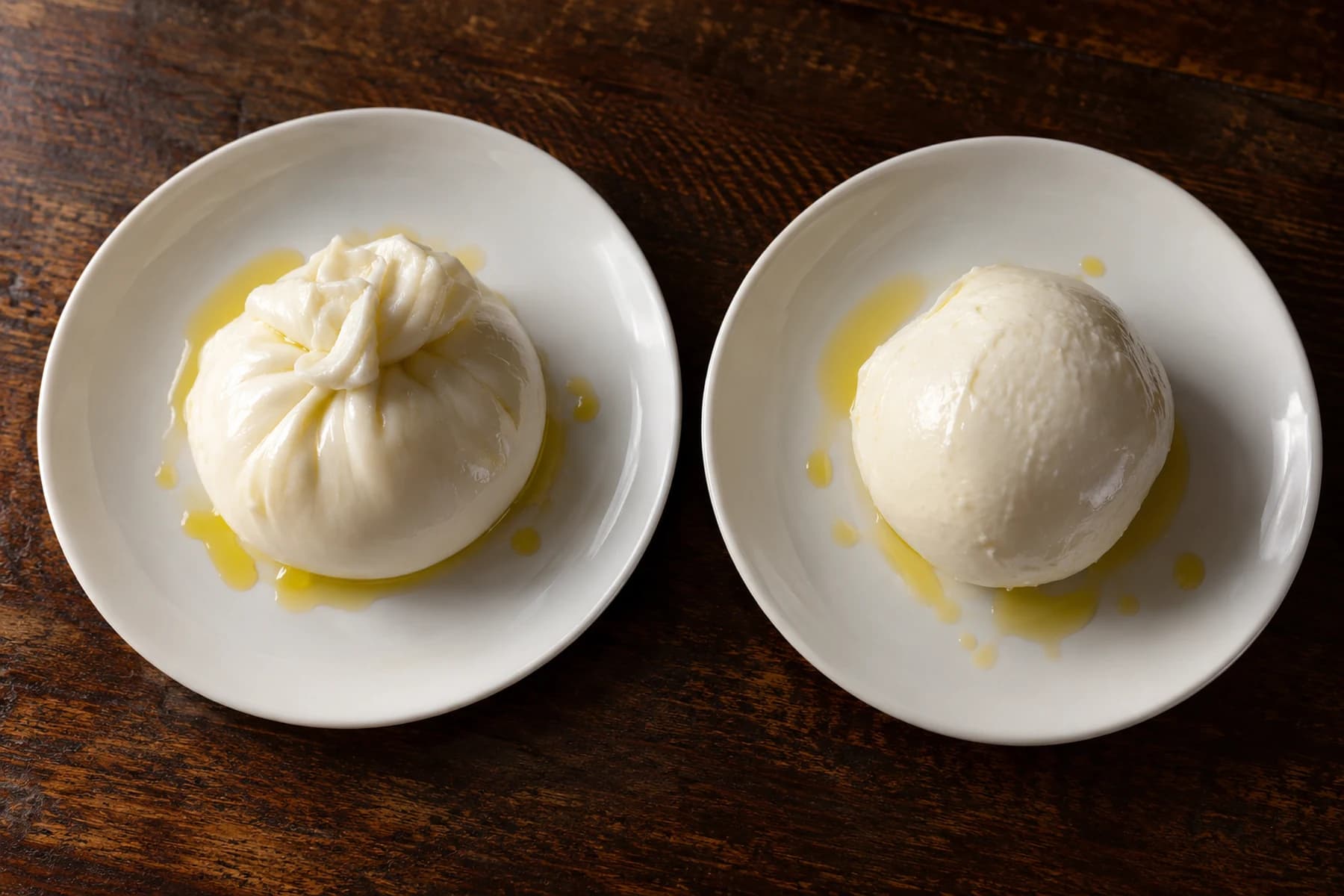
What is burrata? A pouch with two textures
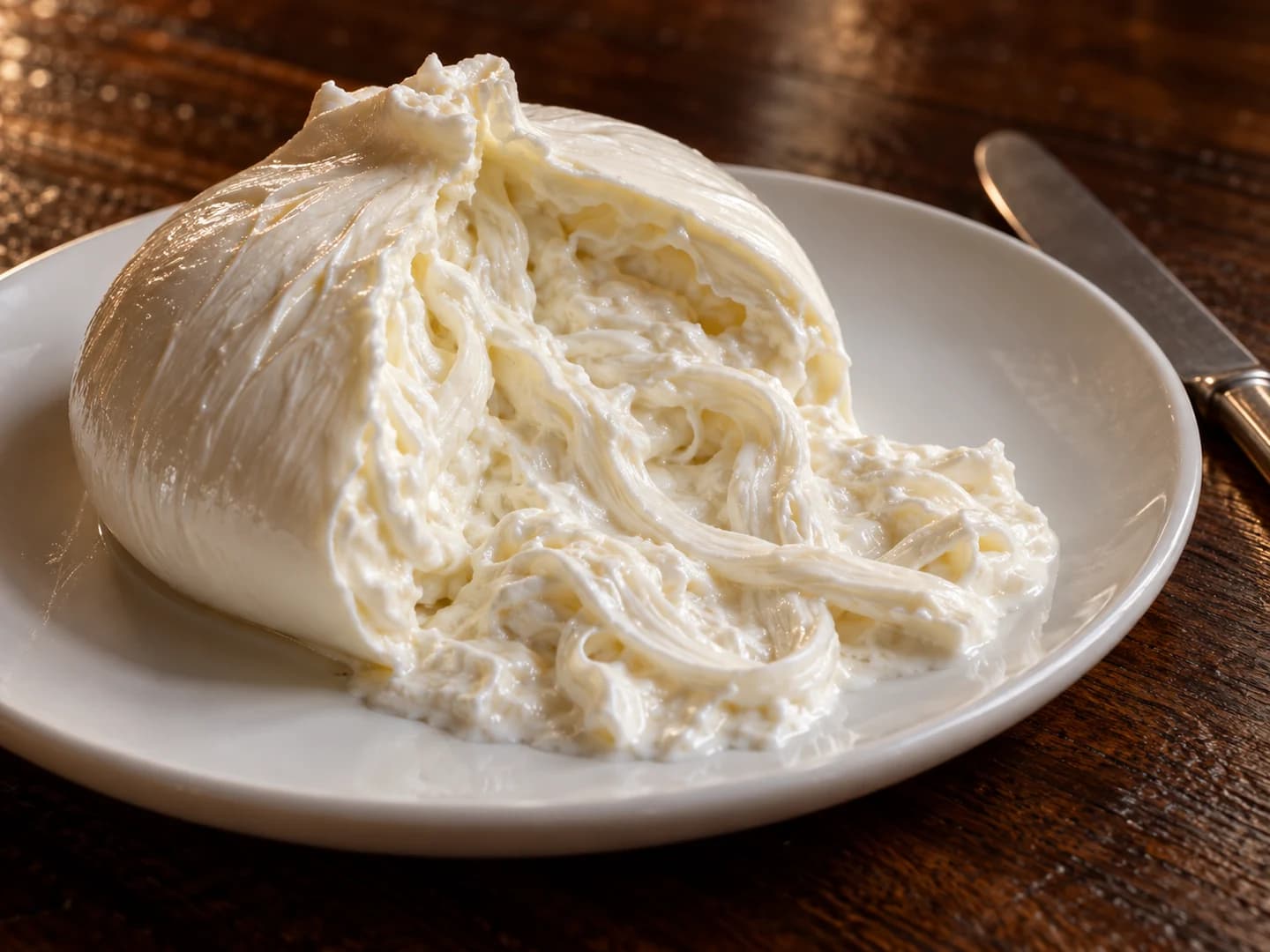
Burrata is a fresh cheese associated with Puglia in southern Italy, particularly Andria. Today it is made from cow’s milk, although buffalo or mixed milk was used in the past. Its outside is stretched cheese with a shiny, elastic surface similar to mozzarella, shaped into a pouch rather than left as a solid ball. The filling is that same cheese crumbled and mixed with cream, so the finished cheese has two distinct components even though it looks like a simple white ball before you cut into it.
The cheese-and-cream filling is called stracciatella, and its shreds are part of the eating experience rather than something to strain away. The outer pouch has enough structure to hold that soft center until it is opened.
Burrata can be served on its own or as one element of a larger appetizer, salad or pizza. In Puglia, restaurants and bars serve it as a starter together with another local specialty, taralli. When it arrives intact, the table can divide pouch and filling directly; when it has already been torn over other ingredients, the creamy part is spread through the dish instead.
What is fresh mozzarella? Soft cheese without a cream pocket
Fresh mozzarella is a soft, milky cheese that can be served in balls or cut into slices. Unlike burrata, the cheese continues through the middle instead of enclosing a separate mixture of cream and shreds. That makes it useful to think of the two as related eating experiences with different structures, rather than assuming burrata is simply another name for the same ball of cheese.
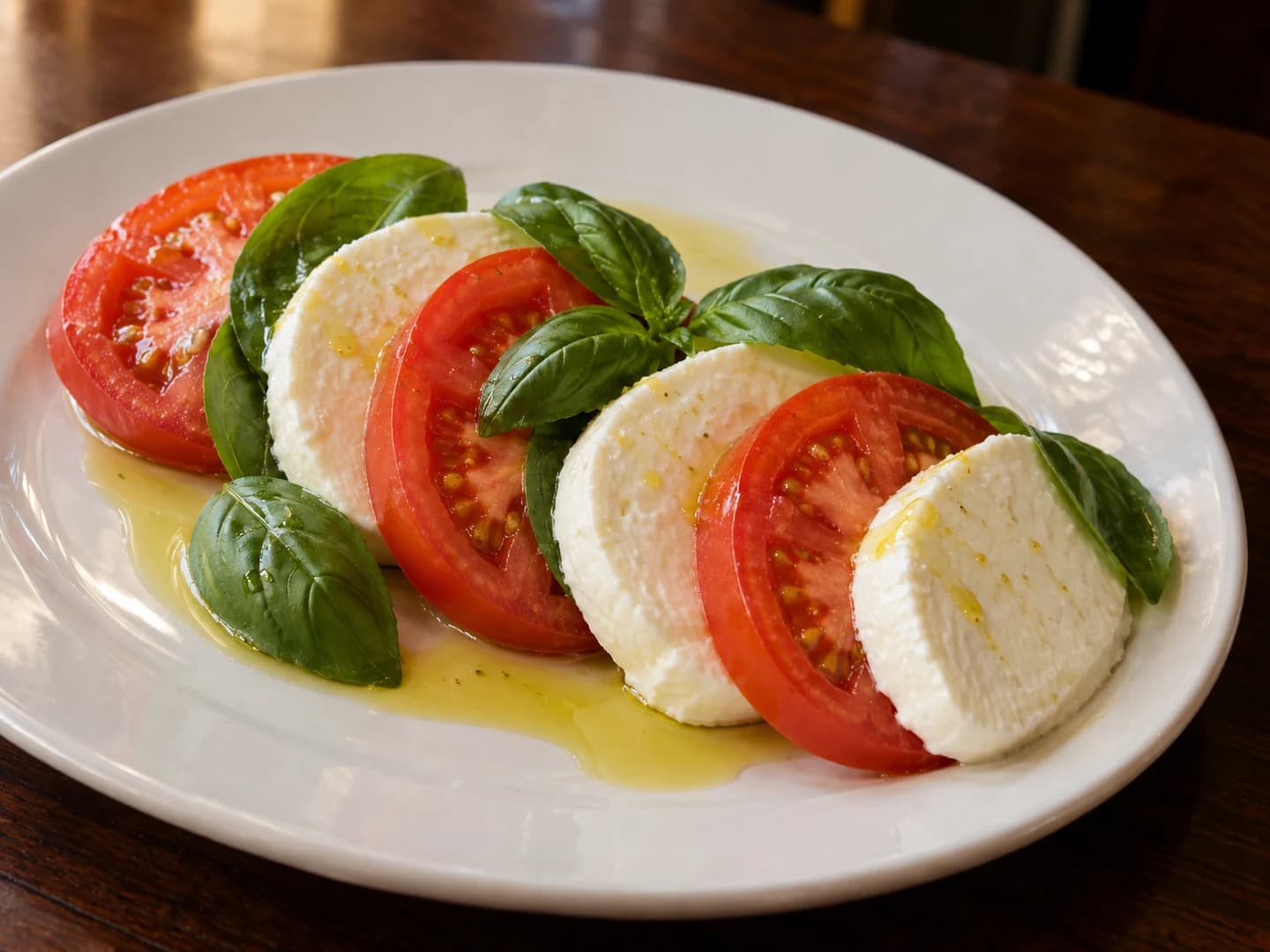
A caprese salad pairs mozzarella with tomato, basil and olive oil, making a familiar place to encounter it without a cooked sauce covering it. Cow’s-milk and buffalo-milk mozzarella can both appear in that style of salad. If milk type matters to the flavor you are seeking, ask which is being used; a menu that says mozzarella alone does not fully answer the question.
A baked pizza topping, a breaded appetizer and a fresh tomato salad are different dishes even when a menu uses the same cheese word. For a direct comparison with burrata, choose a simple uncooked serving of fresh mozzarella rather than changing cheese, cooking method and accompaniments simultaneously.
Burrata vs mozzarella: the structure changes the plate
The defining difference is a filled pouch versus cheese throughout, not a competition over which cheese is always better. Burrata offers a contrast between its outer cheese and its loose center, while mozzarella has no loose center, so a cut piece keeps its shape. A person who dislikes flowing food may prefer mozzarella for exactly the reason another diner would seek out burrata, so texture is a useful first decision before discussing toppings.
Use this comparison table to connect that structural difference with the meal you want. Mozzarella slices make sense when you want separate bites of cheese and tomato; burrata makes sense when a creamy element spreading into the other ingredients is part of the appeal.
When comparing menu descriptions, keep the accompaniments in view as well as the cheese name: a plain mozzarella salad and a burrata plate with cured meat differ in more than their centers. If you would enjoy either cheese, tomato ripeness, bread or a dressing you like may decide the order for you.
| Compare | Burrata | Fresh mozzarella |
|---|---|---|
| Inside | Cheese shreds mixed with cream | Cheese throughout; no separate cream filling |
| Texture | Shiny, elastic outer pouch and a loose, creamy center | Soft, delicate cheese with no loose center |
| First cut | Opens the pouch and releases filling | Slices into pieces that keep their shape |
| Simple serving | Plain, or with tomatoes and olive oil | Tomato, basil and olive oil in caprese |
| Ordering question | Whole or portioned, and what comes with it? | Which fresh mozzarella and how is it served? |
Taste and burrata texture: creaminess versus a soft bite
Both cheeses can have a fresh, milky flavor, so do not expect the contrast to resemble the difference between a fresh cheese and a strongly aged one. Burrata adds the richness of cream to that dairy character. If the idea of a generous creamy mouthful appeals to you, it is a useful choice even without complicated seasoning.
Burrata texture changes within a single bite: the pouch supplies a soft, elastic piece and the filling supplies cream with cheese shreds. Fresh mozzarella is also soft and delicate, but each slice is cheese from edge to center, with nothing to spill. If you prefer a piece you can pick up on a fork, mozzarella may suit you better than a center that needs gathering with the rest of the plate.
Temperature and seasoning influence how directly you experience the cheese. Serving guides suggest allowing burrata to lose its refrigerator chill before eating, and simple olive oil can leave its dairy flavor easy to notice. Freshness matters too: burrata is best eaten soon after it is made, and after several days its flavor turns sour.
How to eat burrata and share the filling
Cut an intact burrata on the serving plate, then take some outer cheese together with some filling so you experience both components. The outside is cheese to eat along with the center, not packaging to discard. If you are sharing, a serving spoon can help gather the soft part; divide that as well as the firmer pouch so each person gets the contrast you ordered it for.
Try a small bite of cheese before combining it with all the other ingredients, then add tomato, basil, olive oil or bread according to the dish. This suggested sequence helps you decide whether you enjoy the cheese itself or mainly its accompaniments. For mozzarella in a caprese, you can simply cut a piece of cheese and tomato together; there is no separate cream center to distribute.
Bread is useful for gathering the creamy filling that a fork cannot hold. If burrata is added to a pizza after baking, cut and distribute it with the slices as a finishing ingredient rather than expecting a melted layer.
How to choose and order in a US Italian restaurant
Read the complete dish description rather than ordering from the cheese name alone. Ask whether burrata comes with tomatoes, bread, cured meat or another accompaniment, and whether the cheese arrives whole or already opened. If your goal is a simple introduction to its texture, request a description of the plainest serving available instead of assuming every burrata dish presents the cheese in the same way.
Portion size varies: a single burrata can weigh anywhere between roughly 4 ounces and just over 2 pounds, so one ball is not a standard measure of how many diners it feeds. Tell the server whether you want a shared starter before pasta, a salad course or something more substantial, then ask what else the order needs.
If the restaurant offers burrata as a substitution, ask what changes in the finished dish rather than treating the swap as a simple upgrade. You may prefer mozzarella when you want distinct cheese slices and burrata when you want a creamy element among the other ingredients.
Dietary questions: milk, rennet and the complete dish
Both cheeses are dairy foods, and burrata’s filling includes cream as well as cheese. If you avoid milk, do not choose one simply because its texture looks lighter; ask the restaurant about an appropriate alternative. If you need information about a specific cheese’s milk source or pasteurization, request the actual product details, since a generic menu name cannot establish the formulation of the item the kitchen buys.
For a vegetarian meal, ask whether the cheese uses animal-derived or non-animal rennet and whether the full plate includes meat. Non-animal-rennet burrata and fresh mozzarella products exist, but that does not identify every restaurant’s supply. A tomato-and-cheese description is a good reason to ask about the rest of the ingredients, rather than enough information to settle every vegetarian requirement on its own.
Ask about nuts in pesto or other dressings, wheat or gluten in bread and crust, and egg, sesame or any other ingredient you need to avoid in the complete serving. Those are ingredient questions, not claims that every burrata or mozzarella plate contains them. If an allergy is involved, state it explicitly and ask the restaurant to check preparation and shared utensils as well as the written menu description.
Which should you order?
Choose burrata if a soft cheese pouch and creamy filling sound like the part of the dish you most want to eat. Choose fresh mozzarella if you prefer a slice that holds its shape and pairs cleanly with tomato and basil. When both appeal, decide by accompaniments, presentation and portion size rather than assuming the filled cheese is automatically the better order.
A useful question for the restaurant
Is the burrata served whole, what comes with it, and how does the portion compare with your fresh mozzarella dish?
Ordering suggestions reflect taste preferences, not a guarantee about the restaurant’s ingredients.
Common questions
Is ricotta the filling inside burrata?
No. Ricotta is a separate fresh cheese with small, soft white curds, and some ricotta is made from milk and whey. Burrata’s filling is the pouch cheese itself, crumbled into shreds and mixed with cream.
Is stracciatella on a dessert menu the burrata filling?
The same word can name different foods: it can mean the cheese preparation, a gelato with chocolate strands, or an egg-drop soup. Read the menu category and ask which meaning is intended rather than expecting the cheese filling whenever you see the word.
What are bocconcini on an Italian menu?
In a cheese or salad context, bocconcini can mean small balls of fresh mozzarella. They are not miniature burrata merely because they are round; ask whether the item is filled if that is the feature you want.
Can I freeze burrata or fresh mozzarella?
A producer’s handling guide advises against freezing its burrata and fresh mozzarella. Treat that as product-specific advice and follow the directions for the cheese you actually have rather than applying one storage rule to every fresh cheese.