
What Is Carbonara? Eggs, Pork and a Creamy Pasta Sauce
What is carbonara?
Carbonara is an Italian pasta dish of eggs, cured pork, hard cheese and black pepper. Roman-style spaghetti carbonara uses guanciale and Pecorino Romano for a glossy sauce without cream. American menus also use the name for cream-sauce versions with chicken, shrimp or peas, so read the listed ingredients before ordering.
What is carbonara?
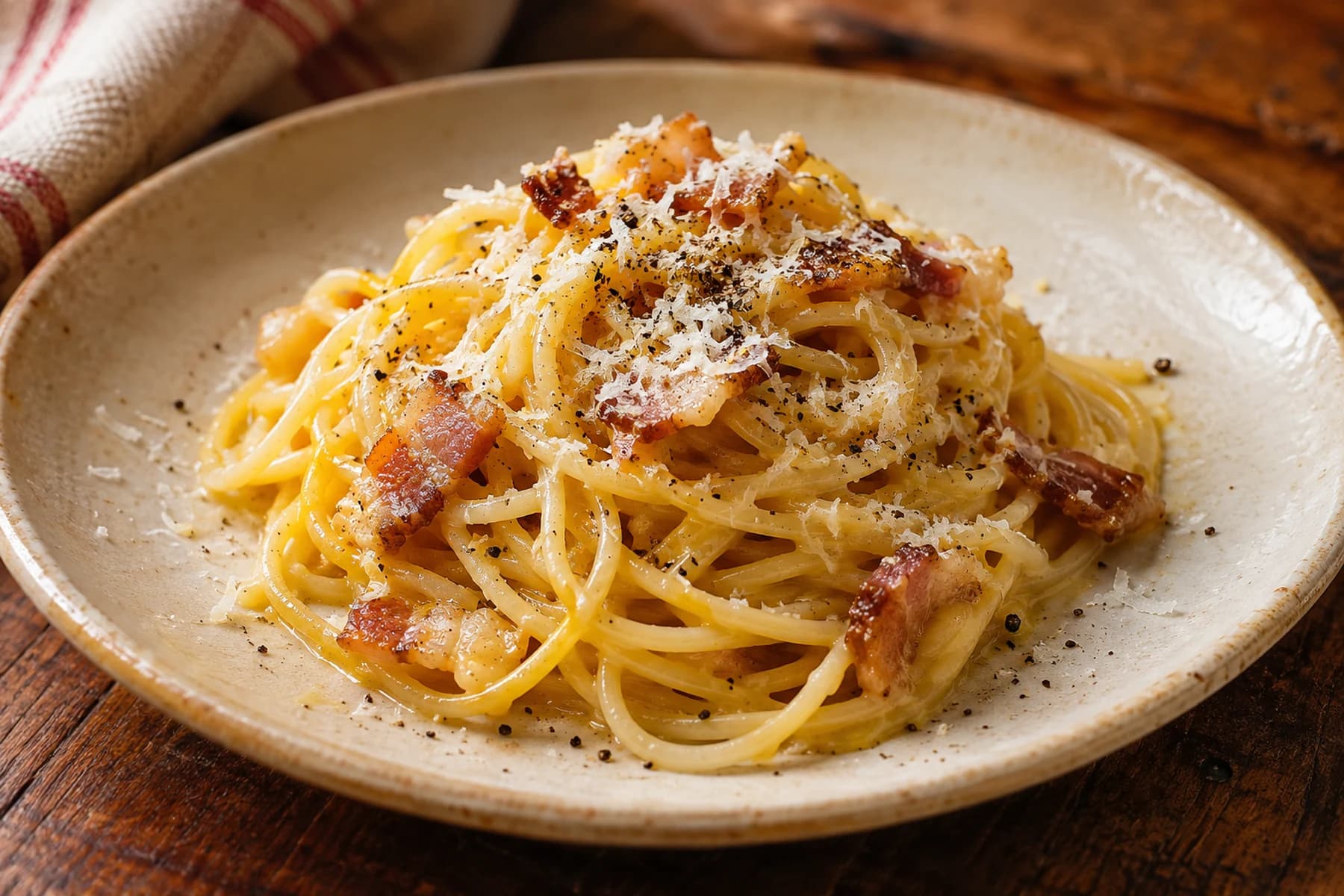
Carbonara is a Roman pasta dish built around egg, cured pork, hard cheese and black pepper. Spaghetti alla carbonara comes as long, thin strands coated in a glossy sauce, with pieces of browned pork through it. The contemporary Roman version uses guanciale, eggs and Pecorino Romano, and leaves cream out.
Say kar-boh-NAH-rah. Menus write it as Spaghetti alla Carbonara, Pasta Carbonara or simply Carbonara; spaghetti names the long, thin pasta strands, and the name may be linked to carbonaro, an Italian charcoal worker. That word link does not prove who invented the dish, and Rome's tourism authority records both a charcoal-worker story and a story about American soldiers in 1944.
The name spaghetti alla carbonara first appears in print in 1939, in a Dutch East Indies newspaper that mentions a Trastevere restaurant known for it without describing the dish. In 1950 an Italian newspaper reported that American officers had long sought it out in Trastevere restaurants. The first recipe on record was printed in 1952 in a Chicago cookbook, which suggests the dish reached the United States through servicemen or Italian Americans who had eaten it in Rome. A 1954 Italian recipe used pancetta, garlic and Gruyère, and Pecorino with guanciale became common in the late 1950s and 1960s. Some commentators argue that the American connection is overstated.
What does carbonara taste like?
Roman-style carbonara tastes salty, rich and peppery. Cured pork supplies salt and a deep savory flavor, egg adds umami, and Pecorino Romano brings a sharp dairy flavor. Guanciale is cured pork jowl; bacon, a common substitute outside Italy, tastes smokier.
Rendered pork fat makes the strands glossy, and browned pork gives a crisp contrast to chewy pasta. Thin pork strips turn out crisper than thicker cubes, which keep a softer center. The sauce is built on hot pasta, so carbonara arrives hot, and black pepper adds aroma along with warmth.
Black pepper gives a warm, aromatic bite, not the sharp burn of chili sauce, so carbonara is mild in heat. Cream-sauce versions coat the mouth more heavily, and peas add small sweet bites. Versions made with bacon and roasted red peppers lean smoky and roasted, a different flavor from the sheep-milk cheese and pork jowl of the Roman plate.
Carbonara ingredients and its creamy coating
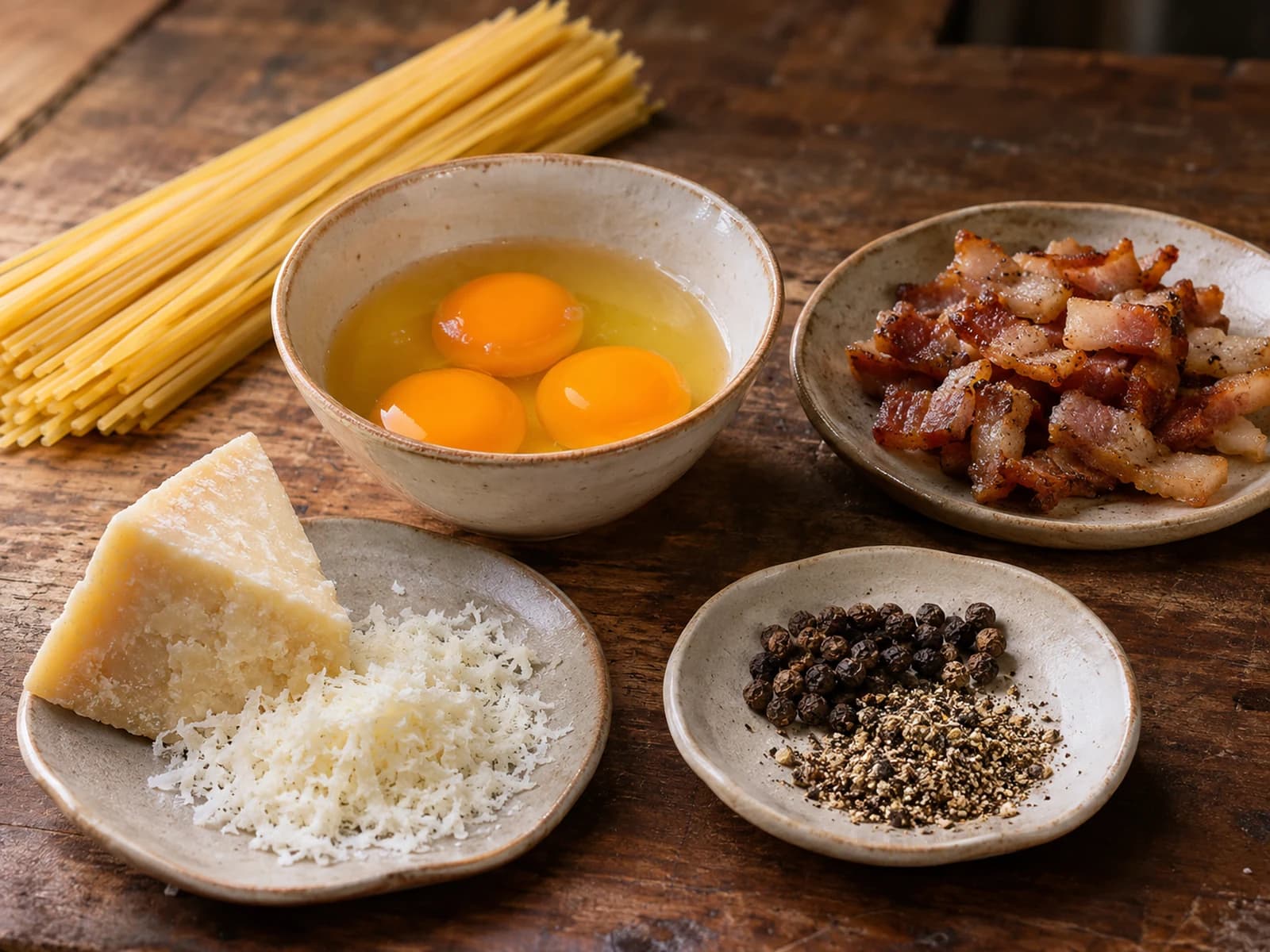
Roman carbonara uses durum-wheat pasta, guanciale, eggs, Pecorino Romano, black pepper and salt. Pecorino Romano is an aged sheep-milk cheese; Parmigiano Reggiano, a hard cow-milk cheese, appears in some versions, and Grana Padano or a blend is occasionally used. Pancetta, cured pork belly, is also used, and bacon is a common stand-in outside Italy. Recipes vary between whole eggs, yolks only and a mix of the two.
The pork is browned to release its fat, and the hot pasta is combined with egg and grated cheese away from direct heat. Pasta water helps the mixture coat the strands so it does not turn into dry scrambled egg. That gentle mixing produces the creamy look with no cream at all. The silky texture alone cannot show whether the egg reached a safe degree of doneness.
Cream is common outside Italy because it stabilizes the sauce, and garlic shows up mostly in non-Italian versions. Ready-made carbonara sauces sold in many countries are often thickened with cream and starch and usually use bacon or pancetta in place of guanciale. One 12.3-ounce US jar lists Pecorino, egg and pork jowl, and that listing describes a sauce, not a finished plate of pasta.
Roman, chicken, shrimp and packaged versions
Roman carbonara centers on egg, guanciale and Pecorino. Spaghetti is the most common pasta, with bucatini or rigatoni also used; tubular shapes such as penne suit versions with a larger amount of sauce.
The recipe has changed over time and by place. The 1954 Italian recipe used pancetta, garlic and Gruyère, and cream stayed in many recipes into the 1990s. Most Italian recipes today leave cream out, while outside Italy it remains common. Alfredo, a creamy dairy sauce, is the usual point of comparison for the cream versions.
Some American menus list Chicken Carbonara with chicken breast, prosciutto, peas and garlic in Alfredo sauce. Chicken and Shrimp Carbonara adds shrimp, bacon and roasted red peppers in a cream-style sauce, Shrimp Carbonara drops the chicken, and Ravioli Carbonara swaps the long strands for filled pasta. In grocery stores the name also appears on jarred sauce, such as one 12.3-ounce US jar that lists Pecorino, egg and pork jowl.
Eating carbonara while the sauce coats the pasta
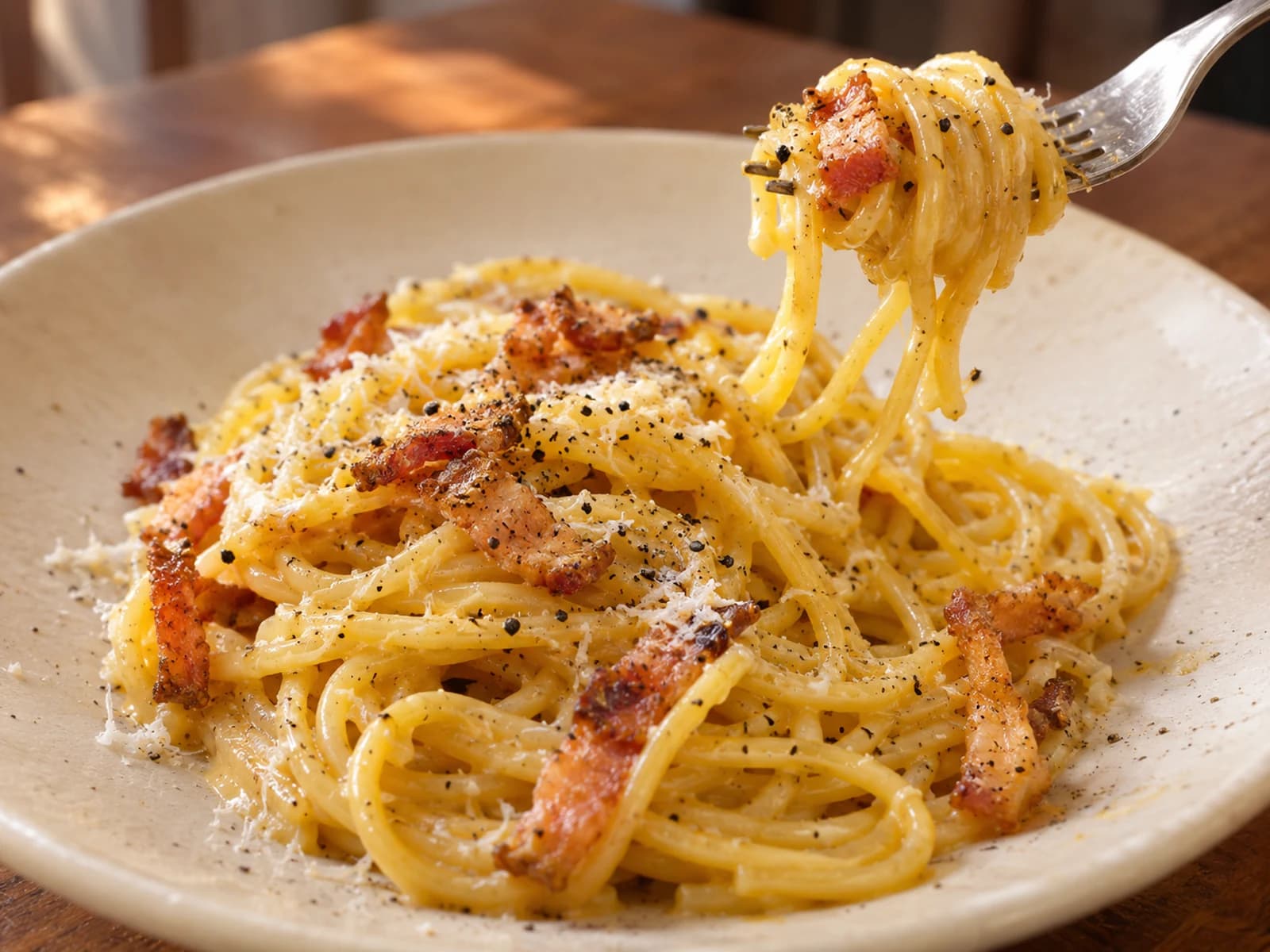
Carbonara is served as a plate of pasta and eaten with a fork. Eat it promptly while the sauce still coats the strands smoothly. Twirl a small amount of spaghetti against the plate instead of lifting a large bundle with long loose strands hanging.
Take a little pork with the pasta so the crisp and soft textures arrive in one bite. Extra grated cheese intensifies the salt and dairy flavor already in the sauce, so add it only if you want more of both.
In a family-style order, divide the pasta and pork among the plates while the dish is warm, so the later portions get their share of the meat pieces.
Ordering carbonara in the United States
Look for Spaghetti alla Carbonara or Pasta Carbonara, then read whether the sauce lists egg and Pecorino or Alfredo and cream. Guanciale means cured pork jowl, pancetta cured pork belly and prosciutto cured ham, and none of them is vegetarian. Chicken, shrimp and ravioli in the name point to extra ingredients or a different pasta format.
Ask whether the serving is an individual entree or a shared platter, since some American family-style menus offer pasta sizes for 2–3 or 4–5 diners. A 12.3-ounce retail listing refers to a sauce jar, not a restaurant pasta portion.
Egg, guanciale and Pecorino in the description point to the Roman style. Alfredo, cream, chicken, peas or shrimp in the description point to the American cream-sauce style, which is a different dish under the same name.
Wheat, egg, milk and lightly cooked eggs
Standard spaghetti carbonara contains wheat, egg and milk. A cream-free Roman sauce still contains milk through sheep-milk cheese. Shrimp versions add crustacean shellfish, and some restaurant sauces and filled-pasta versions also contain soy; shrimp preparations can carry sulfites. At one large US chain, Chicken Carbonara is marked for milk and wheat on the allergen table. The Roman ingredient list of pasta, pork, egg, Pecorino and pepper has no fish, peanut, tree nut or sesame, but sauces, fillings and sides on restaurant versions differ.
Carbonara is not vegetarian because of the cured pork, and it is not vegan because of the egg, cheese and pork. It is not gluten free because the pasta is wheat. Gluten-free pasta alone says nothing about the sauce or a shared pasta cooker, so check the complete preparation and cross-contact handling when gluten matters.
Raw or lightly cooked eggs can carry Salmonella, and gentle warming with pasta does not by itself prove adequate cooking. Pregnant diners should choose thoroughly cooked egg dishes or preparations made with pasteurized eggs, and use pasteurized dairy products. Confirm the egg and cheese handling before ordering.
Which should you order?
Choose guanciale, egg and Pecorino for a peppery, pork-rich Roman style. Bacon gives a smokier profile. A U.S. chicken version can pair chicken breast, prosciutto, peas and garlic with Alfredo sauce, making it richer and creamier.
A useful question for the restaurant
Is this egg-and-cheese carbonara or a cream-sauce version, which pork is used, and are the eggs pasteurized or fully cooked?
Ordering suggestions reflect taste preferences, not a guarantee about the restaurant’s ingredients.
Common questions
How many calories are in carbonara?
One bacon-and-Parmesan recipe lists 444 kcal for one of its eight servings. For a restaurant-size reference, one small family-style Chicken Carbonara serving at a large U.S. chain is listed at 730 kcal. Both figures vary with the pasta amount, pork and sauce.
Is carbonara spicy?
Usually no: carbonara is peppery rather than chili-hot. Black pepper gives the egg-and-cheese coating its warmth and aroma.
Is carbonara vegan?
No. Standard carbonara has egg, cheese and cured pork; a vegan version would need to replace all three. A packaged U.S. carbonara sauce also lists Pecorino, egg and pork jowl.
Is carbonara gluten free?
No, regular spaghetti carbonara is not gluten free because the pasta is wheat. A gluten-free pasta substitution also needs a gluten-free sauce and separate cooking equipment to avoid cross-contact.