
Cacio e Pepe: Rome's Cheese and Pepper Pasta
What is cacio e pepe, and how spicy is it?
Cacio e pepe is a Roman pasta dish of tonnarelli or spaghetti coated in a glossy sauce of Pecorino Romano, black pepper and starchy pasta water. The classic version has no egg and no cream. Its flavour is salty, sharp and warmly peppery. One serving has about 485 calories.
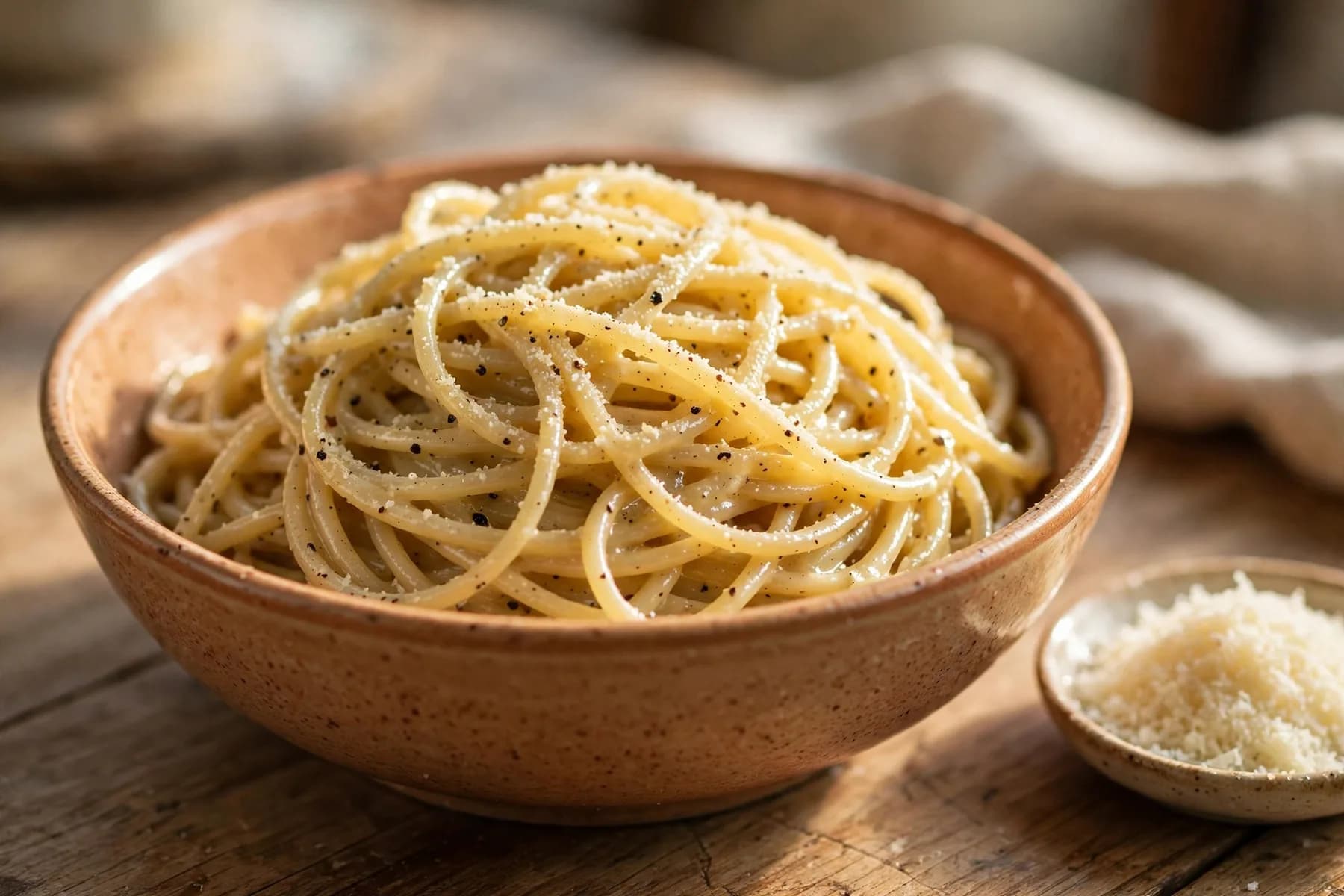
What is cacio e pepe?
Cacio e pepe is a Roman pasta dish built from pasta, Pecorino Romano cheese, black pepper and starchy pasta water. The cheese melts into the water and coats each strand in a glossy, pale sauce flecked with dark pepper. A bowl arrives hot, and the sauce clings to each strand.
The name means cheese and pepper in the Roman dialect, and it is pronounced kaa-chee-ow-ee-peh-pay. Tonnarelli is the traditional pasta, a thick square-cut strand, while spaghetti is the usual substitute outside Italy. Bucatini and rigatoni also appear, and each shape holds the sauce in a slightly different way.
The dish comes from Rome and Lazio, and it stands as one of Rome's four great pasta dishes, beside carbonara, amatriciana and gricia. A common story says shepherds carried dried pasta, aged sheep cheese and pepper on long journeys, because those foods kept well. The same account says pepper joined the dish later, when it became easier to get.
What does cacio e pepe taste like?
Pecorino Romano gives the first flavour: salty, sharp and savoury, from a sheep milk cheese. Black pepper follows with a warm, floral heat that stays in the background of each bite. The pasta itself tastes mild and wheaty, so the cheese and pepper carry the flavour.
The sauce feels creamy and smooth when it works, with a light cling that coats the tongue without feeling heavy like a cream sauce. Freshly cracked pepper adds tiny bursts of aroma, and the cheese gives a faint tang.
The heat comes only from black pepper, so it warms the mouth with a gentle heat. How strong that warmth feels depends on how much pepper the cook uses, and some versions use a lighter hand. If you want a gentler bowl, the pepper level is the thing to change, while the cheese stays the same.
What ingredients go into cacio e pepe?
The classic list is short: pasta, Pecorino Romano, black pepper, salted water for cooking, and some of that water saved for the sauce. Pecorino Romano is a hard sheep milk cheese, saltier and sharper than Parmesan, and it needs to be grated very fine. Whole black peppercorns, cracked just before cooking, give more aroma than pepper from a jar.
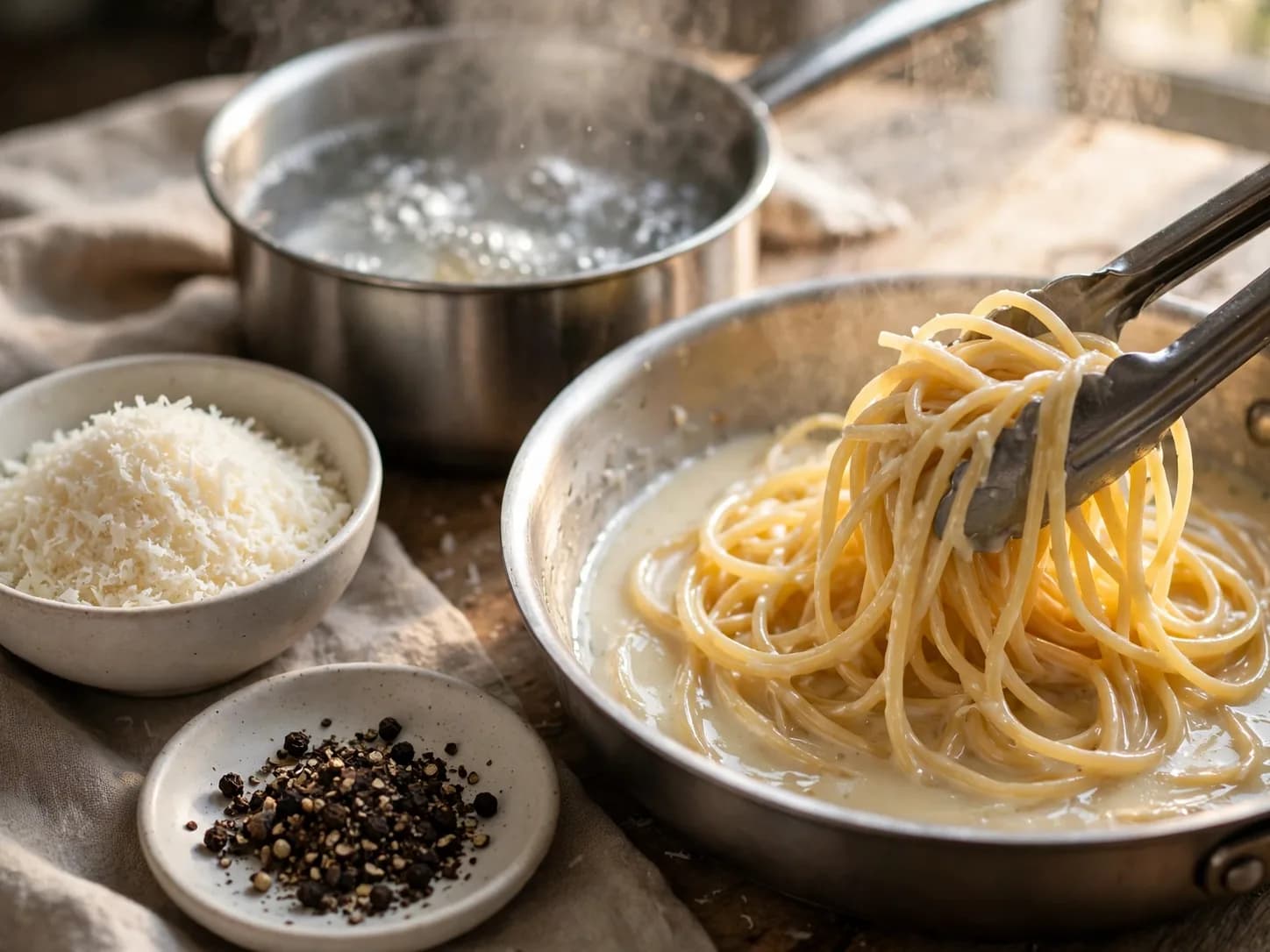
The pepper goes into a dry pan first, where toasting wakes up its aroma, while the pasta cooks in well-salted water kept starchy by using less water than usual. The grated cheese is mixed with a little cold water into a thick paste, which helps it melt smoothly. The pasta is tossed with pepper and hot pasta water, then the pan comes off the heat before the cheese paste goes in, because cheese that meets a pan above 70°C seizes and clumps, and small splashes of pasta water loosen the sauce until it turns glossy.
That temperature rule explains why the dish is hard to get right, and in 2025 the sauce won an Ig Nobel Prize in physics for work on how its cheese and starch behave. Modern versions change the base: some add butter to bloom the pepper, and some add a splash of cream for extra richness. Those versions taste richer and heavier than the classic three-ingredient one.
Cacio e pepe versions and relatives
The main split is between the classic version and modern restaurant and home versions that add butter, cream or olive oil. A 50/50 blend of Pecorino Romano and Parmigiano Reggiano is another common change, and it makes the flavour milder and less salty. Parmesan alone works as a substitute, with the same softer result.
Carbonara is the closest relative, and the difference is clear once you see the two side by side: carbonara adds egg and guanciale, cured pork cheek, to the same cheese and pepper base, while cacio e pepe keeps only cheese and pepper. Gricia sits between them, because it adds guanciale without egg. Some Roman cooks add a little guanciale to cacio e pepe itself, which moves the dish toward gricia.
Outside Rome you also find the sauce on rigatoni, penne and bucatini, and a jarred sauce version is sold in the United States with water, Pecorino Romano, sunflower oil, modified corn starch, black pepper and thickeners. That jarred sauce gives the cheese and pepper flavour in shortcut form, with a looser texture than a fresh emulsion made in the pan.
How to eat cacio e pepe
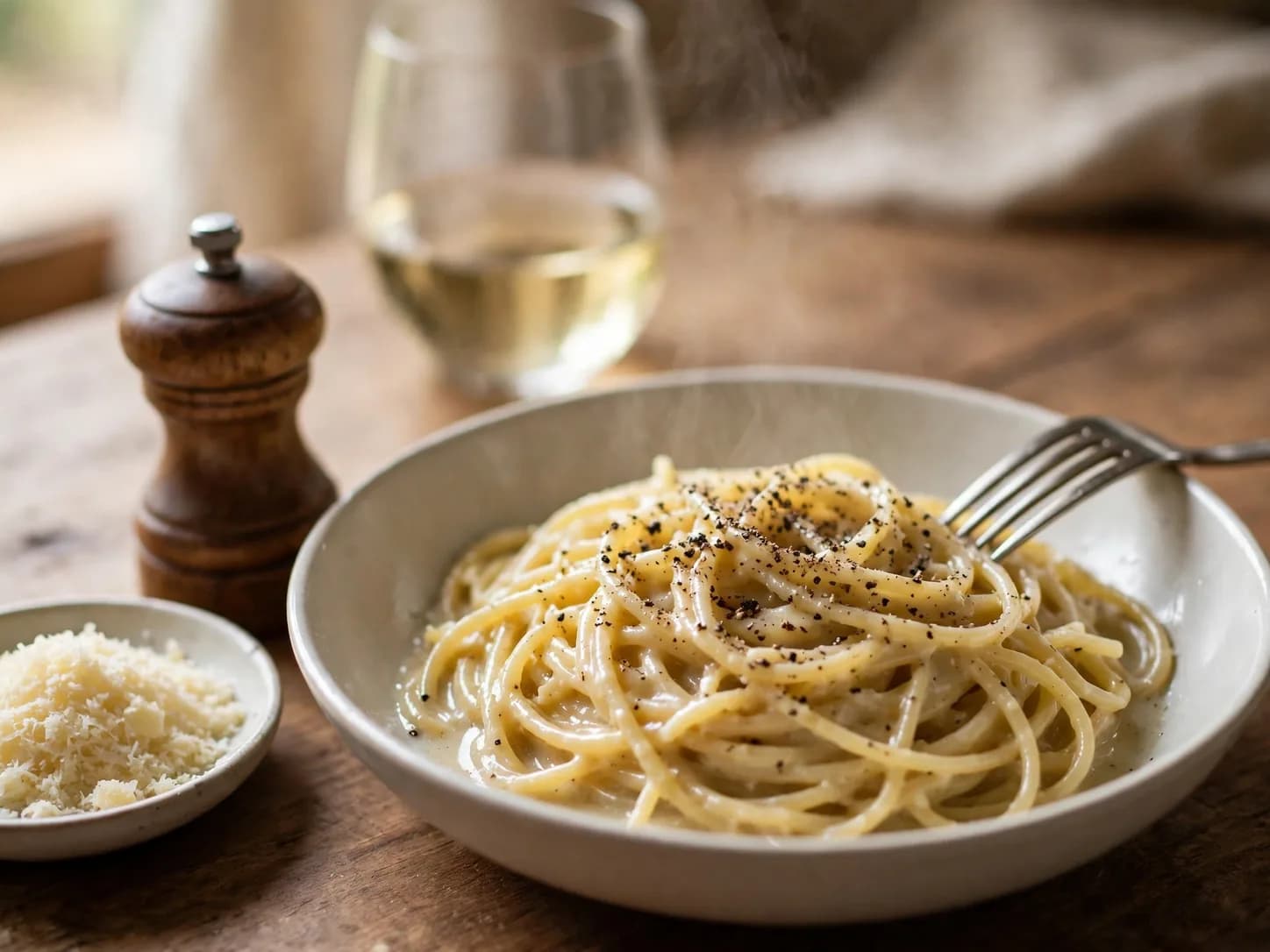
Cacio e pepe is served at once, in a warm bowl, with extra grated Pecorino and a few cracks of black pepper passed at the table. Eat it while it is hot, because the cheese can set on the pasta. A fork is the usual tool, and each mouthful should carry pasta, sauce and pepper together.
In Rome the dish often works as a primo piatto, the pasta course before a grilled meat or vegetable dish. A crisp white wine from Lazio, such as Frascati or Verdicchio, cuts through the sharpness of the cheese. A fresh salad also sits well beside it.
The common mistake is waiting. The bowl loses its gloss and the pasta starts to stick together if it sits, so the dish works best as a single hot course. Order it when you are ready to eat, and give it your full attention while the sauce is still glossy.
How to order cacio e pepe
On a menu, look for the words cacio e pepe, and for the pasta shape named beside it, usually tonnarelli, spaghetti or bucatini. Tonnarelli means a thick square-cut pasta, bucatini is a thick hollow strand, and spaghetti needs no translation. If the menu lists guanciale or egg with the same name, you are looking at a version that has moved toward gricia or carbonara.
A serving is usually a single main-course portion, and recipes for two show how rich one bowl can be. In a multi-course meal, a smaller portion works better, because the cheese makes the dish rich despite its simple list. Tell your server if you want a smaller portion; more pepper at the table is an easy change.
The dish pairs well with a salad or a vegetable side, and with a crisp white wine. If you eat dairy-free or gluten-free, say so before you order, because the standard version contains both milk and wheat, and the kitchen may offer a different pasta or cheese.
Is cacio e pepe gluten free or vegan?
Milk is present, because Pecorino Romano is a sheep milk cheese and forms the sauce, and wheat is present, because the pasta is the base of the dish. Egg is a possible presence, because some pasta contains egg. Fish, shellfish, tree nuts, peanuts, sesame and soy are absent from the classic version, unless a substitute cheese brings soy in, and milk and wheat are among the major allergens the FDA lists, so tell your server about either allergy before you order.
The classic version is vegetarian, because it contains only pasta, cheese, pepper and water, but it is not vegan, because the cheese is dairy. A vegan version swaps the Pecorino for a plant-based parmesan and uses vegetable broth for moisture, and it keeps the same peppery character without dairy. A gluten-free version swaps the pasta for a gluten-free pasta, and the cheese and pepper stay the same, but a packaged food that calls itself gluten-free must stay below 20 parts per million of gluten under the FDA rule, and a restaurant version should meet the same idea.
Leftovers keep in an airtight container in the fridge for up to two days, inside the general 3 to 4 day window for cooked leftovers, and the sauce tightens as it cools. Reheat them gently in a pan with a tablespoon of water, tossing constantly, until the sauce loosens again. The jarred sauce lists milk as its only allergen, so its label is a useful check for the packaged version.
Which should you order?
Choose the classic version if you want sharp cheese and clear pepper heat; choose a butter or cream version if you want a softer, richer bowl, and look for guanciale or egg on the menu, because those move the dish toward gricia or carbonara.
A useful question for the restaurant
Can I have the cacio e pepe with extra black pepper, and is the pasta made with egg?
Ordering suggestions reflect taste preferences, not a guarantee about the restaurant’s ingredients.
Common questions
Is cacio e pepe spicy?
Yes, but only mildly: the heat comes from black pepper, not chili. The dish is often compared to mac and cheese, but with a bold, peppery kick instead of a mild cheese sauce. If you want it gentler, order it with less pepper, because the pepper amount sets the warmth while the cheese stays the same.
Does cacio e pepe have egg?
The classic version has no egg. The jarred sauce lists no egg either: its ingredients are water, Pecorino Romano, sunflower oil, modified corn starch, black pepper and thickeners. If egg matters to you, read the pasta label, because some fresh pasta contains egg.
Is cacio e pepe gluten free?
The standard version is not gluten free, because the pasta is wheat pasta. Gluten is a mixture of proteins found in wheat, rye and barley, so the pasta is the part that has to change. The swap is only about the pasta: the cheese, pepper and pasta water stay the same.
Is cacio e pepe vegan?
The classic version is not vegan, because Pecorino Romano is a sheep milk cheese. The vegan version needs no blender and no cashews, and it uses vegetable broth instead of butter or cream. Its listed serving has 531 calories, so the plant-based swap does not make it a light dish.
How many calories are in cacio e pepe?
One serving has about 485 calories, with 820 mg of sodium, in the version with a plain cheese and pepper sauce. The butter version is a different bowl: it lists 785 calories and 31 g of fat per serving. The jarred sauce alone has 100 calories per 60 g serving, before the pasta is added.