
What Are Cannoli? Ricotta Filling, Shells and Calories
What are cannoli, and what is the filling?
Cannoli are Sicilian pastries: crisp fried tubes filled with sweetened ricotta. Classic versions use milk and wheat, and many shells use egg; lard is also traditional. U.S. bakeries sell ricotta, custard, whipped-cream and chocolate-covered versions, so the shell, filling and topping determine both texture and allergens.
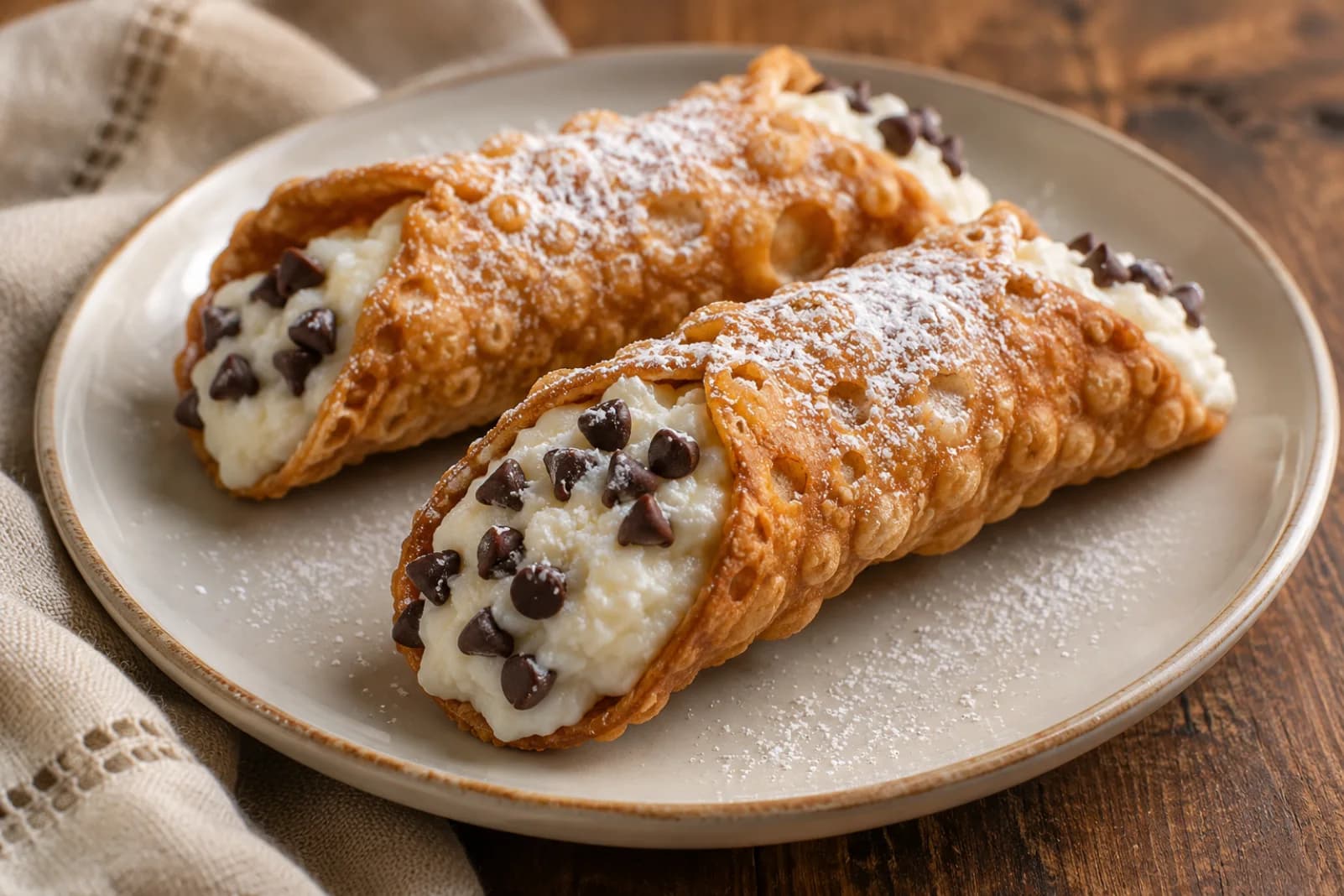
What are cannoli?
Cannoli are crisp Sicilian pastry tubes filled with sweetened ricotta, a fresh dairy cheese. The hollow shell is fried dough with a bubbled, brittle surface, and it is filled after frying and cooling. Chocolate chips, pistachios, candied fruit, and powdered sugar are common finishes. In Italy the tubes run from about 9 to 20 centimeters long. Bakery versions may use vanilla custard or whipped cream in place of ricotta.
Say the name roughly “kuh-NOH-lee.” In Italian one pastry is a cannolo and two or more are cannoli; Sicilian uses cannolu and cannola, and mainland Italy often says cannolo siciliano. The name is a diminutive of canna, meaning cane or tube, so it translates as “little tubes.” A menu may print cannoli, mini cannoli, or cannolo siciliano for the same family of pastry.
The pastry is tied to Carnival season in Sicily and is now made all year. Some food historians place its origin in Caltanissetta during the period of Arab rule, roughly 827 to 1091, and propose the Arabic qanawat, “tubes,” as the source of the name; others link the pastry to Palermo and Messina. Arab influence is credited with bringing sugar, candied fruit, pistachios, and cinnamon to the island. Related pastries include Maltese kannoli and Albanian kanojet.
What does cannoli taste like?
Ricotta cannoli taste sweet and milky, with a cool, creamy center inside a crisp shell. Chocolate chips add firm chocolate bites, pistachios add a nutty crunch, and candied fruit adds sweet citrus. Recipes also put cocoa, cinnamon, coffee, or Marsala wine in the shell dough, so the shell can carry a faint bitter or spiced note of its own.
Texture is the point of the pastry: a shattering shell against a soft filling. The filling gradually softens the shell, so a cannolo filled close to serving has the sharpest contrast. A chocolate-dipped shell adds another brittle layer, while a chocolate custard filling changes the center rather than the shell. Custard is smoother and more uniform than ricotta, and whipped cream is lighter.
Cannoli are sweet rather than spicy, and the sweetness is moderate to rich depending on the filling and any dipped or powdered finish. Regional versions differ: Palermo-style fillings use candied orange zest, Catania-style versions use chopped pistachios, and Ramacca is known for a version with purple artichokes. In the U.S. the usual points of difference are chocolate chips, nuts, and the choice of ricotta or custard.
Cannoli ingredients: shell and ricotta filling
A traditional shell uses wheat flour, sugar, egg, lard, cocoa, and Marsala or another wine; vinegar is an alternative to the wine. Some recipes add cinnamon or coffee powder, and some use butter in place of lard. Marsala is a fortified Sicilian wine. The filling is ricotta made from sheep’s or cow’s milk, sweetened and often mixed with chocolate chips, with candied orange or fruit, pistachios, and powdered sugar as options.
Two steps shape the pastry. The dough is wrapped around a tube and fried, which gives the shell its bubbled, brittle surface; once cooled, the hollow shell can be filled. Filling comes last because the moisture in the cream softens the shell over time. The frying fat is lard in a traditional recipe, and canola or peanut oil in others.
Bakery cannoli are usually made from ready shells filled to order or in advance, while a packaged version arrives already filled or sold as shells with filling separate. Fresh bakery versions are sold filled on the day, whereas a commercial shell maker sells shells in 2-, 3-, and 5-inch lengths. Packaged supermarket cannoli carry an ingredient label, which is the most reliable record of the shell, filling, and any shared-equipment warning.
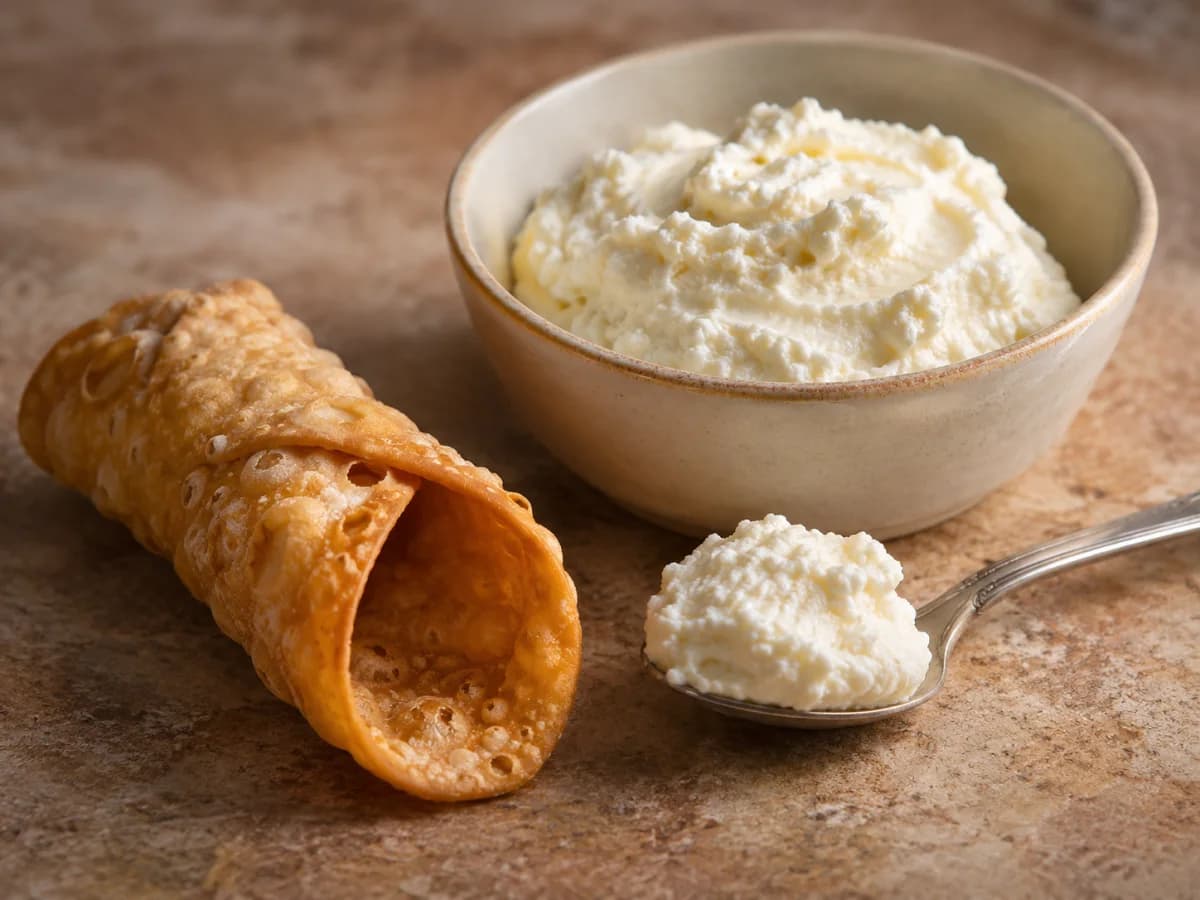
Ricotta, custard, chocolate and nut versions
U.S. bakeries offer traditional ricotta, vanilla custard, chocolate custard, whipped cream, and chantilly, a sweetened whipped-cream filling. Shells may be plain, chocolate-dipped, chocolate-covered, or mini, with chocolate chips, pistachios, or almonds as toppings. The filling and the shell are chosen separately, so a name such as “chocolate cannoli” can mean a chocolate shell, a chocolate filling, or both.
Regional Sicilian styles are tied to the finish: candied orange zest in the Palermo style, chopped pistachios in the Catania style, and a purple-artichoke filling in Ramacca. Maltese kannoli and Albanian kanojet are related pastries in neighboring cuisines. A mini cannolo changes the size, not the kind of filling, and many bakeries sell minis by the piece or in boxes.
Packaged supermarket versions include two-packs of large cheese-filled cannoli and 12-packs of mini chocolate-covered cannoli. A gluten-free bakery version uses a plain shell and ricotta only; its rice- and corn-based shell still contains milk and may have soy and nut traces. Gluten-free here refers to the wheat, not to dairy.
How to eat cannoli and keep the shell crisp
Eat cannoli while the filling is cool and the shell is crisp. Pick up a small cannolo; use a plate and fork for a larger one to catch the fragments. Filled-to-order service gives the filling less time to soften the shell.
A cannolo is a dessert, usually served on its own on a small plate or in a pastry box. It is dusted with powdered sugar or rolled in chocolate chips or pistachios at the ends. Mini cannoli are eaten in a few bites, and an assorted box is typically shared across a table.
Keep filled cannoli refrigerated until serving; one producer gives filled shells a refrigerated life of up to three days. The shell loses crispness as it absorbs moisture from the cream, so a day-old filled pastry is softer than a fresh one. Leaving a filled pastry out warm is a food-safety concern because the filling is dairy.
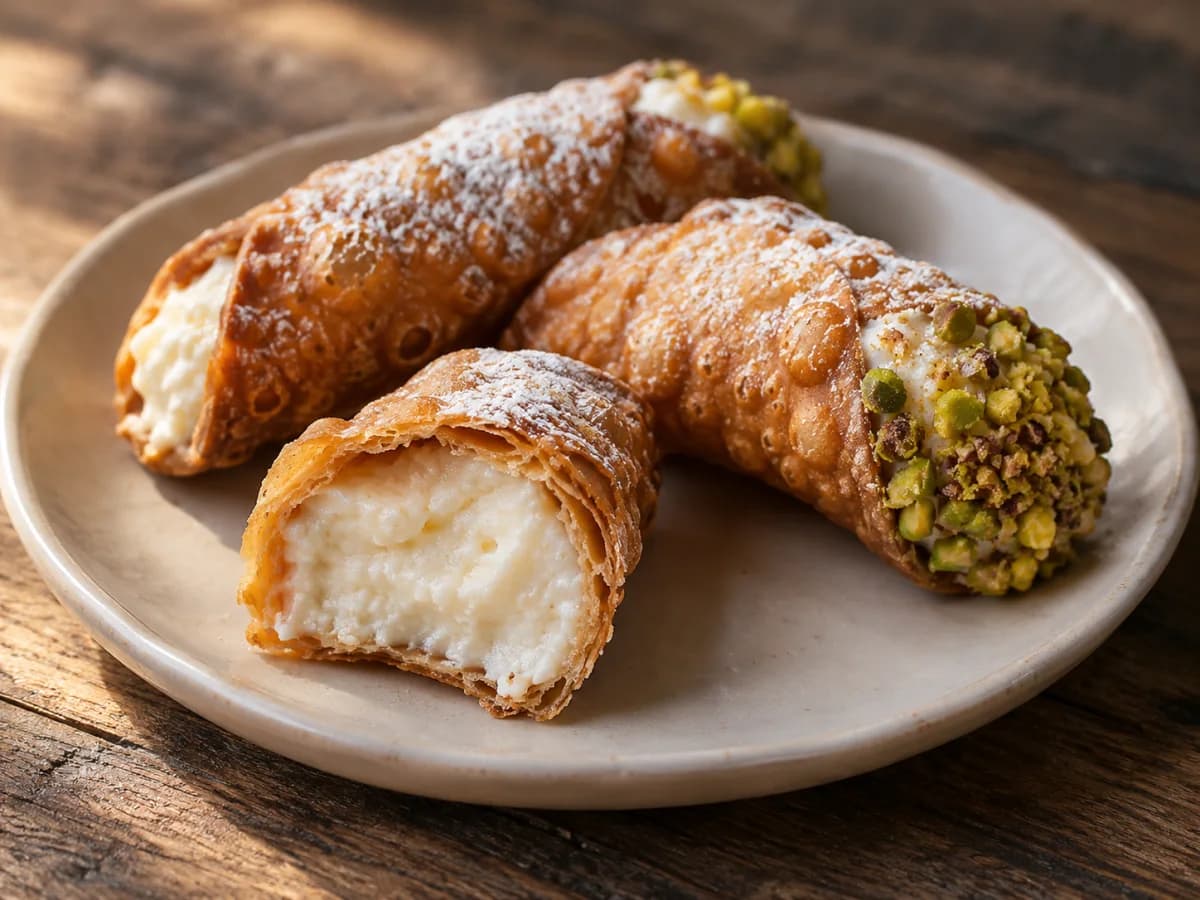
Ordering cannoli in an American bakery
Look for cannoli, mini cannoli, ricotta filled, chocolate dipped, and filled to order. Cannolo is the singular, so one pastry can be listed either way. Specify the number, shell, filling, and topping: an assorted box can contain different allergen combinations.
Commercial shells come in 2-, 3-, and 5-inch lengths, so ask how many pieces are in the order and whether the display is already filled. Packaged supermarket sets run from a two-pack of large cannoli to a 12-pack of minis, which gives a sense of how the count changes with size. Minis suit a table of several people sharing, while one large cannolo is usually a single dessert.
Cannoli are often paired with espresso or coffee, a pairing that suits the sweet filling. Choices that change the order include a chocolate-dipped shell, chocolate chips, pistachios or almonds on the ends, and custard in place of ricotta. If you want a cannolo filled to order, say so when you place the order.
Milk, wheat, egg, nuts and frying fat
Classic cannoli contain milk and wheat, and many shells contain egg. Pistachio and almond toppings are tree nuts, and peanut oil can also be used for frying. At one U.S. grocery chain, large cheese-filled and mini chocolate-covered cannoli list egg, milk, soy, and wheat; their labels also warn that shared preparation can introduce other allergens. Sesame and fish are not part of a basic cannolo, but a filled, topped, or boxed pastry can pick up other ingredients, so the label or the bakery’s ingredient list is the record to read.
Shells made with lard are not vegetarian, and the dairy filling means classic cannoli are not vegan; butter in the shell does not change that. A gluten-free cannolo can still contain milk and may have soy and nut traces. One gluten-free bakery option is limited to a plain shell with ricotta and no toppings, and its shell uses rice and corn starch with lactose-removed butter and milk. Gluten-free and dairy-free are different claims.
The filling is dairy and is not cooked, so it needs refrigeration; a filled cannolo left out at room temperature is a food-safety concern. Anyone with a milk, wheat, egg, soy, tree nut, or peanut allergy needs the full ingredient list for the shell, filling, topping, and frying oil, plus the bakery’s shared-equipment policy. Ask whether the toppings and the shells share a fryer or counter with other pastries. A product that avoids the allergen in its name can still share equipment with it.
Which should you order?
Choose ricotta for the traditional fresh-cheese flavor, a chocolate-dipped shell for an extra crisp cocoa layer, or mini cannoli to sample several fillings. Pistachio and almond toppings change the allergens as well as the flavor.
A useful question for the restaurant
Can you tell me which shell, filling and topping contain milk, egg, wheat, soy, peanuts or tree nuts, and whether the pastries are filled to order?
Ordering suggestions reflect taste preferences, not a guarantee about the restaurant’s ingredients.
Common questions
How many calories are in cannoli?
A published recipe estimates 361 calories per 100 g. A 5-ounce two-pack works out to about 2.5 ounces, or 71 g, per cannolo; at that recipe’s calorie density, one cannolo is about 256 calories. That is an estimate, not a universal nutrition label.
What are cannoli made of?
Traditional cannoli combine a fried wheat-flour shell with sweetened ricotta filling. Shell recipes can include egg, lard, cocoa, Marsala, or vinegar, while chocolate chips, pistachios, and candied fruit are optional.
Are cannoli gluten-free?
Ordinary cannoli are not gluten-free because the shell contains wheat flour. A specifically gluten-free shell is a different product, and that bakery’s version still contains milk and declares possible soy and nut traces.
Are cannoli vegetarian or vegan?
Cannoli with lard in the shell are not vegetarian. Classic ricotta filling contains dairy, so classic cannoli are not vegan; custard and whipped-cream versions also use dairy ingredients.