
What Is Focaccia? Ingredients, Calories and Taste
What is focaccia, and which version should I choose?
Focaccia is an Italian olive-oil bread made with flour, water, yeast and salt, recognizable by its finger-pressed dimples. The Ligurian-style loaf has an airy crumb and a crisp, oil-rich crust. In the US, bakery and catering menus offer rosemary, tomato, cheese, raisin and jalapeño-cheese versions, as well as focaccia sandwiches.
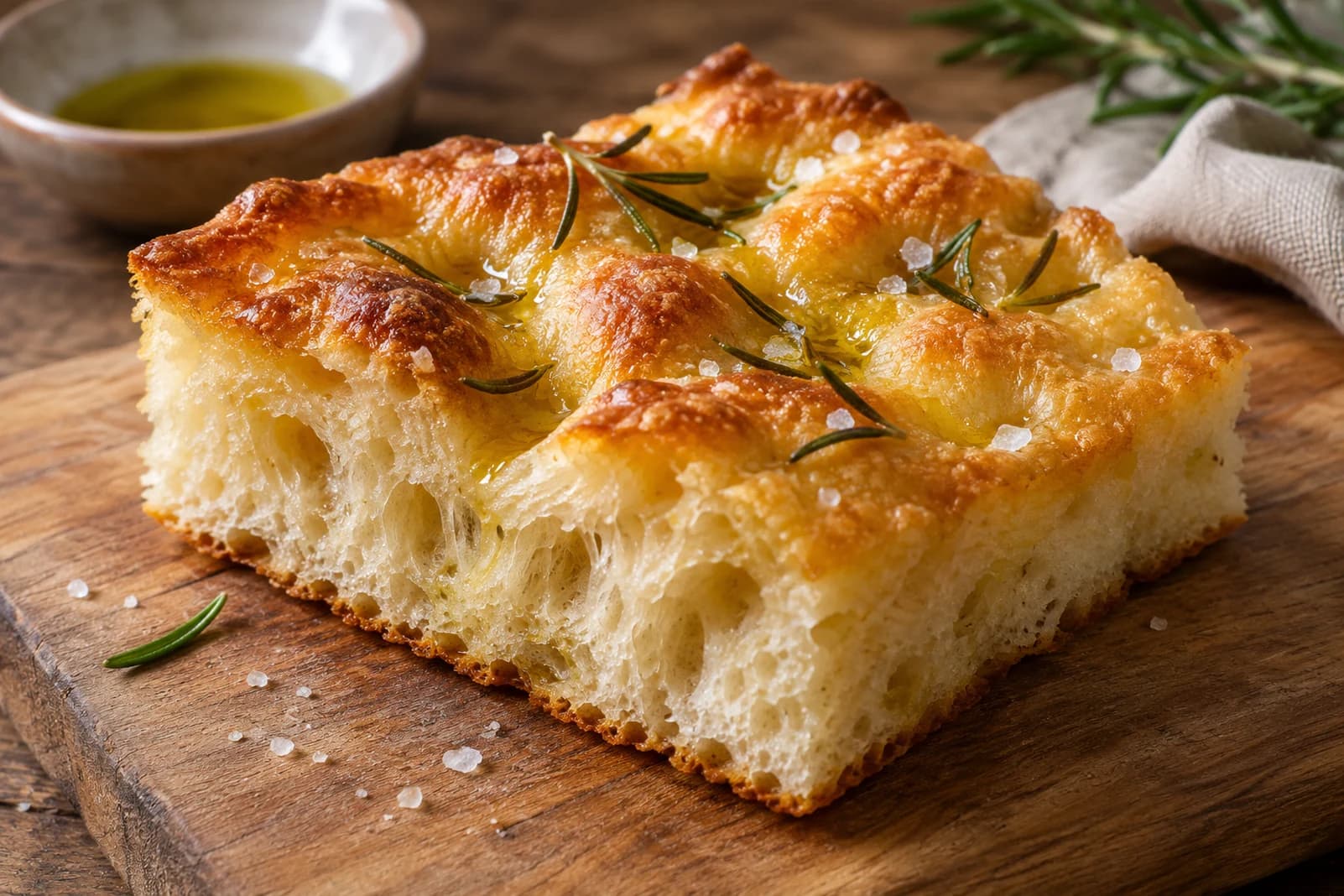
What is focaccia, and where does the name come from?
Focaccia is an Italian leavened flatbread baked in a wide, oiled pan. Its surface is marked with finger-pressed hollows, and the Ligurian version is about 1/2 to 1 inch thick, so it eats like a thick slice of bread rather than a cracker. Inside it is soft and airy, and the bottom and top are crisp and oily. It reaches the table as a plain piece, a topped piece or the bread of a sandwich.
The name is pronounced foh-KAH-chah and comes from the Latin focus, meaning hearth or place for baking. In Genoa the local name is fugàssa, and the dimples are called ombrisalli in the Genoese dialect. Menus usually write Focaccia, Rosemary Focaccia or Focaccia Genovese, and a similar Roman bread is called pizza bianca, or white pizza.
Panis focacius was a flatbread baked on the hearth in ancient Rome, and the word focaccia itself is recorded from the 14th century. Outside Liguria the word most often means the Genoese style. In the US the bread shows up in several forms: in New York City, potato and rosemary focaccia is sometimes called potato pizza, and one San Francisco bakery sells original, rosemary, raisin and jalapeño-cheese slices.
What does focaccia taste like?
Plain focaccia tastes of bread, olive oil and salt. The oil gives the golden crust its richness, and the coarse salt sits on the surface and in the hollows, so the first bite is salty before it is wheaty. Rosemary, the most common herb topping, adds a pine-like aroma; sage, garlic or basil sometimes replace it or join it.
The texture has two sides: an airy, soft crumb with visible pores inside and a crisp bottom from the oiled pan. Genoese-style focaccia is traditionally eaten warm, and in Genoa a warm slice is sometimes dipped in milk or cappuccino at breakfast, which turns the oily crust soft and wet. Freshly baked focaccia has the strongest olive-oil aroma.
Toppings change the flavor more than the dough does. Tomato adds moisture and acidity, aged cheese adds salty dairy flavor, raisins make sweet pockets in the bread, and jalapeño cheese pairs creamy saltiness with chile heat. Sweet focaccia dolce, sprinkled with sugar and sometimes raisins or honey, is closer to a sweet bread. Only the jalapeño versions are spicy.
Focaccia ingredients and the dimpled surface
The basic dough is wheat flour, water, yeast, olive oil and salt, and a high-gluten flour is typical. Olive oil is both an ingredient and a coating: it goes into the dough, into the pan and onto the surface. One Ligurian-style preparation adds honey, and Apulian focaccia adds potato to the dough. Brine means salted water, brushed or poured over the dough before baking.
Three steps shape the result. The wet dough ferments until it expands, which creates the airy crumb. It is then stretched into a shallow pan and pressed with fingertips, and oil, coarse salt and sometimes water collect in the dimples to form the shiny, salty hollows. Focaccia rises again after it is flattened, while pizza is baked right away, so the two are different breads even though some people outside Italy treat focaccia as a pizza variant.
Bakery and traditional versions are built the same way, with rosemary sprigs often added after baking and salt sprinkled on top. Focaccia di Recco is built differently: prescinsêua cheese between two layers of paper-thin dough. A 16-ounce supermarket loaf lists wheat flour, yeast, a Romano-style cheese flavor, soybean oil and soy flour, which differs from the olive-oil dough described above.
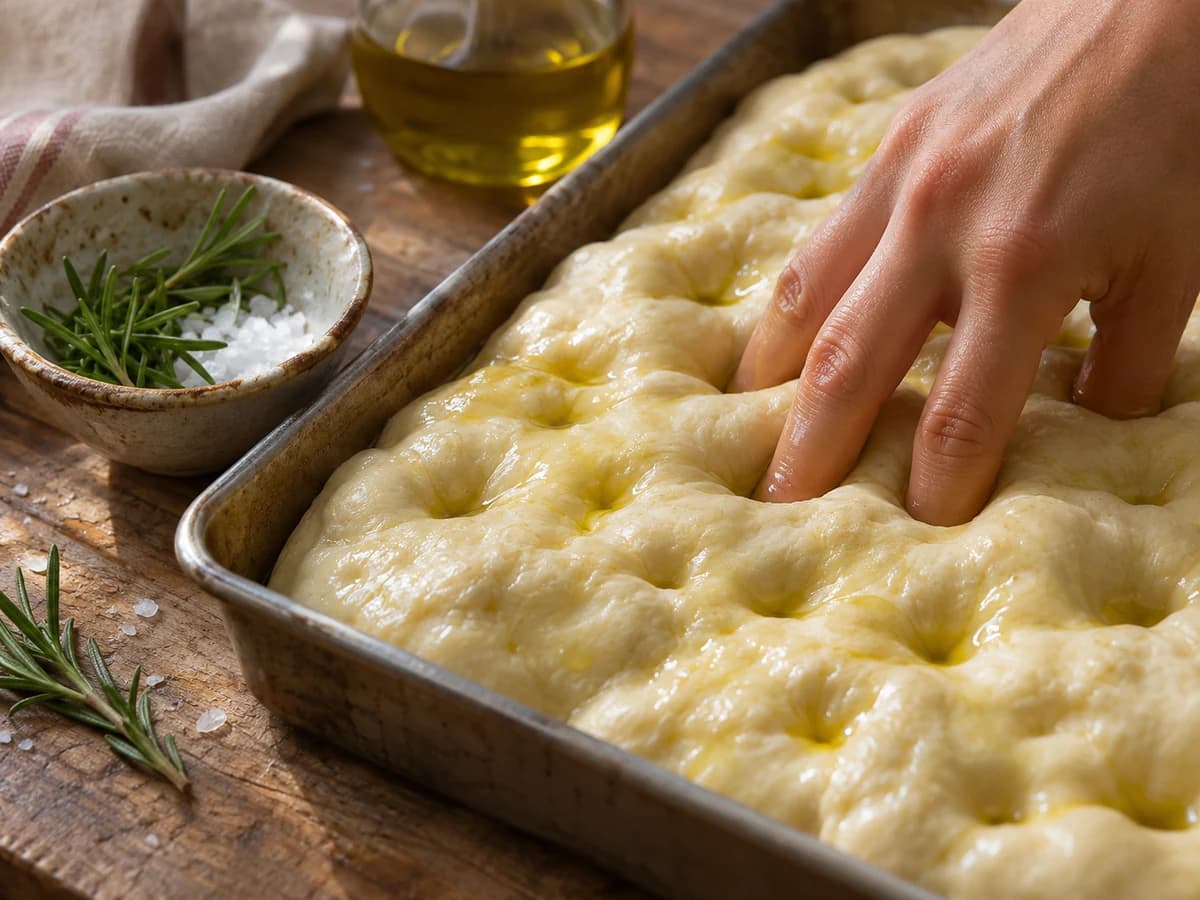
Rosemary, tomato, cheese and sweet versions
The standard version is the dimpled Genoese loaf, topped with olive oil and coarse salt. Rosemary focaccia is the most common flavored one, and sage focaccia (focaccia alla salvia) is a variation. Other Ligurian styles range from focaccia secca, which is dry and biscuit-hard, to a soft, oily corn-flour version from Voltri.
Regional versions differ more than the name suggests. Focaccia di Recco has paper-thin dough around soft cheese. Apulian focaccia contains potato in the dough and is topped with tomatoes, olives and oregano. Sweet versions include focaccia dolce with sugar, raisins or honey, the Easter focaccia veneta made with eggs, sugar and butter, and the piada dei morti of Rimini, topped with raisins, almonds, walnuts and pine nuts and eaten in November for All Souls’ Day.
American Italian catering menus list Classica with rosemary and sea salt, Rossa with tomato and oregano, and Cacio e Pepe with Pecorino Romano, Parmigiano Reggiano and black pepper. Bakeries add raisin, jalapeño-cheese and red-sauce “pizza” focaccia, and supermarkets sell 16-ounce packaged loaves.
Eating a warm slice or using it as sandwich bread
In Italy focaccia is served as an antipasto, as table bread or as a snack, and in Genoa plain or onion-topped slices are eaten between meals. You eat it with your hands. Tear or cut a piece that includes both crust and interior to get the two textures, and hold a tomato-topped piece level so the topping stays on the bread.
Rosemary focaccia is sometimes served with prosciutto, and filled versions become sandwiches. Because the bread already carries oil and salt, taste a piece plain before adding a dip. For a Genoese-style breakfast, a warm slice goes into milk or cappuccino.
Focaccia is best eaten fresh. Gently reheating a leftover piece brings back the crisp edge and the olive-oil aroma, while a cold, cut piece loses much of that crispness.
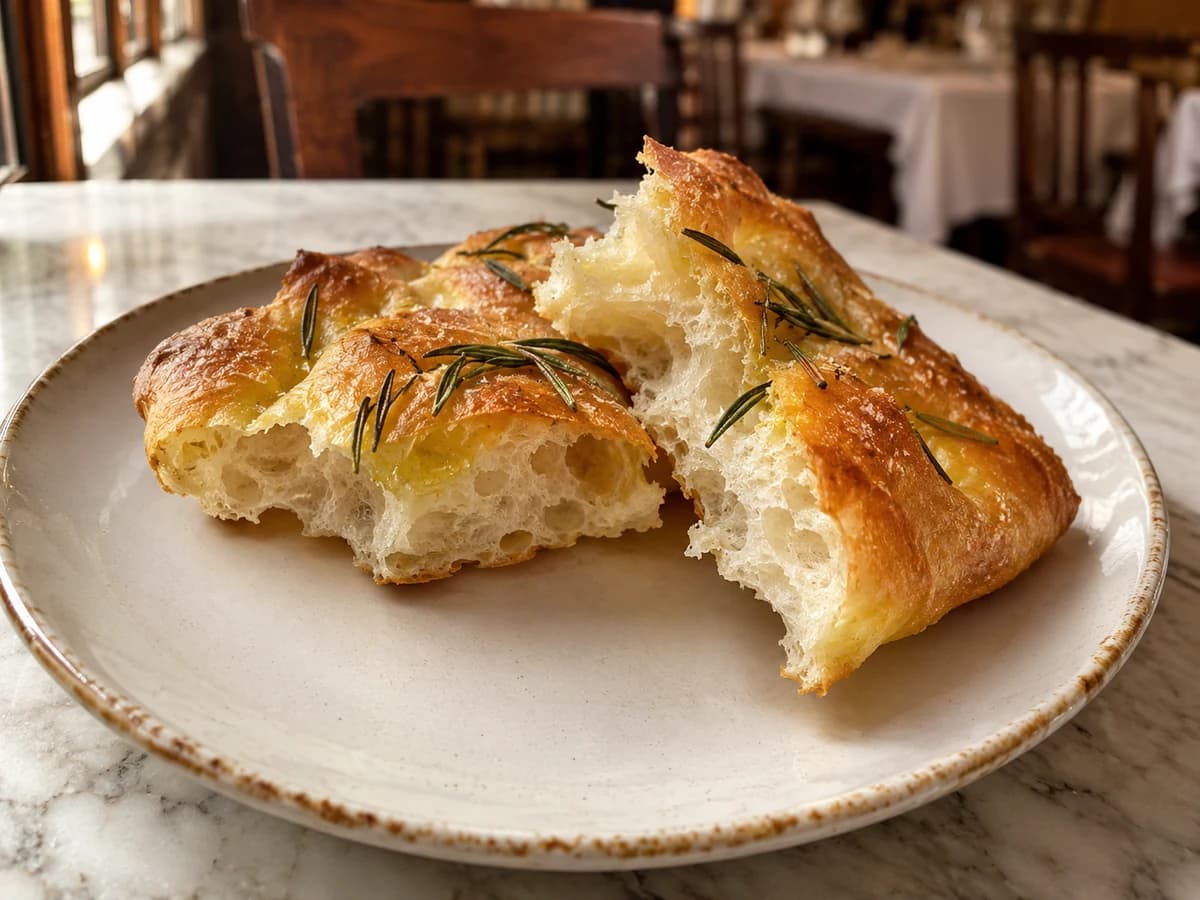
Ordering focaccia at an American bakery or restaurant
Look for Focaccia, Rosemary Focaccia, Focaccia Genovese or Focaccia al Rosmarino. Rossa means red and signals tomato and oregano, with no cheese promised, while Classica means rosemary and sea salt. Cacio e Pepe means Pecorino Romano, Parmigiano Reggiano and black pepper. A “pizza” focaccia is the red-sauce kind, and in New York City “potato pizza” can mean a potato and rosemary focaccia. A sandwich name identifies its filling as well as its bread.
Bakeries sell individual slices, and a slice is a sensible single serving. Catering trays are sized for 10 to 15 people, so a tray is a sharing portion and not a bread-basket side. Supermarket loaves are sold at 16 ounces.
Focaccia often comes as an antipasto or a bread basket alongside prosciutto. Ask whether the order arrives warm, and ask which cheese is on a cheese version, because Recco-style focaccia and Cacio e Pepe use different cheeses.
Wheat, dairy toppings and vegan questions
Standard focaccia contains wheat and gluten. Cheese toppings, Cacio e Pepe and Recco-style fillings contain milk. The sweet focaccia veneta is made with eggs and butter, so it has egg and milk, and the piada dei morti is topped with almonds, walnuts and pine nuts, which are tree nuts. A 16-ounce supermarket loaf lists wheat and soy. At one large US chain, prepared focaccia sandwiches list wheat, milk and egg and may contain sesame. Fish, shellfish and peanuts are not part of the basic dough, but a sandwich filling or topping can change the allergen list, so each one needs its own check.
Plain oil-and-yeast dough may omit milk and egg, but honey makes a loaf unsuitable for vegan eating, and cheese or egg versions are not vegan. Meat-filled sandwiches are not vegetarian. Some US catering menus mark individual focaccia as vegan or vegetarian, which is more reliable than guessing from the name. Focaccia is not gluten free; the FDA allows a gluten-free label only if a food contains no wheat, rye or barley ingredient and has less than 20 parts per million of gluten.
For celiac disease or a food allergy, ask about the dough, toppings, sandwich filling and shared preparation surfaces. The FDA notes that as many as 3 million people in the US have celiac disease, that there is no cure, and that the only way to manage it is to avoid gluten. It suggests asking a restaurant what it means by “gluten-free,” what ingredients it uses and how the item is prepared. Removing cheese from the surface does not show that the bread avoided dairy contact.
Which should you order?
Choose rosemary and sea salt for the clearest olive-oil-and-bread flavor, tomato and oregano for a juicier slice, or cacio e pepe for salty cheese and black pepper. Raisin adds sweetness; jalapeño cheese adds chile heat. Choose a warm slice for the crispest edge.
A useful question for the restaurant
Is this a single slice or a sharing portion, and does the dough or topping contain dairy, egg or honey?
Ordering suggestions reflect taste preferences, not a guarantee about the restaurant’s ingredients.
Common questions
How many calories are in focaccia?
A plain 57-gram slice has about 142 calories, based on the USDA entry’s 249 calories per 100 grams (FDC 2707612). A whole prepared focaccia sandwich at one large US chain has 740 calories. Cheese, added oil and fillings raise the total above a plain slice.
Is focaccia vegan?
A plain olive-oil version can be vegan. Honey in the dough, cheese toppings and meat-filled sandwiches make other versions unsuitable for a vegan diet.
Is focaccia gluten free?
No, standard wheat-flour focaccia is not gluten free. For celiac disease, ask whether any gluten-free dough is prepared apart from wheat flour and crumbs.
What are focaccia ingredients?
The basic dough uses wheat flour, water, yeast, olive oil and salt. Rosemary, tomato, oregano, cheese, raisin and jalapeño are toppings or additions used in different versions.