
What Is Panna Cotta? Cream, Gelatin and Toppings
What is panna cotta, and what should I expect?
Panna cotta is a chilled Italian dessert of sweetened cream set with gelatin. Its name means “cooked cream,” and it is usually served cold with fruit or sauce. Expect a soft, delicate wobble, vanilla and dairy flavor, and a texture eaten with a spoon.
What is panna cotta, and where is it from?
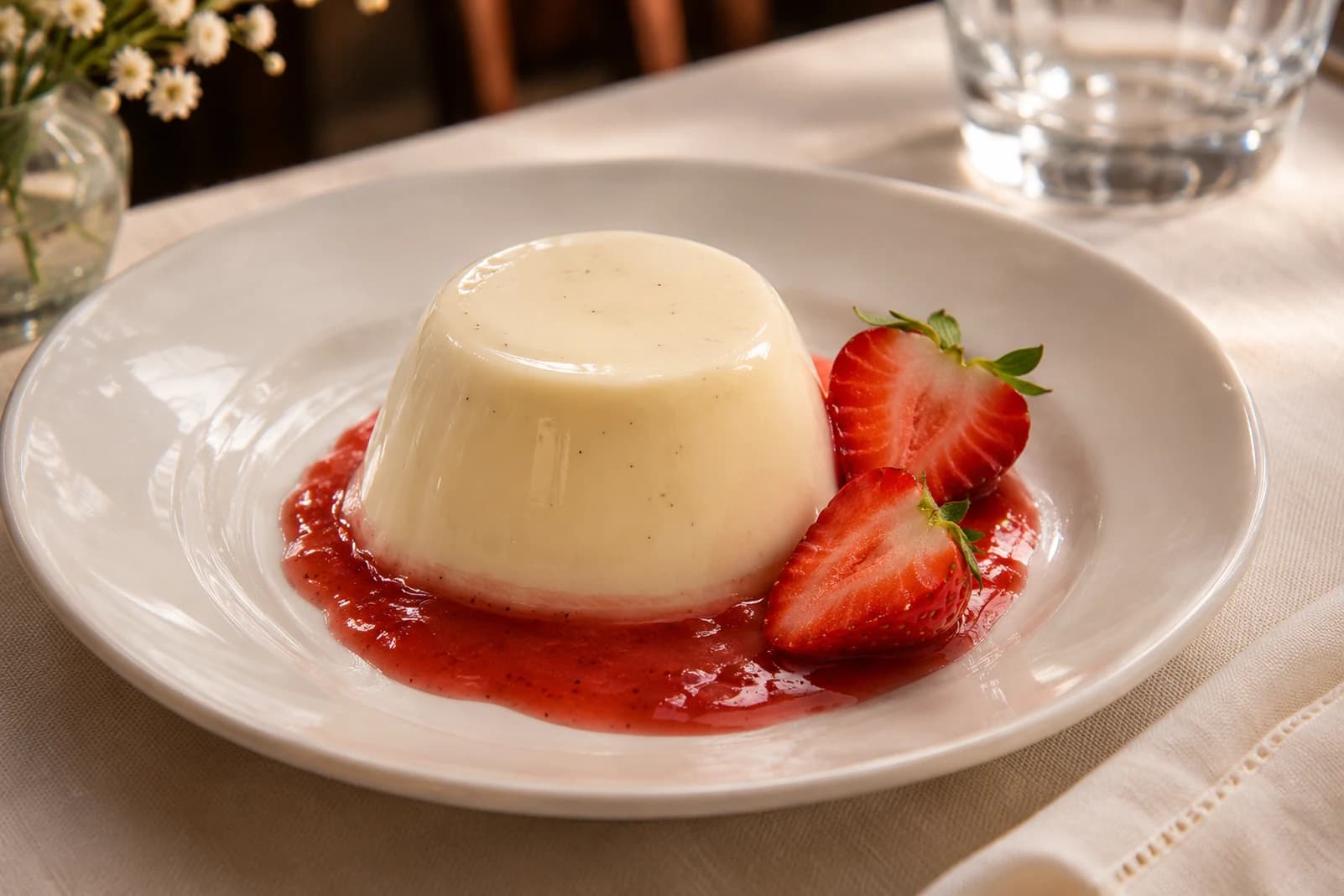
Panna cotta is a chilled Italian dessert of sweetened cream and milk set with gelatin into a soft, pale wobble. The traditional ingredients are cream, whole milk, sugar, gelatin and vanilla, and the finished dessert is snow white. It can arrive as a small individual portion in a cup, or unmolded onto a plate, or as a large mould that is sliced into portions. It is served plain or with fruit, syrup, icing or chocolate on top.
Say it PAH-nah KOT-tah. Panna is the Italian word for cream and cotta means cooked, so the name reads as “cooked cream.” The cream mixture is heated before it is chilled, and the final portion is set by refrigeration rather than baked. On American menus it appears as Panna Cotta or Vanilla Bean Panna Cotta, and a flavor word such as coconut or pistachio may follow the name.
The dessert belongs to Piedmont in northwestern Italy. Written accounts of its birth are scarce, and early 20th-century folk tales connect it to a Hungarian woman living in the Langhe area. Chef Ettore Songia put the recipe on paper in the 1960s. By the 1980s panna cotta had become one of the best-known symbols of Italian cooking, often served after dinner at a pizzeria.
What does panna cotta taste like?
A vanilla panna cotta tastes sweet and milky. Cream supplies the richness, milk loosens the mixture, sugar sets the sweetness and vanilla provides the aroma. The base has no cake or flour layers, so the flavor is almost entirely dairy and vanilla, and the topping shapes the rest of each bite.
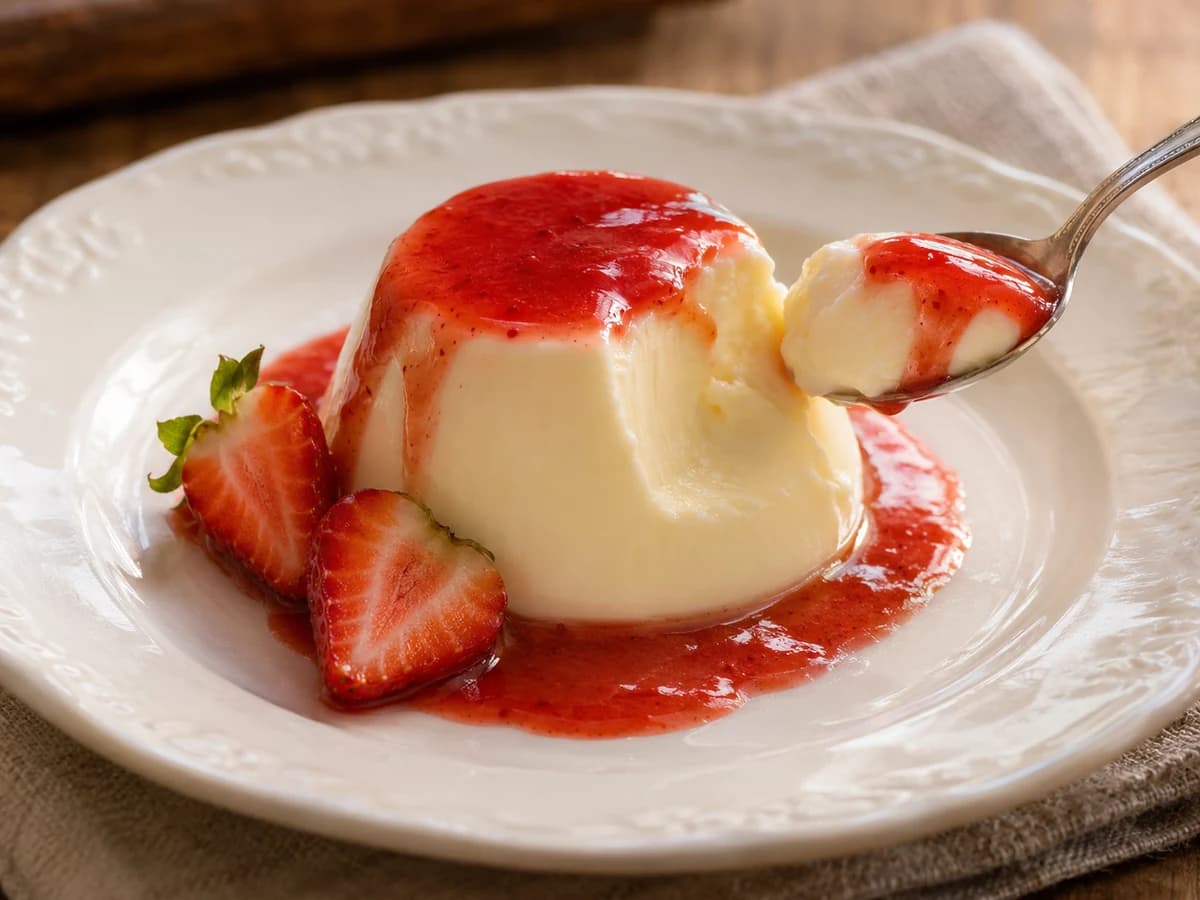
The texture is soft and smooth. Gelatin gives an unmolded portion enough structure to stand, yet a spoon moves easily through the center. It is served cold, after hours of setting in the refrigerator. A thin tuile cookie or toasted coconut adds a crisp contrast to the smooth cream.
Sweetness and tartness depend on what sits beside the cream. Strawberry, raspberry and other berry sauces add acidity, and the sauce can make one bite fruitier than the next. A coconut version with melon tastes of coconut, a pistachio version with apricot tastes nutty and fruity, and a rose-water version adds a floral aroma. The cream underneath stays mild in all of them.
Panna cotta ingredients and the chilled set
The basic ingredients are heavy cream, milk, sugar, unflavored gelatin and vanilla. Gelatin is a protein obtained from animal collagen in connective tissue. In Europe, roughly 80% of edible gelatin comes from pork skin, about 15% from cattle hide, and the remaining 5% from pork and cattle bones and fish.
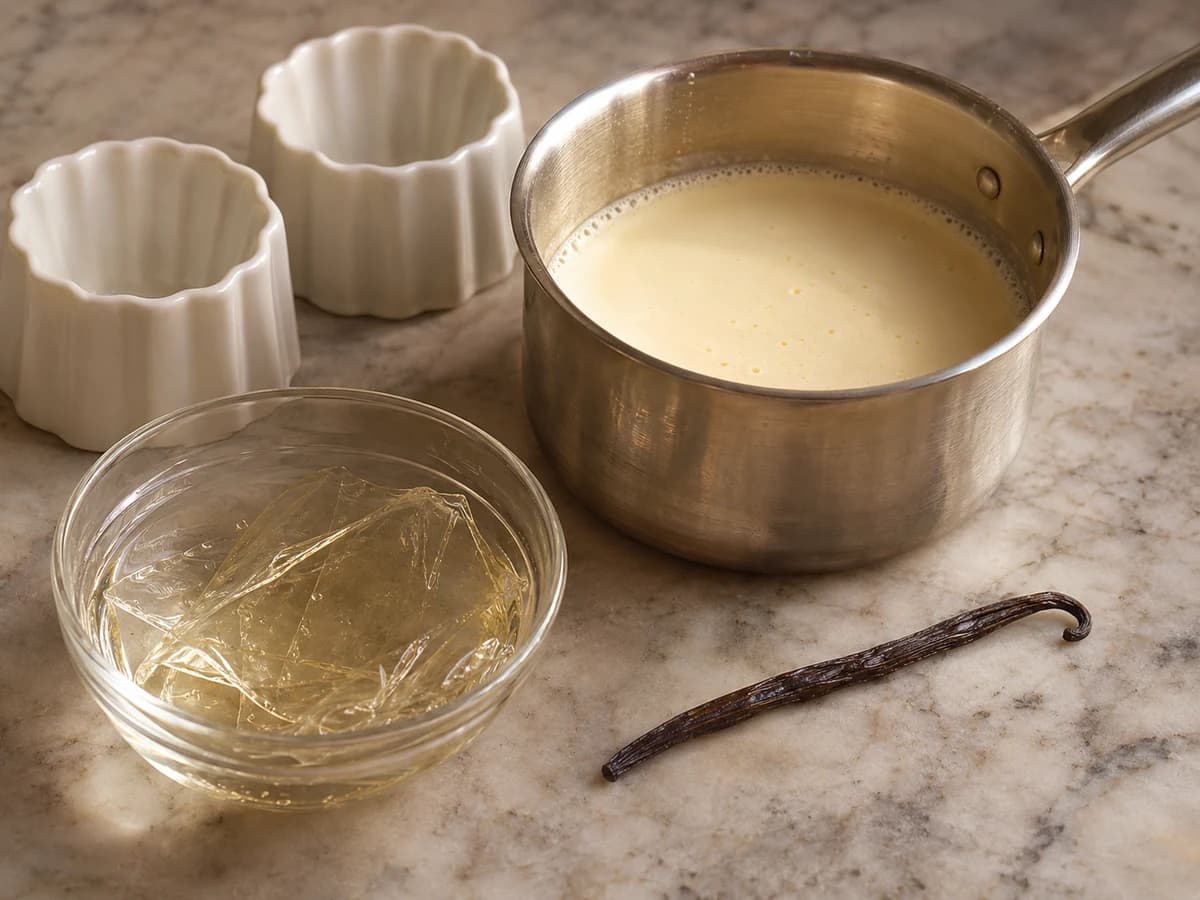
The sequence explains the texture. Gelatin is soaked in cold water to soften it. The cream, milk, sugar and vanilla are heated gently, and the softened gelatin is stirred in off the heat so that it dissolves into the warm mixture. The liquid is poured into moulds or cups and refrigerated, and the cold is what turns it from a liquid into a set cream. Because gelatin does the setting, an egg custard is not needed.
Setting takes hours. One American recipe for six small bowls chills for at least 4 hours, and an Italian preparation describes 5 to 6 hours, so panna cotta is made ahead and served cold. The Italian version is made in one large mould and sliced, or in small individual servings, with a strawberry sauce of blended strawberries and sugar. A restaurant portion adds a sauce, fruit or cookie to this same cream base.
Vanilla, coconut, pistachio and rose-water versions
The most familiar version is vanilla. U.S. menus list vanilla cream with strawberries and raspberry sauce, and vanilla bean with fresh berries and a tuile, which is a thin, crisp cookie. A coconut version is listed with melon and toasted coconut. The coconut label describes a flavor and does not by itself say that dairy or animal gelatin has been left out.
Other versions change the flavor of the cream itself. A pistachio-and-apricot panna cotta uses pistachios, dried apricot and apricot sauce. A Malabi-style version is listed with rose water, strawberry compote and a kadaif cookie, a pastry-style accompaniment. In Piedmont the traditional dessert is the plain white cream, finished with syrup, icing, fruit or chocolate.
At one large U.S. chain with locations in New York, Chicago, Boston, Dallas and Los Angeles, a berry panna cotta with almond streusel is listed on a catering page for 8 to 10 people. That is a platter, which is a different product from the plated dessert on a dinner menu.
How to eat panna cotta
Eat panna cotta cold with a dessert spoon. A spoonful from the plain center shows the dairy and vanilla flavor before the sharper fruit, and a spoonful that includes the sauce shows how the two work together. The dessert is eaten after a meal.
The toppings on menus include berries, raspberry or apricot sauce, strawberry compote, toasted coconut, almond streusel and cookies such as a tuile or kadaif.
Keep any cookie at the side until you want its crunch, because mixing it into the cream softens it. A panna cotta left out on a table loses the chill that holds its shape, and the dairy base should not stand warm for an extended period. For takeout, keep it refrigerated, since FDA guidance names refrigeration as a basic safeguard for dairy and egg foods.
Ordering panna cotta on an American dessert menu
Look under Dolci, Desserts or Sweets for Panna Cotta or Vanilla Bean Panna Cotta; dolci is Italian for sweets. The line that follows names the fruit, sauce or cookie, such as berries and a tuile, melon and toasted coconut, or rose water and a kadaif cookie. A flavor in the title, such as coconut or pistachio, changes the ingredients of the cream, so read the whole description.
A restaurant listing describes one plated dessert. The American reference recipe divides the mixture into 6 small bowls, and a catering page lists a berry panna cotta with almond streusel for 8 to 10 people. Confirm whether the item is a single plate or a platter before ordering for a table.
Panna cotta is ordered at the end of the meal. Ask for the topping on the side when you want to limit the sauce or avoid an allergen listed in the description. Ask whether the cookie can be left off if wheat or egg is a concern.
Milk, gelatin and topping allergens
Of the nine major food allergens, the panna cotta base contains milk. The base has no egg in the reference recipe, but a cookie can add egg and wheat. Pistachio or almond toppings add tree nuts. Gelatin from fish matters for a fish allergy, because the gelatin source cannot be judged from the pale color of the dessert. None of the listed items names peanut, soy, sesame or shellfish, but a menu line is not a full ingredient list for the sauce or cookie. At one large U.S. chain, a berry version is marked gluten-free and milk-containing, and its almond streusel adds tree nuts.
Conventional panna cotta contains milk and animal gelatin, so it is neither dairy-free nor vegan, and it is not vegetarian when the gelatin comes from animal collagen. A coconut version is listed with melon and toasted coconut, and the menu does not call it vegan or dairy-free. The cream base has no wheat, but a cookie or streusel may. A pistachio version is marked gluten-free on its menu; FDA says a gluten-free claim depends on the ingredients and the preparation, so a menu label alone does not settle the question for celiac disease or severe allergy.
During pregnancy, choose pasteurized dairy and a dessert that has been kept refrigerated, because unpasteurized dairy can carry Listeria bacteria, which can be particularly harmful during pregnancy. An eggless recipe does not make unpasteurized cream appropriate. If a kitchen serves a custard-style version made with eggs, the eggs should be fully cooked, since FDA names raw or undercooked eggs as a bacterial risk. For allergies, ask the kitchen about the entire dessert and shared handling, including toppings that are removed before service.
Which should you order?
Choose vanilla with berries for sweet cream and tart fruit. Coconut and melon lean tropical, while pistachio and apricot add nutty fruit flavor; a tuile adds crispness.
A useful question for the restaurant
Does the panna cotta or its topping contain milk, egg, wheat, tree nuts or fish-derived gelatin?
Ordering suggestions reflect taste preferences, not a guarantee about the restaurant’s ingredients.
Common questions
How many calories are in panna cotta?
One small ramekin from a six-serving American recipe lists 418 calories. That is a practical single-dessert estimate; fruit sauce, cookies and restaurant portions can change the total.
Is panna cotta gluten free?
Plain panna cotta can be gluten free when its cream base, toppings and preparation contain no gluten. Cookies and kadaif can add wheat; the chain version with almond streusel is labeled gluten-free, but diners with celiac disease should ask about preparation.
Can panna cotta be vegan?
Conventional panna cotta is not vegan, because it combines dairy with animal gelatin. A vegan version must replace both ingredients; a coconut flavor alone does not show that either has changed.
Do panna cotta ingredients include eggs?
Standard gelatin panna cotta has no eggs in the cream base. A tuile or other cookie may add egg, so ask about the whole plate.