
What Is Arancini? Sicilian Fried Rice Balls Explained
What is arancini, and what does it taste like?
Arancini are Sicilian balls of saffron risotto wrapped around meat ragù or ham and cheese, rolled in breadcrumbs and deep-fried until crisp. One 50-gram piece has 100 calories. They arrive hot, with a crunchy shell and a soft, melted centre, and menus list them as a snack or starter.
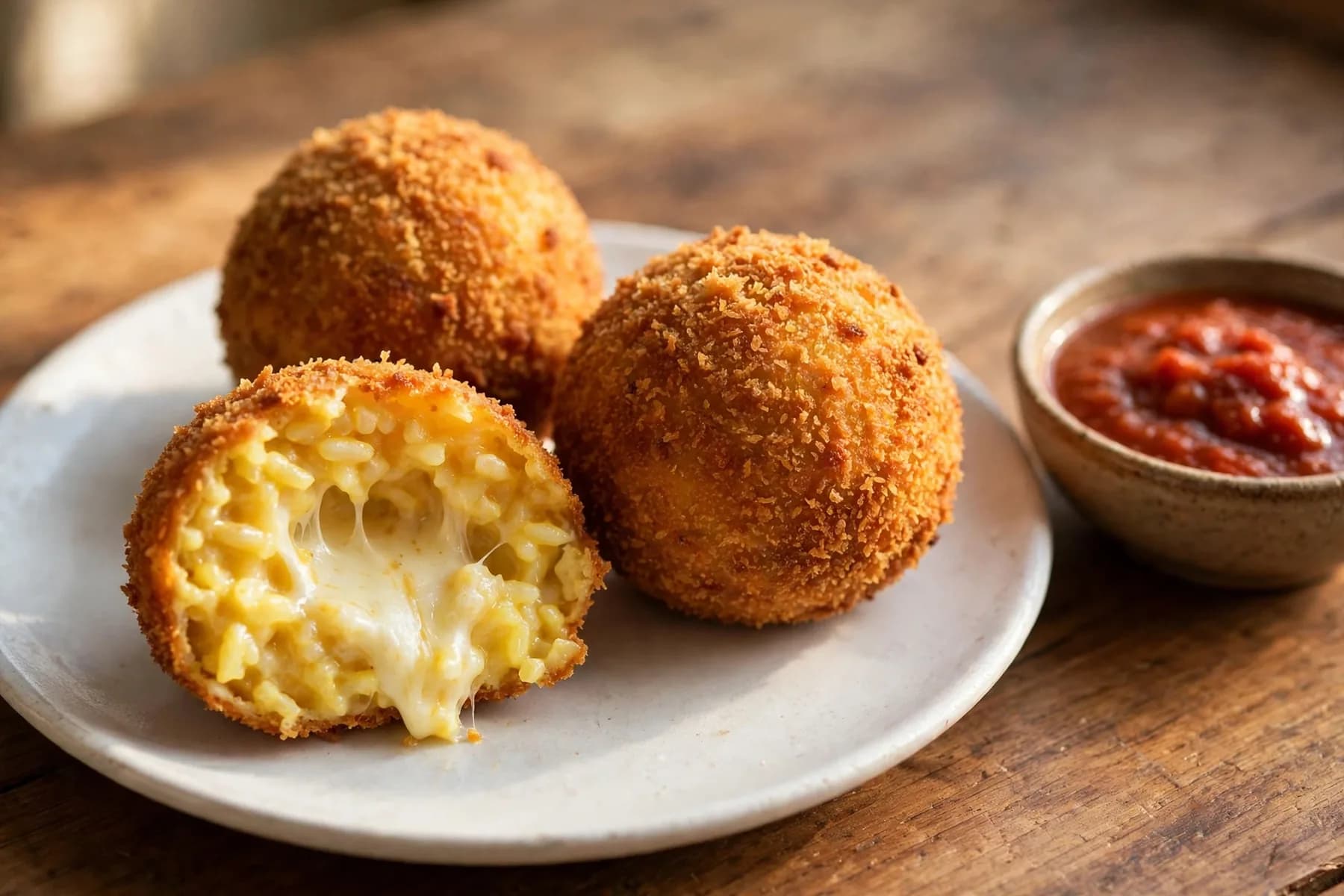
What Arancini Are
Arancini are balls of cooked saffron risotto wrapped around a filling, coated in breadcrumbs, and deep-fried until the shell turns golden and crisp. The classic filling is meat ragù with peas, while mozzarella, ham and cheese, and spinach and cheese are also common. Sicilian bakeries and street stalls sell them hot as a snack or a quick lunch.
The name comes from the Italian word for orange, after the shape and golden colour of a small orange. In western Sicily, around Palermo, people call one ball arancina and several arancine. In eastern Sicily, around Catania, the same food is arancino in the singular and arancini in the plural.
Arancini are said to have started in 10th-century Sicily under Arab rule, and rice with saffron traces back to that period. The exact origin of the fried, filled ball is still debated. The breaded shell made the rice easy to carry and eat on the move, and the dish is now sold year-round across Sicily, above all in Palermo, Messina, and Catania.
What Arancini Taste Like
Saffron gives the rice a floral, slightly honeyed note in every bite, and too much saffron turns the flavour bitter. The rice tastes rich and savoury from the broth, butter, and salty aged Parmigiano stirred through it. Ragù adds tomato and meat, while the mozzarella in the middle melts into a mild, milky pull.
The first bite is all crunch, as the breadcrumb shell shatters against soft, creamy rice. The balls arrive hot from the fryer, and the centre stays very hot, so the cheese inside is still melted when you reach it. Saffron adds a warm aroma that rises as soon as the shell breaks open.
The ragù version tastes the richest, with meat, tomato, and peas in saffron rice. The ham and cheese version tastes milder and creamier, because the béchamel softens the salt of the ham and the cheese. The spinach and cheese version keeps the same crisp shell and creamy rice, with the filling tasting of spinach and melted cheese.
How Arancini Are Made
The base is short-grain risotto rice, usually Arborio or Carnaroli, cooked in broth with saffron, butter, and Parmigiano. Short-grain rice releases starch as it cooks, and that starch makes the cooled rice stick together in a ball. The ragù filling is ground beef or a mix of ground meats, cooked with onion, carrot, celery, tomato, and peas. The ham and cheese filling pairs diced ham and scamorza or mozzarella with béchamel, a smooth sauce of flour, butter, and milk.
The risotto cooks a ladle of warm saffron broth at a time until the rice turns tender and creamy, then the Parmigiano goes in and the rice is spread out to cool. The rice is chilled until firm and compact, because warm rice sticks to your hands and falls apart in the oil. Cold risotto is flattened in the palm, the filling and a cube of mozzarella go in the middle, and the rice closes over the filling and rolls into a ball with no gaps. Each ball rolls in flour, then beaten egg, then breadcrumbs, and fries until deep golden brown.
Arancini began as a way to use up leftover risotto, and day-old risotto still works as the base. A packaged frozen version lists rice, mozzarella, burrata, breadcrumbs, butter, and saffron on its label. Some kitchens bake the coated balls, with a less crisp crust than the fried one.
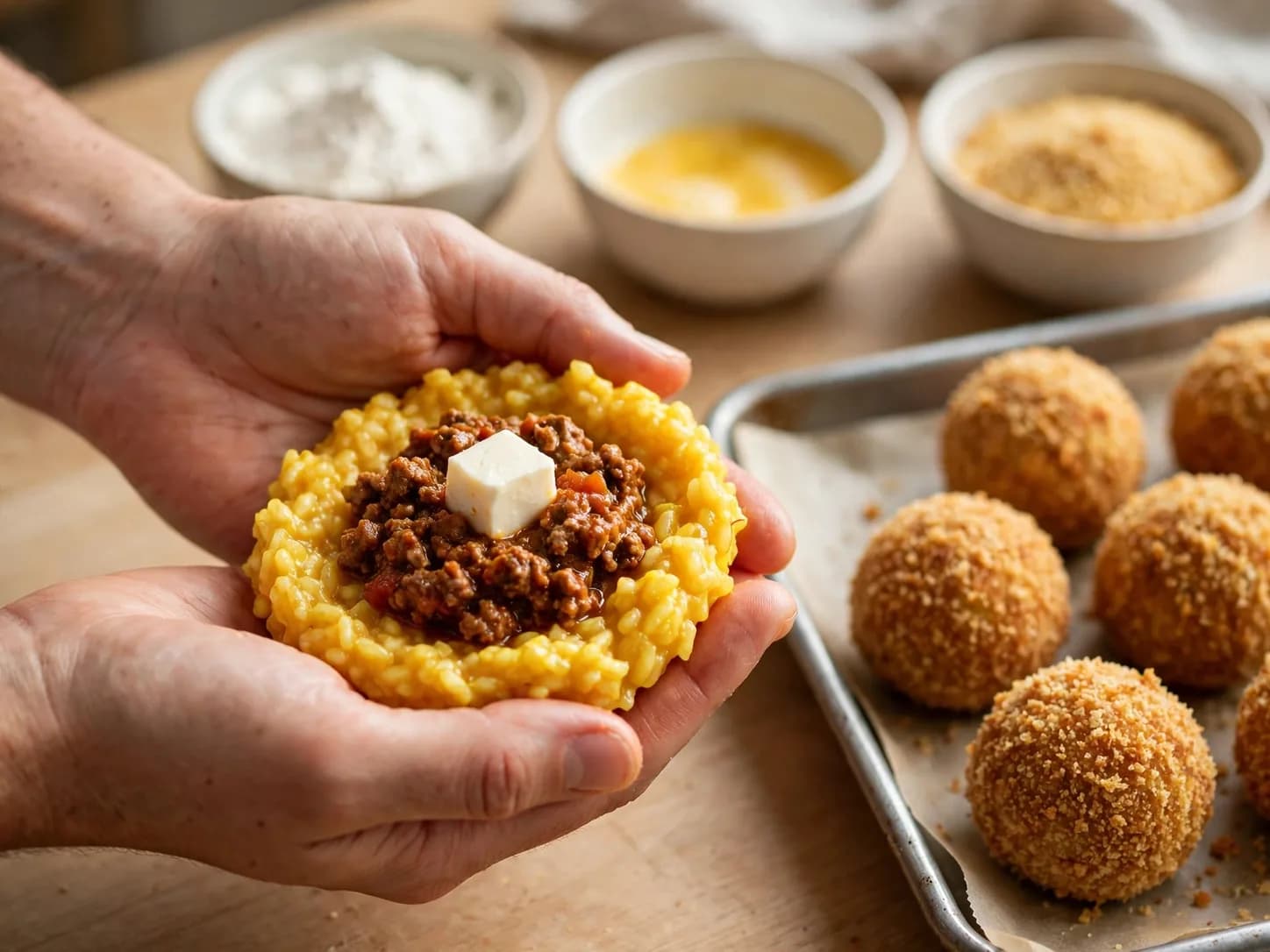
The Main Types
The two most common types are al ragù and al burro. Al ragù holds meat sauce with peas and mozzarella, while al burro holds ham and cheese mixed with béchamel. In one Sicilian version the shape tells you the filling, with round balls for ragù and cones for ham and cheese.
Palermo balls are usually round and Catania balls are usually cone-shaped, a point Sicilians still argue over. Arancine agli spinaci fill the same saffron rice with spinach and cheese. Plain versions with just mozzarella, or with peas and cheese, work as a vegetarian option in vegetable stock. Sweet versions exist too, with chocolate in place of the savoury filling.
Market stalls in Palermo offer modern fillings too, such as ricotta and olives, roasted vegetables, a cheese trio, and blue cheese. Outside Sicily, arancini usually appear as an appetizer, served with marinara sauce for dipping. Packaged frozen arancini are also sold, with a label that lists the same rice, cheese, and breadcrumb ingredients.
How to Eat Arancini
Arancini are street food, eaten standing up and still hot from the fryer at bars and market stalls in Palermo. The breaded shell makes the rice easy to carry and eat on the move. Let each ball cool for a few minutes, because the centre stays very hot after frying.
Break a ball open and the mozzarella inside should be melted and soft. Marinara sauce comes on the side for dipping, and more grated Parmigiano goes on top. Menus serve arancini as an appetizer, and Sicilian stalls sell them as a snack or a quick lunch.
Eat arancini while they are hot, since the shell loses its crunch as the ball cools. A cooled ball goes back in the oven to crisp up again. Biting straight into a fresh ball is the mistake to avoid, because the melted cheese and hot rice in the centre can burn your mouth.
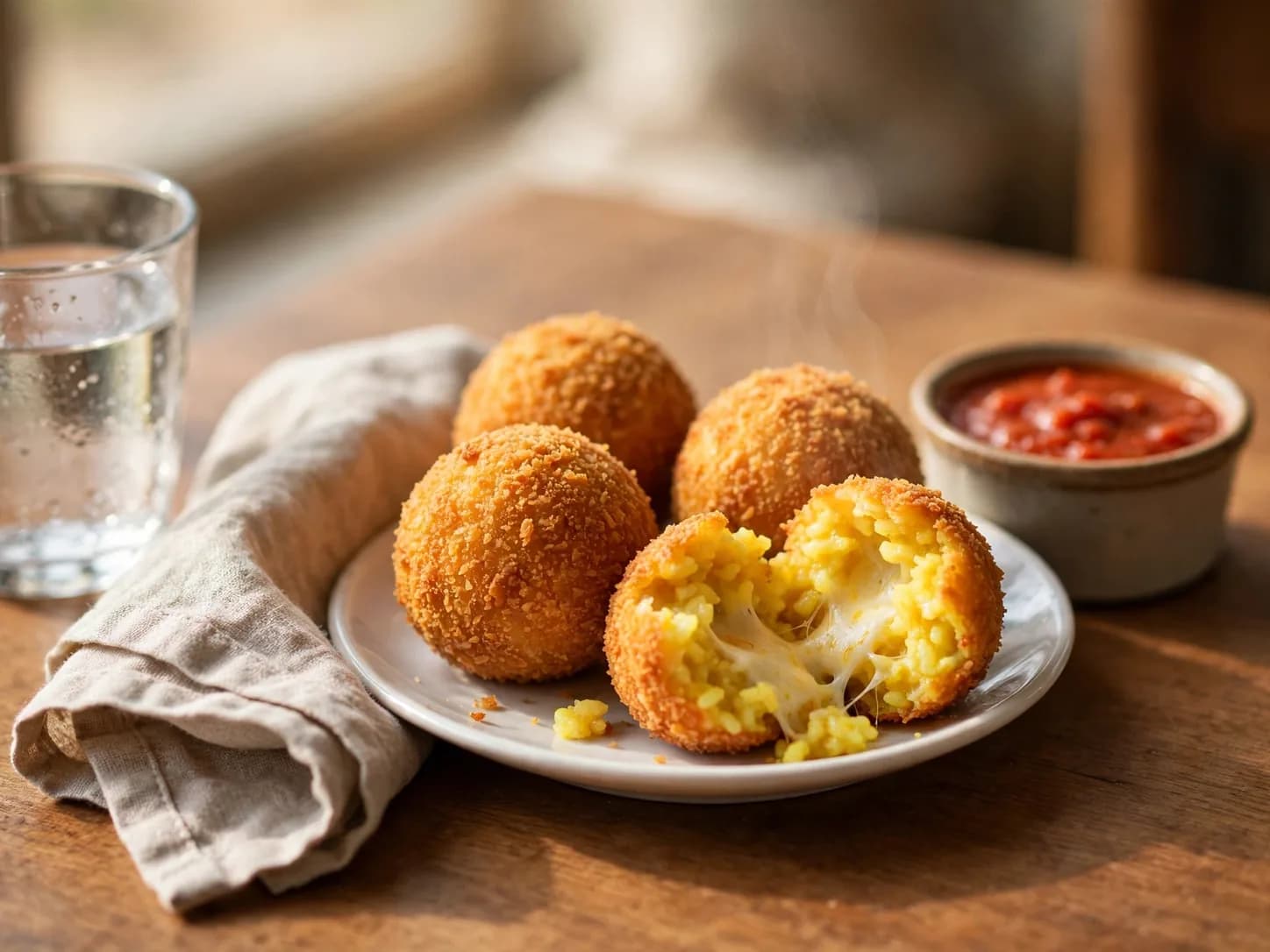
How to Order
On a menu, look for arancini al ragù for the meat sauce version and arancini al burro for the ham and cheese version. The singular forms arancino and arancina show up on Sicilian menus too, naming the same dish. Arancini are fried balls made from risotto, so they arrive as a snack or starter, separate from a plate of risotto.
The balls run from bite-size pieces to tennis-ball size, with the shape and golden colour of a small orange. A packaged serving is one 50-gram piece. One ball works as a snack, while a few balls make a light lunch.
Ask for the spinach and cheese version or the plain mozzarella version if you eat no meat, and whether the rice was cooked in vegetable stock. Ask whether a gluten-free coating is available, since some versions coat the rice in rice flour and tapioca starch instead of wheat breadcrumbs. Marinara sauce on the side is the usual accompaniment, so ask for it when the menu does not list it.
Allergens and Safety
Milk is in every standard version, through mozzarella, Parmigiano, butter, and the milk in béchamel. Wheat is in the coating, through the flour and the breadcrumbs. Egg is in the coating as beaten egg, and some versions stir beaten egg into the risotto as well, while one traditional version uses no egg. One 50-gram piece carries 210 milligrams of sodium. Fish, shellfish, tree nuts, peanuts, and sesame are absent from the standard versions. Fried items from a shared fryer carry a special risk of cross-contact with other foods, so tell the server about an allergy first.
Plain mozzarella and spinach and cheese versions work for vegetarians when the rice is cooked in vegetable stock. The standard version is not vegan, because it holds cheese, butter, and egg. Vegan versions skip the cheese or use vegan cheese alternatives. The standard version is not gluten free, because the coating uses wheat flour and breadcrumbs. Gluten-free versions use rice flour and tapioca starch for the coating. A menu that calls a version gluten free still comes from a kitchen where gluten is present, and shared fryers can carry traces.
Cooked rice needs care once it cools. Refrigerate leftovers within 2 hours, or within 1 hour when the room is above 90 degrees Fahrenheit, and eat them within 3 to 4 days. Reheat leftovers to 165 degrees Fahrenheit. Throw out cooked rice that has sat at room temperature for more than 2 hours, since reheating does not make it safe. Cooked arancini also freeze for up to 3 months.
Which should you order?
Pick al ragù for a rich meat filling with peas and melted mozzarella, or al burro for ham and cheese in a creamy béchamel. If you eat no meat, the spinach and cheese version or the plain mozzarella version keeps the same crisp shell. Order one piece as a snack, or a few to share as a starter.
A useful question for the restaurant
Do you have a vegetarian arancini, and is the coating gluten free?
Ordering suggestions reflect taste preferences, not a guarantee about the restaurant’s ingredients.
Common questions
What is arancini?
Arancini are Sicilian balls of cooked saffron risotto wrapped around a filling, coated in breadcrumbs, and deep-fried until golden and crisp. The classic filling is meat ragù with peas, while ham and cheese is the other common version. They are sold hot as a snack or a quick lunch.
What does arancini taste like?
Arancini taste savoury and rich, with a floral, slightly honeyed note from the saffron in the rice. The shell is crisp and the inside is soft and creamy, with melted mozzarella at the centre. The ragù version tastes meatier, while the ham and cheese version tastes milder and creamier.
Is arancini gluten free?
No, regular arancini are not gluten free, because the coating uses wheat flour and breadcrumbs. Gluten-free versions swap the wheat coating for rice flour and tapioca starch. A shared fryer can still carry traces of gluten, so ask how the kitchen fries them.
Is arancini vegan?
No, standard arancini are not vegan, because they hold cheese, butter, and often egg. Vegan versions skip the cheese or use vegan cheese alternatives, and they can use a flax mixture in place of the egg wash. The rice itself is vegan when it is cooked in vegetable stock.
How many calories are in arancini?
One 50-gram piece of arancini has 100 calories, with 3 grams of protein and 210 milligrams of sodium. A larger street-vendor portion runs around 320 calories. The exact number depends on the size of the ball and the filling inside.
What are arancini made of?
Arancini are made of short-grain risotto rice cooked in broth with saffron, butter, and Parmigiano. The filling is meat ragù with peas or ham and cheese with béchamel, and the coating is flour, beaten egg, and breadcrumbs. The balls are deep-fried until the shell turns golden and crisp.