
What Are Gnocchi? Potato Dumplings, Texture and Gluten
What are gnocchi made of, and are potato gnocchi gluten free?
Gnocchi are Italian dumplings, most often made from cooked potato and wheat flour, sometimes with egg. Potato gnocchi are tender and slightly springy under a fork. Ordinary versions contain gluten from the flour. The sauce can add milk, tree nuts or meat, so it needs its own ingredient check.
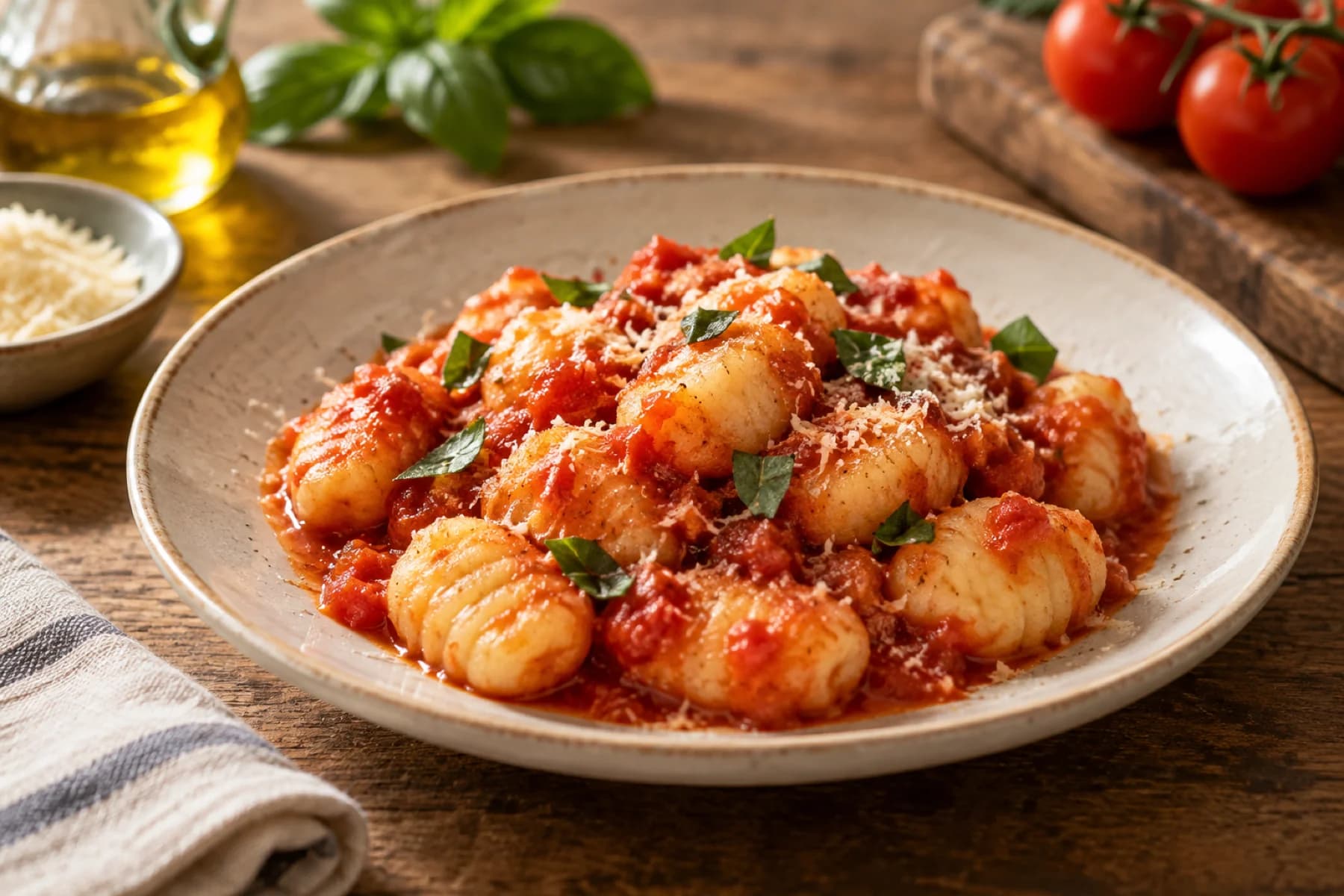
What are gnocchi?
Gnocchi (NYOH-kee) are small Italian dumplings, most often made from cooked potato and wheat flour, with egg in some recipes. They arrive as short, pillowy pieces about the size of a wine cork or smaller, usually pressed with ridges, boiled in salted water and then tossed or topped with a sauce. In Italy they are served as a primo, the course before the main dish, or as a side called a contorno.
Gnocchi is plural; one piece is a gnocco. The word may come from nocchio, a knot in wood, or from nocca, a knuckle. Menus write gnocchi di patate for the potato version, and Spanish-language menus in Latin America write ñoqui; Portuguese uses nhoque and Croatian uses njoki. Because other doughs also carry the name, a line that says only gnocchi leaves the base open.
Gnocchi have been eaten since Roman times, and the Roman legions are credited with spreading the dish across Europe. The ancient recipe was a semolina dough mixed with eggs. Its descendants include baked gnocchi alla romana and Sardinian malloreddus, which contain no eggs. Potatoes entered gnocchi in the late nineteenth century, when milling wheat became too expensive for small landowners in central and northern Italy.
What do gnocchi taste like?
Plain potato gnocchi taste mildly of potato with a little salt from the cooking water, so most of the flavor on the plate comes from the sauce. Sage and brown butter adds toasted milk solids and an herbal aroma, tomato sauce adds acidity, and pesto brings basil, garlic, cheese and pine nuts. Gorgonzola cream, a Bolognese-style ragù and truffle sit at the richer end.
The center should be tender and cohesive. Texture depends on the potato and the flour: a starchy, low-moisture potato needs less flour, which keeps the dumplings light, while too much flour makes the dough tough and too little lets it fall apart in the water. Overworking the dough makes the cooked pieces hard. The ridges pressed into each piece hold sauce. Gnocchi browned in a skillet have a crisp outside and a soft center, and boiled ones have the softer, more traditional bite.
Gnocchi are neither sweet nor spicy, and any heat comes from the sauce. They taste closer to mashed potato than to wheat pasta, a dumpling that is sauced like pasta.
Potato gnocchi ingredients and shaping
Potato gnocchi need only a few ingredients: potatoes, wheat flour, salt and, in many recipes, an egg. One well-known Italian recipe gives both versions, and the eggless one calls for more flour to make up for the egg. Semolina, a coarse wheat flour, dusts the work surface and the shaped pieces.
The potato drives the result. Starchy, low-moisture potatoes such as red or aged potatoes are recommended, while new potatoes hold too much water and need more flour. The potatoes are boiled in their skins, mashed while hot onto the flour and kneaded only briefly, because extra kneading toughens the dumplings. The dough is rolled into ropes, cut into small pieces and pressed against a fork or a ridged gnocchi board, called a cavarola, which makes the grooves that hold sauce.
Fresh homemade gnocchi are best the same day and can be frozen for about two months, while commercial refrigerated packs can last two weeks or more and some shelf-stable packs keep until opened. One 16 oz packaged potato gnocchi is made with over 85% potato in a facility free of egg and nuts. A restaurant kitchen that makes its own dough sets its own recipe, so egg and flour can differ from a package.
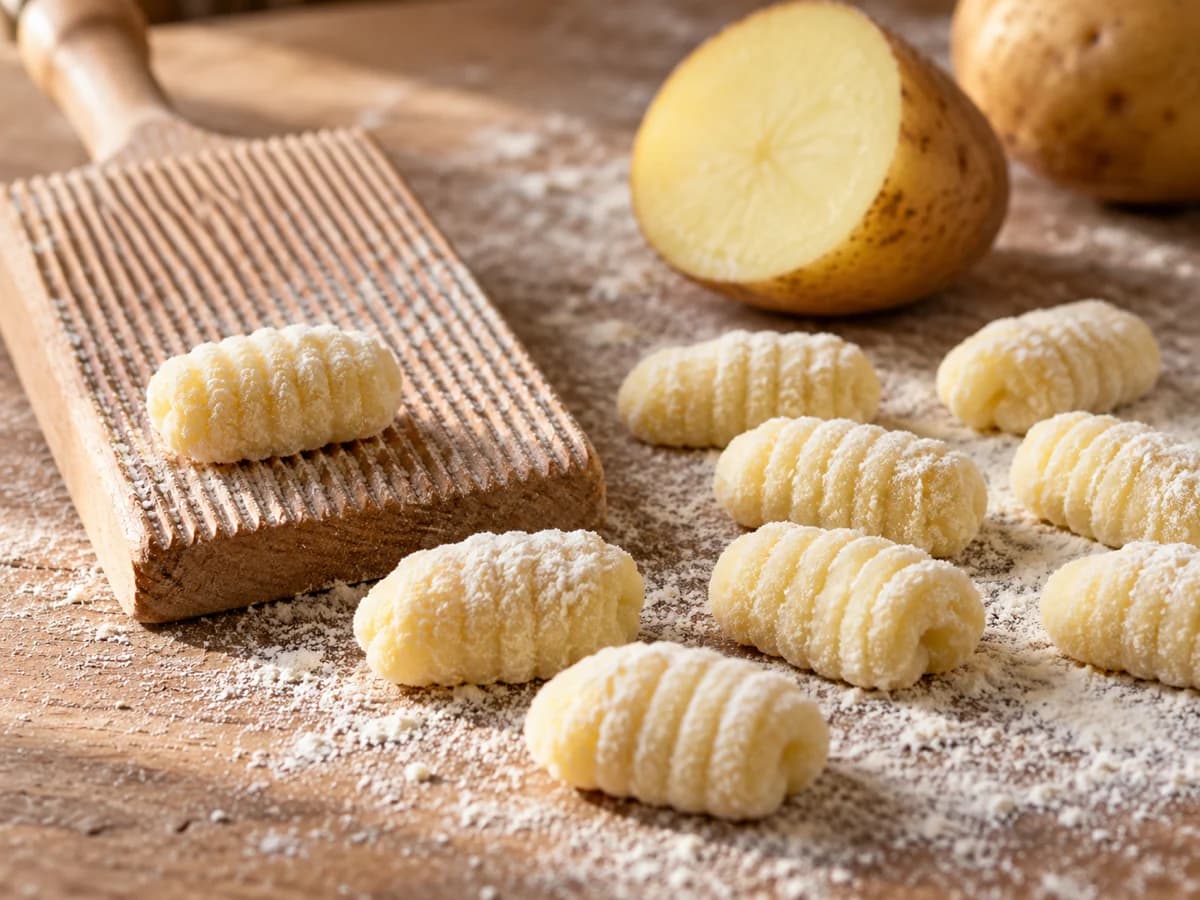
Potato, ricotta and Roman-style gnocchi
Gnocchi di patate, the potato dumplings, are the version most people mean. Ricotta gnocchi get their softness from fresh cheese and may also contain flour and egg. Gnocchi alla romana are made from semolina or polenta dough that is spread out to dry, layered with cheese and butter and baked as disks. Substitutions such as sweet potato or rice flour exist but are often considered non-traditional.
Several flour-based pastas sit near gnocchi: Campanian strangulaprievete, Apulian cavatelli and Sardinian malloreddus. The ricotta dumplings include Lombard and Tuscan malfatti, made with spinach, and Tuscan gnudi. In France, gnocchi à la parisienne are choux pastry dumplings served with béchamel.
US grocery shelves carry potato gnocchi in shelf-stable, refrigerated and frozen forms. A certified gluten-free version is made from 85% potato and rice flour in a dedicated facility. Skillet gnocchi are sold for pan-browning or boiling, as an appetizer, side or main dish, so the surface can be crisp or soft.
Eating gnocchi with sauce
Gnocchi arrive already sauced and are eaten with a fork. The pieces are about the size of a wine cork or smaller, so they go in whole. Pan-browned gnocchi have a crisp outside and a soft center, and boiled ones have the softer, more traditional bite, so the same name can give two different textures on the plate.
Common pairings are butter with sage, basil or garlic, a simple tomato sauce, a heavy Bolognese, pesto, gorgonzola cream and stracchino with spinach. Gnocchi also go into creamy or broth-based soups and baked cheesy dishes. Grated cheese or a pinch of salt finishes a pan-browned plate.
In a traditional Italian meal gnocchi come as the primo before the main dish; as a contorno they sit beside meat. In Argentina, Paraguay and Uruguay, it is customary to eat ñoqui on the 29th of each month, sometimes with money tucked under the plate for prosperity.
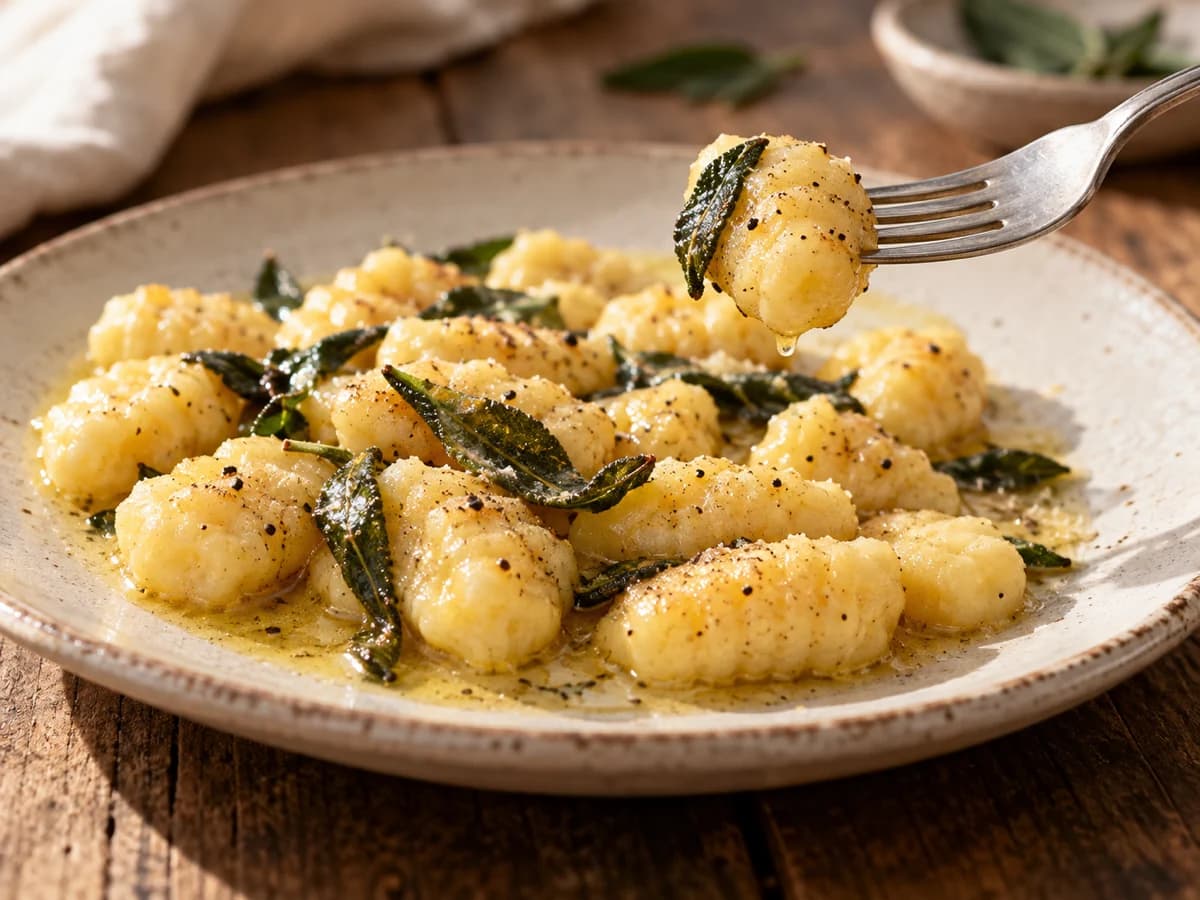
Ordering gnocchi as a first course or entrée
Menu words tell you which dough and sauce to expect. Gnocchi di patate is the potato dumpling, gnocchi alla romana is baked semolina, burro e salvia is butter and sage, pesto is basil sauce, ragù is meat sauce and ricotta marks a cheese dough or filling. Spanish-language menus write ñoqui. Cavatelli and malloreddus are flour pastas, so ask what the base is when the name is unfamiliar.
Portions vary by form. A 16 oz package is a common retail size, a skillet package lists two servings, and a US reference cup of potato gnocchi weighs 188 g. When gnocchi appear in a soup, one serving at a large US chain is 8 fluid ounces. Regular gnocchi are the normal dumpling size, and mini gnocchi are about half that size.
Gnocchi are ordered as a first course, a main dish or a side next to meat. The sauce changes the dish most: sage butter and plain tomato are the simplest, Bolognese and gorgonzola cream are richer, and pesto adds cheese and pine nuts.
Are potato gnocchi gluten free?
Regular gnocchi contain wheat, from the flour or from semolina. Egg is common in the dough, and butter, ricotta, grated cheese and cream sauces such as Alfredo or gorgonzola add milk. Traditional pesto is made from basil, olive oil, hard cheeses, pine nuts, garlic and salt, so it adds milk and tree nuts. Meat ragù contains meat even when the dumpling has no egg. At one large US chain, the Chicken & Gnocchi Soup row of the allergen table lists dairy, egg and wheat, plus gluten and sulfites, and that table covers fixed sauces, seasonings and fixed sides, so the whole dish and not just the dumplings shapes the allergen picture.
Regular potato gnocchi are not gluten free, and Roman-style semolina gnocchi also contain wheat. A gluten-free potato version can be made with rice flour; one certified product is 85% potato and rice flour made in a dedicated facility. In US packaged-food labeling, gluten-free means under 20 ppm of gluten, and wheat, rye, barley and their crossbreeds cannot be used unless gluten is removed to that level. Restaurants that make gluten-free claims on menus should follow the same definition, and the FDA suggests asking what the restaurant means by gluten-free, which ingredients are used and how the item is prepared. A potato, semolina and water dough has no egg, so egg-free and dairy-free versions exist, but butter, cheese and meat sauces decide whether a plate is vegetarian or vegan.
Egg-free and nut-free facility statements on a package describe that product, not a restaurant kitchen. People with wheat, gluten, egg, milk, tree nut or sulfite concerns need the full dish, including the sauce, topping and any soup base, and should not assume gnocchi are safe because the dumplings look plain.
Which should you order?
Choose sage butter for a light, herbal coating or tomato sauce for a brighter, acidic plate. Choose skillet gnocchi for crisp edges. For a gluten-free order, choose a labeled gluten-free dumpling and ask how it is prepared.
A useful question for the restaurant
Are these gnocchi made with wheat or egg, and what goes into the sauce?
Ordering suggestions reflect taste preferences, not a guarantee about the restaurant’s ingredients.
Common questions
How many calories are in potato gnocchi?
Potato gnocchi supply 135 calories per 100 g (FDC 2708722). One 188 g cup has about 254 calories before sauce, and one 26 g piece has about 35. An 8-fluid-ounce serving of chicken-and-gnocchi soup at one US chain has 230 calories.
Are gnocchi gluten free?
Regular potato gnocchi are not gluten free because they contain wheat flour. Buy a labeled gluten-free version made with rice flour, and ask how a restaurant prepares it.
What are gnocchi made of?
Traditional potato gnocchi use cooked potato and wheat flour, sometimes with egg and salt. Ricotta gnocchi use fresh cheese, while Roman-style gnocchi use wheat semolina.
Are gnocchi vegan?
Some potato gnocchi are vegan, but many recipes add egg. Butter, cheese, pesto and meat ragù also make the finished dish non-vegan.